
LC, SC, or MPO connector? It looks like a simple choice, but it often causes confusion when selecting the right fiber connector in real projects.
These fiber optic connectors are all widely used, but they are built for different purposes. Choosing the wrong one can make fiber cabling more complicated than it needs to be and limit how easily your network scales over time.
In this article, we will walk through the key differences between common fiber optic connector types and show where each connector fits in real-world network deployment.
What Is an LC Fiber Connector?
A fiber connector, also called an optical fiber connector, is the interface used to align and connect fiber end faces so light signals can pass reliably between cables, transceivers, patch panels, and network equipment.
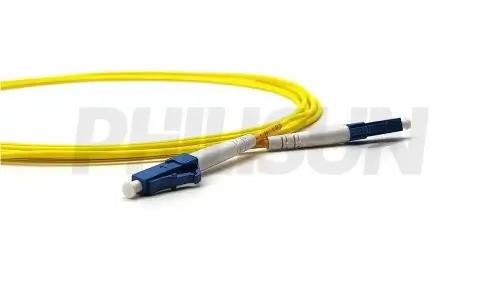
An LC fiber connector is the compact 1.25 mm ferrule connector most often used for duplex links on SFP, SFP+, SFP28, QSFP28 LR4 and many patch-panel ports. Choose LC when equipment presents separate transmit and receive fibers, rack space is limited, or the optical design uses WDM optics that do not require parallel MPO fibers.
LC Fiber Connector Selection Checklist
| Decision point | How to choose | Related PHILISUN page |
|---|---|---|
| UPC or APC polish | Use LC UPC for most multimode and standard duplex links. Use LC APC when the design needs lower reflection on singlemode access, transport or video links. | LC APC vs LC UPC guide |
| Duplex or simplex LC | Use duplex LC for paired transmit and receive fibers. Use simplex LC pigtails or patch leads for one-fiber service paths, splicing or equipment-side termination. | LC duplex connector guide |
| Standard or uniboot cable | Use standard duplex patch cords for simple routing. Use LC uniboot when the rack needs cleaner cable management, polarity switching or higher patching density. | LC uniboot fiber patch cord |
| Patch cord, pigtail or breakout | Match the product family to the job: LC duplex patch cords for equipment links, LC pigtails for splicing, and LC breakout cables for pre-terminated high-density routing. | LC duplex patch cord series |
| LC to MPO migration | Use MPO-LC cassettes or breakout assemblies when a high-fiber-count backbone needs to present duplex LC ports at switches, patch panels or equipment rows. | MPO-LC cassettes |
For a practical order, confirm fiber type, connector polish, cable construction, jacket, length, polarity and insertion-loss target before choosing a final LC connector assembly.
LC vs SC vs MPO Fiber Connector: Key Differences
LC is a small form-factor fiber optic connector with a 1.25 mm ferrule.
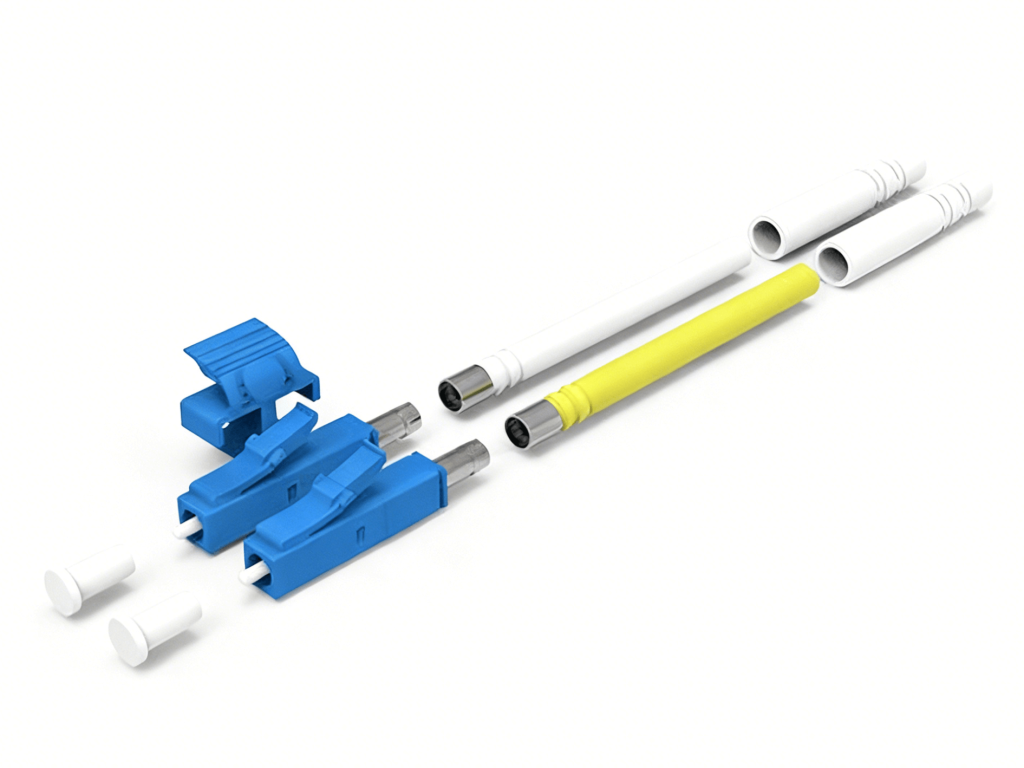
SC fiber connector is a standard fiber optic connector with a 2.5 mm ferrule and a push-pull coupling mechanism.
MPO is a multi-fiber connector that integrates multiple fibers, typically 8, 12, or 24, into a single rectangular interface.
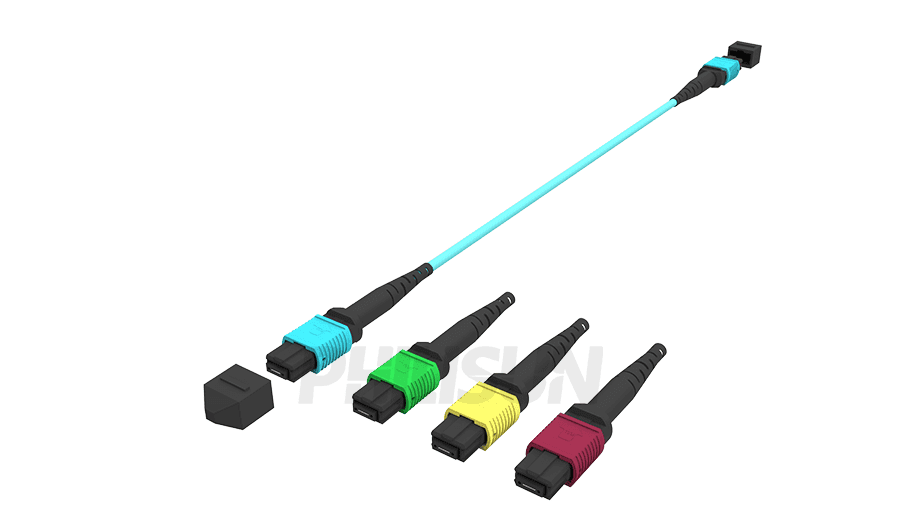
Connector selection in real projects depends on structure, application requirements, and network deployment design.
In enterprise fiber networks and typical server-to-switch links ranging from 1G to 25G, LC connector is the most common choice because it saves space and supports higher port density.
For FTTH, PON, and other access-side deployments, SC is still widely used thanks to its simplicity and lower installation cost.
In high-density data center interconnect environments, especially for 40G, 100G, and 400G parallel optics, MPO becomes the more practical option because it can handle multiple fibers within a single interface
LC vs MPO in Data Centers: Why Both Are Used
It is easy to assume that higher speeds automatically mean using MPO connector, but that is not always the case. The real deciding factor is the optical architecture, not just the data rate in modern optical communication systems.
For instance, 100G-SR4 relies on parallel optics, which fits naturally with an MPO fiber connector. In contrast, 100G-LR4 uses WDM technology and still runs over a standard duplex LC connector.
In most data center designs, MPO and LC are used at different layers rather than competing with each other. MPO is typically used for backbone fiber cabling, where large numbers of fibers need to be managed efficiently. Closer to the equipment, those links are usually converted into LC connections, making it easier to connect switches, servers, and other devices.
A common example is splitting a 100G port into four 25G links using an MPO to 4×LC cable. This allows high-speed aggregation on the backbone side while keeping device connections simple and flexible.
This layered approach is widely used in modern fiber infrastructure, allowing networks to scale efficiently while keeping deployment and maintenance manageable. Instead of replacing LC with MPO, most networks rely on both, with each serving a different role within the same system.
3 Key Factors When Choosing LC vs SC vs MPO Fiber Connectors
Fiber connector decisions often go wrong due to incorrect assumptions during the selection process. The following three factors are commonly overlooked.
Consider total deployment cost, not just connector unit price
Component cost is only part of the equation. Labor, installation time, and link consistency often have just as much impact on the total cost of fiber cabling projects. While an MPO may cost more upfront, it can significantly reduce labor requirements and improve efficiency in high-density fiber deployments.
| Metric | LC/SC (Field Terminated) | MPO (Pre-Terminated) |
| Typical Insertion Loss | 0.25 dB – 0.50 dB (field spliced) | < 0.35 dB (factory polished) |
| Labor Cost | High, often requiring a fusion splicer and experienced technician | Lower, with plug-and-play installation |
| Installation Time | 5–10 minutes per fiber pair | Seconds per 12-fiber link |
| Best For | Low-count, single-mode, long-distance runs | High-count, multi-fiber, intra-data-center runs |
Base selection on interface type and transmission architecture, not just speed
Not every 100G or higher-speed link requires MPO. Some applications use parallel optics, while others rely on WDM. A better selection process starts with the transceiver and optical design rather than the assumption that higher speed automatically means a multi-fiber interface
Future Upgrade Plans Should Also Be Part of the Decision
A network built for 10G, 25G, or early 100G today may need to support 400G, 800G, or higher-density data center interconnect in the near future. In many backbone fiber infrastructure deployments, planning scalable MPO-based solutions early is far more efficient than rebuilding the cabling system later.
How Philisun Supports LC, SC, and MPO Fiber Connector Solutions
PhiliSun offers a complete range of fiber connector options for different types of network deployment, from standard duplex links to access deployments and high-density backbone systems.
LC Solutions for Standard Duplex Connectivity
For enterprise networks, access layers, and equipment interconnects, LC-based fiber connectors are widely used for high-density patching and stable performance. Typical insertion loss is controlled within 0.3 dB, making them suitable for high-speed fiber cabling environments.
Representative LC product paths include LC duplex patch cord series, LC uniboot patch cords, LC pigtails, and LC high-density breakout cables. The right choice depends on fiber type, rack density, polarity handling and the installation workflow.
SC Solutions for Access and Subscriber-Side Deployment
In FTTH, subscriber-side, and access network scenarios, SC connectors are valued for their simplicity and reliability. These connectors are commonly used in telecom networks, where fast installation and consistent performance are essential.
Available products include SC OS2 multifiber breakout cables for indoor distribution, SC simplex patch cords in OS2, OM3, OM4, and OM5, and 2-fiber FTTA patch cables for indoor and outdoor use, with both armored and non-armored configurations.
MPO and Hybrid Solutions for High-Density Fiber Infrastructure
For backbone and high-density data center interconnect environments, MPO is used to handle large numbers of fibers in a compact form. Philisun provides MPO trunk cables, jumpers, cassettes, and fiber enclosures to support this type of fiber connectivity.
Breakout options are also available. For example, a 100G QSFP28 to 4×25G SFP28 AOC can split one high-speed port into multiple lower-speed links, while 400G QSFP-DD to 4×100G solutions support migration to higher-capacity optical communication systems.
Key Advantages of Philisun’s Fiber Connector Solutions
Aligned with real deployment scenarios
LC, SC, and MPO are used across different parts of fiber infrastructure, from access connections to high-density backbone cabling.
Consistent low-loss performance
LC and SC connectors maintain insertion loss within 0.3 dB, while factory-terminated MPO assemblies help ensure stable performance in high-speed links.
Simplified installation
Pre-terminated MPO systems and user-friendly LC and SC products reduce installation time and lower on-site complexity, especially in large-scale fiber optic cable installation projects.
Ready for future upgrades
Support for OM5 fiber and 400G/800G-ready MPO solutions makes it easier to scale modern data center interconnect and AI-driven environments.
Customizable for different deployment needs
Cable types, fiber counts, connector formats, and lengths can be adjusted based on specific project requirements, making it easier to match different network designs and installation conditions
Future-Proofing Your Network with the Right Fiber Connector Solution
As networks continue to evolve, the key is not choosing one connector as the “best,” but building a fiber strategy that supports both current needs and future upgrades. The right connector choice should improve performance flexibility, efficiency, and scalability over time.
PhiliSun provides a full range of fiber connectivity solutions, from duplex links to high-density backbone deployments. For project-specific guidance, feel free to explore our solutions or contact our team.
Fiber Connector FAQs
Which fiber connector is better for data centers: LC, SC, or MPO?
For standard duplex device connectivity, LC is more common. For high-density backbone links and parallel optical systems, MPO is usually the better fit. Many modern data centers use MPO in the backbone and LC at the edge.
Does 100G always require MPO?
No. 100G-SR4 typically uses MPO, but 100G-LR4 and similar WDM optics often still use LC. The connector should match the optical architecture, not just the speed.
Is SC connector outdated ?
No. While SC is less common than LC and MPO in dense data centers, it remains practical in FTTH, access networks, and telecom deployments where installation simplicity and cost efficiency matter.
Can MPO connect directly to LC?
Not directly. In most cases, the transition requires an MPO-LC cassette or an MPO-LC breakout cable.
What is the difference between MTP and MPO?
MTP is generally considered a high-performance implementation within the MPO family. The two are typically interoperable, but MTP is often positioned as a more refined or premium MPO-format solution.
Recommended MPO Products
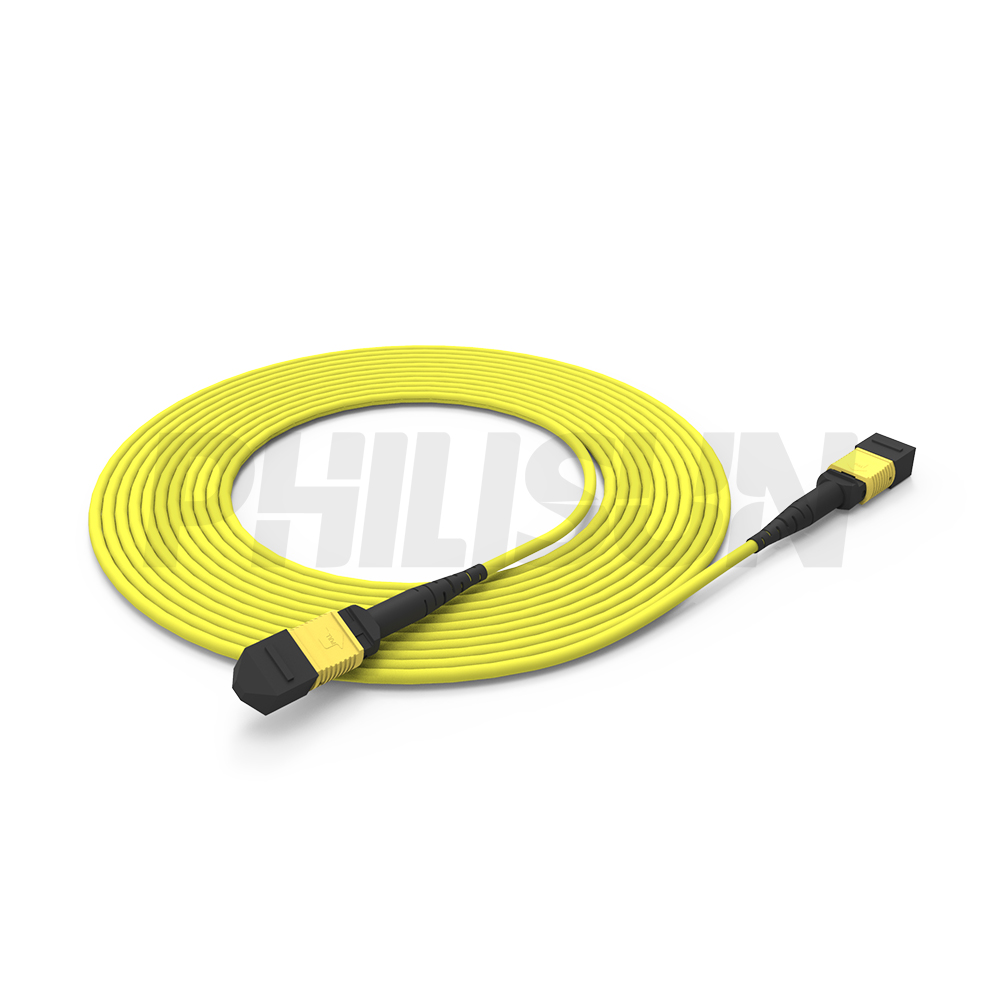
MPO Jumper
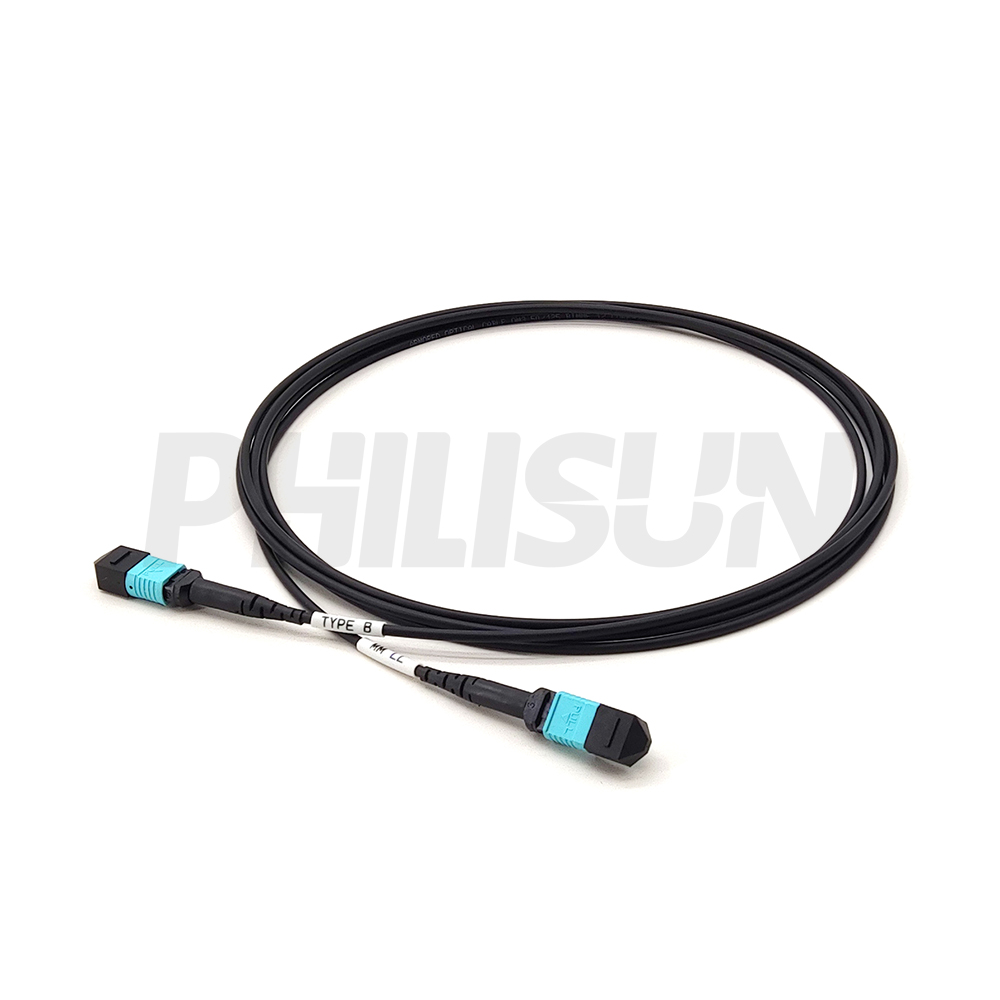
MPO Armored Jumper
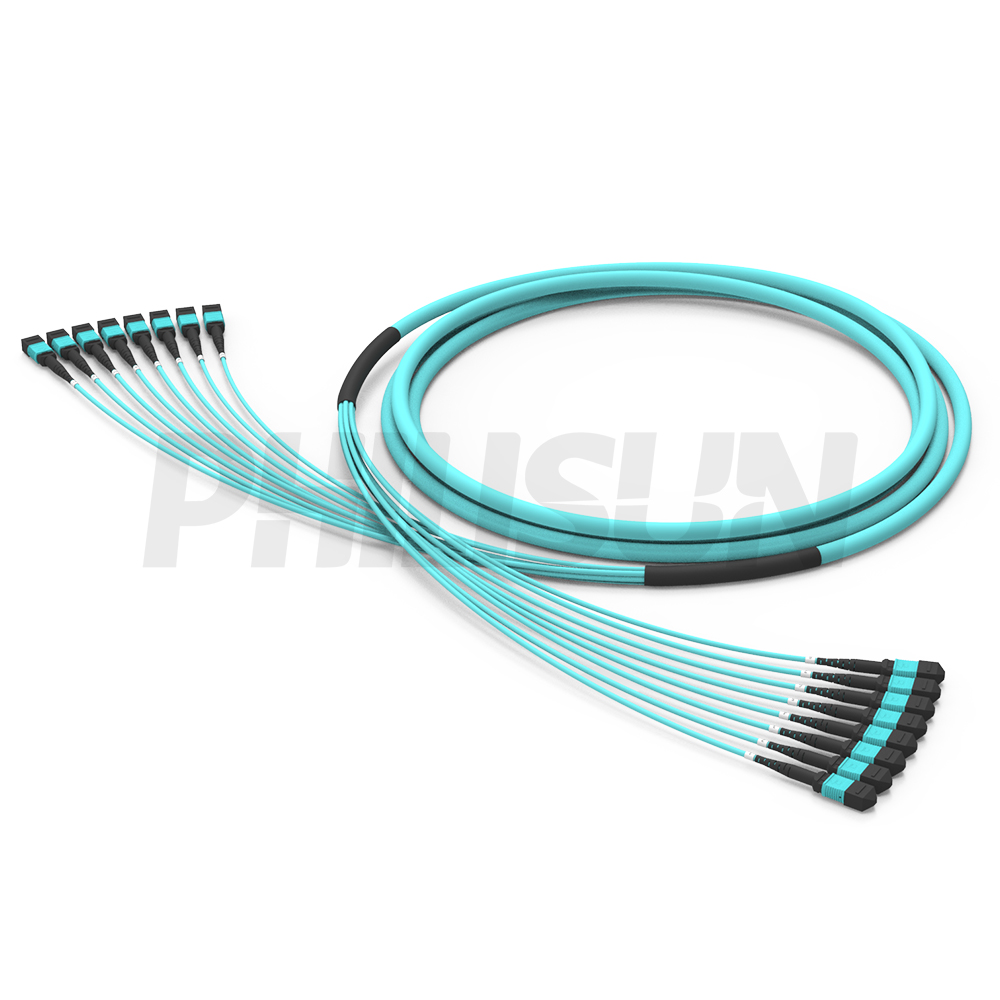
MPO Trunk Cable
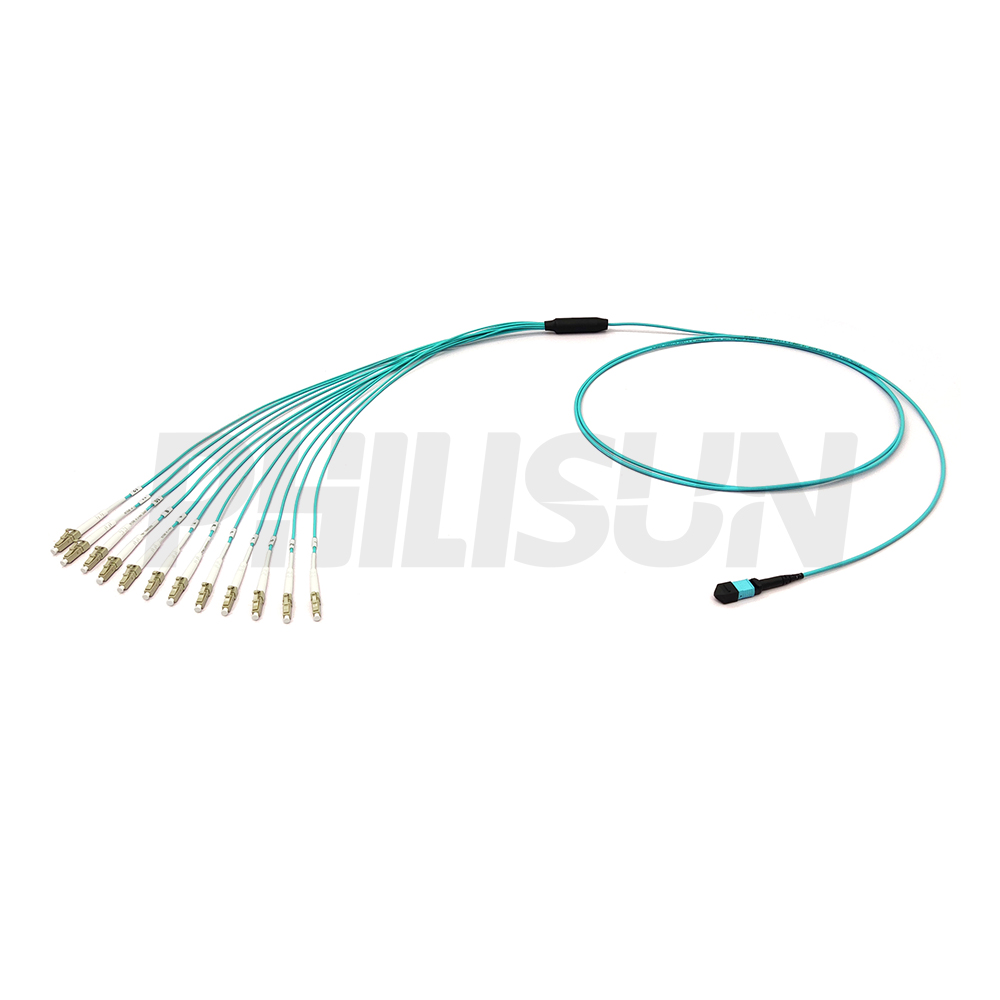
MPO Harness Cable