5G Carrier Network Fiber Solutions
PHILISUN 5G carrier network fiber solutions support base station access, indoor coverage, metro aggregation and transport networks that need high bandwidth, reliable optical links and efficient fiber utilization.
5G Carrier Network Fiber Solutions for Fronthaul, Midhaul and Backhaul
PHILISUN 5G carrier network fiber solutions support base station access, fronthaul, midhaul, backhaul, indoor coverage and metro aggregation where high bandwidth, stable optical links and efficient fiber utilization matter. The solution combines optical transceivers, WDM planning, OS2 fiber cabling, patch cords, MPO assemblies, labeling and acceptance testing for telecom deployment teams.
| 5G network requirement | Recommended PHILISUN solution | Planning notes | Start here |
|---|---|---|---|
| Base station access and fronthaul | Single-mode fiber links, optical transceivers, LC patch cords and protected handoff points. | Confirm distance, wavelength, connector type, link budget and field installation environment. | Optical Transceivers |
| Fiber shortage or route tension | CWDM/DWDM planning, passive WDM paths and clean patching records. | Use wavelength multiplexing when new fiber deployment is limited or expensive. | CWDM vs DWDM Guide |
| Metro aggregation and transport | Optical modules, OS2 fiber cabling, patch panels and POTN/OTN-ready physical links. | Plan reach, capacity, service growth and maintenance access across aggregation nodes. | POTN Guide |
| Indoor 5G coverage | Fiber patch cords, pigtails, ODF wiring and labeled distribution routes. | Keep cable routes clear and testable for building-level coverage maintenance. | Fiber Patch Cords & Pigtails |
| High-density central office or edge sites | MPO trunk cables, fiber panels, LC cassettes and documented cross-connects. | Use structured cabling when port density, expansion and troubleshooting speed are important. | MPO Cable Assemblies |
How to specify a 5G fiber cabling BOM
- Map the network layer: fronthaul, midhaul, backhaul, indoor coverage, metro aggregation or central office cross-connect.
- Confirm optical interface: speed, form factor, wavelength, reach, fiber type and equipment compatibility.
- Check fiber availability: decide whether dedicated fibers, CWDM/DWDM or passive WDM expansion is needed.
- Plan site cabling: include patch panels, ODF, LC patch cords, pigtails, MPO trunks, protection, labels and spare capacity.
- Define acceptance tests: insertion loss, return loss, polarity, OTDR trace, end-face inspection and final route documentation.
| Deployment scenario | Fiber layer focus | Common product choices | Related resource |
|---|---|---|---|
| AAU/RRU to DU or BBU | Reliable single-mode optical access links. | OS2 patch cords, pigtails, optical modules and outdoor-protected assemblies. | SFP Module Guide |
| Fiber-constrained existing routes | Use wavelength planning to increase capacity on available fiber. | CWDM/DWDM optics, passive WDM path planning and clean ODF patching. | CWDM/DWDM Selection |
| Metro and aggregation sites | Scalable transport connectivity and link budget control. | Optical transceivers, OS2 fiber, patch panels and tested fiber links. | Fiber Optic Network Solutions |
| Indoor coverage systems | Clean building distribution and easy maintenance. | LC/SC patch cords, pigtails, ODF wiring and labeled routes. | Fiber Color Code |
| Central office or edge data rooms | High-density cross-connects with future expansion. | MPO trunks, LC cassettes, patch panels and structured cabling documentation. | Structured Cabling Guide |
For a faster 5G carrier network recommendation, send the site type, link distance, target speed, optical interface, wavelength plan, available fiber count, connector type, cabinet layout, environmental requirement, label format and test report requirement. PHILISUN can help turn the transport design into a practical optical cabling and module BOM. For project support, contact PHILISUN.
5G Carrier Network Fiber FAQ
What fiber products are used in 5G carrier networks?
5G carrier networks commonly use single-mode fiber cabling, optical transceivers, LC patch cords, pigtails, ODF patching, MPO trunk cables, WDM components and tested fiber links across fronthaul, midhaul, backhaul and aggregation sites.
How does WDM help when 5G fiber resources are limited?
WDM allows multiple wavelengths to share fiber resources, which can increase capacity on existing routes when laying new fiber is difficult, slow or expensive. The right plan depends on distance, channel count, link budget and equipment compatibility.
Which optical transceivers are used for 5G transport links?
The module choice depends on speed, reach, wavelength, fiber type, connector and host equipment. Common planning options include SFP, SFP+, SFP28, QSFP and wavelength-specific optical modules for access, aggregation and transport links.
How should fronthaul, midhaul and backhaul cabling be planned?
Plan each layer by distance, bandwidth, site environment, available fiber count, patching points and test requirements. Clear labels, ODF records and acceptance tests are important because carrier links must be maintainable after installation.
What information is needed for a 5G fiber solution quote?
Send the site scenario, speed, distance, fiber count, connector type, wavelength requirement, equipment model, cable route, quantity, label format, packaging needs and test report requirements.
5G Carrier Network
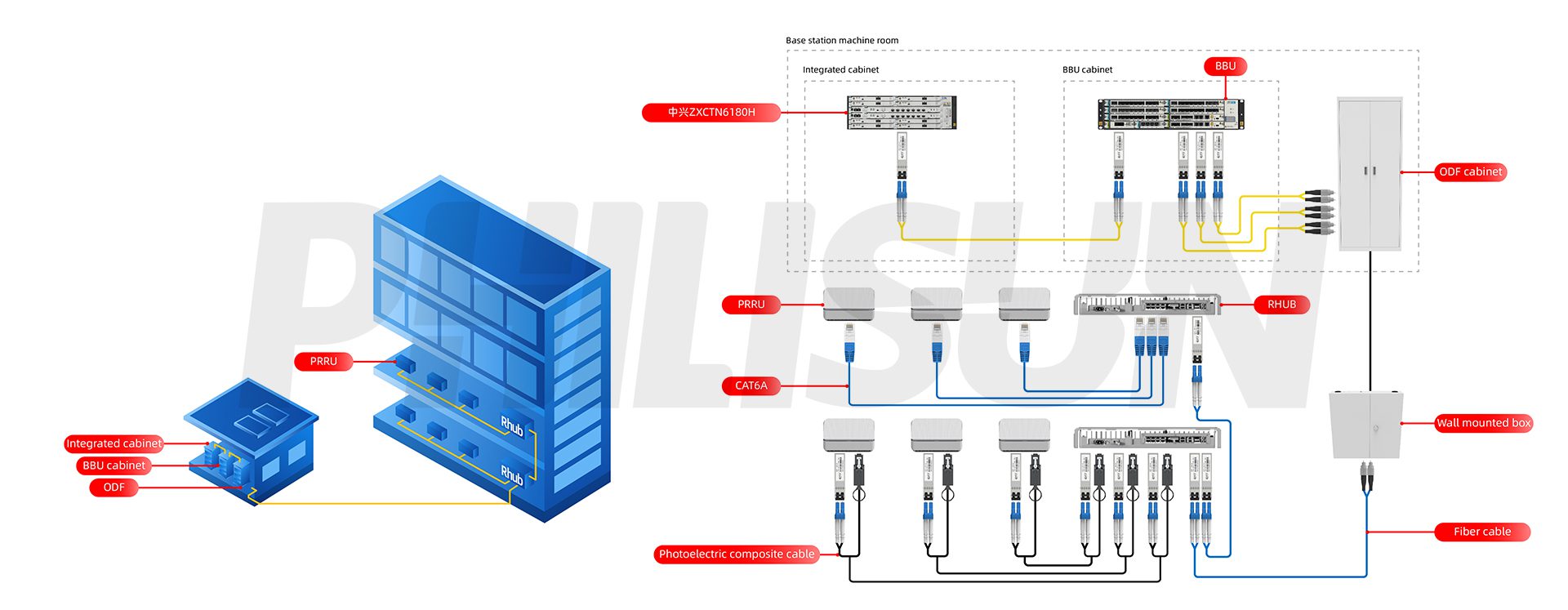
With the release of the 5th generation mobile networks (5G) standard scheme, 5G construction will enter a substantive stage. The 5G band is high, and its coverage is poor. It is estimated that the number of 5G base stations, including various types, will be twice that of 4G. Dense base station deployment brings higher challenges to optical fiber networking. In order to meet the demand for 5G large bandwidth, the access network needs more optical fibers to support the complex routing environment. In response to the application requirements of 5G’s high bandwidth, low latency, and massive connections, PHILISUN provides solutions that cover a variety of 5G application scenarios based on Carrier Network Access Stratum.
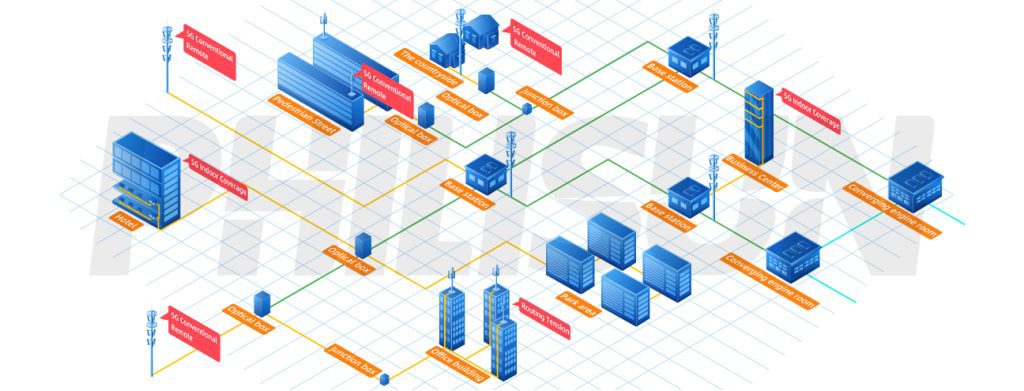
5G Carrier Network Access Layer
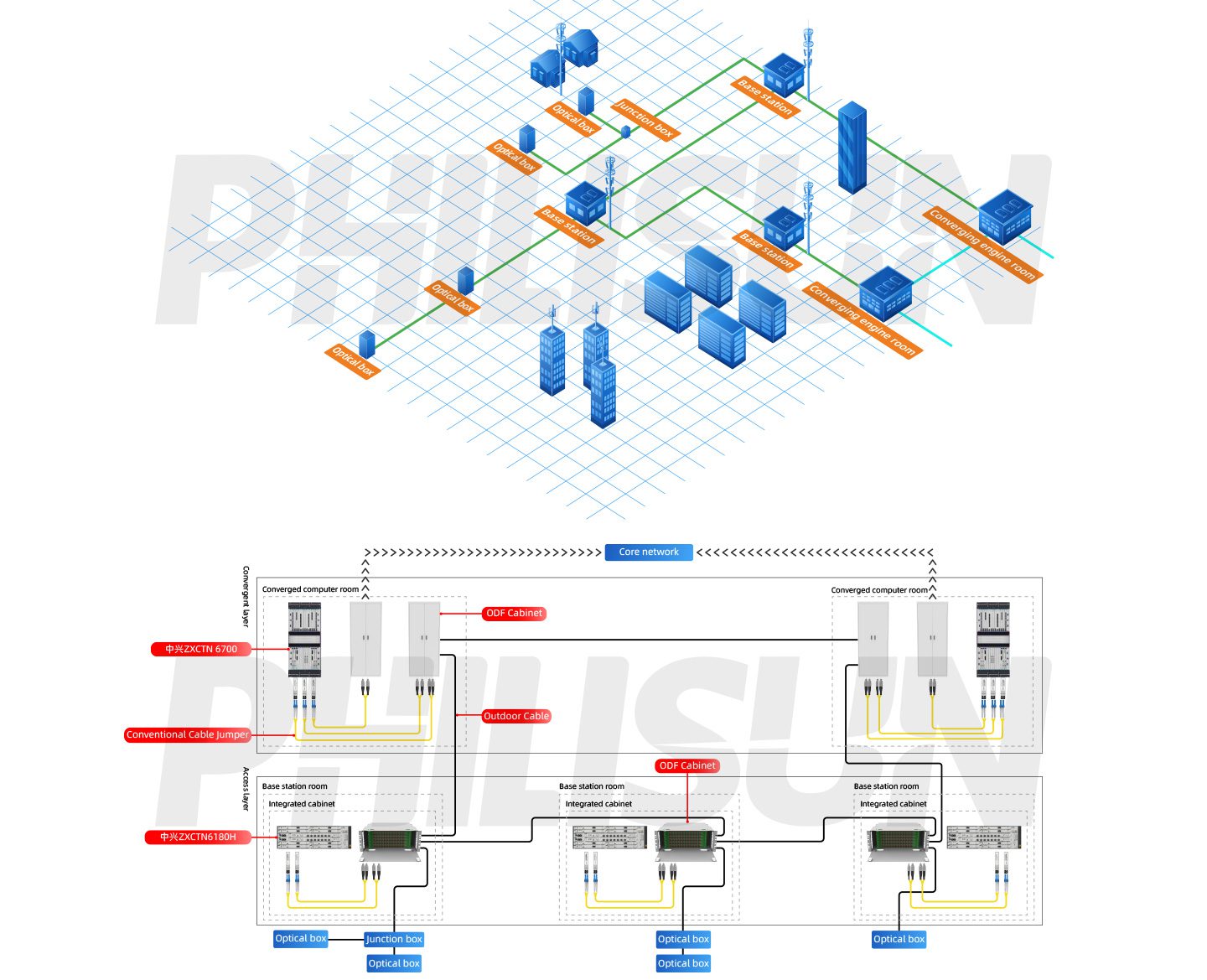
5G Conventional Remote
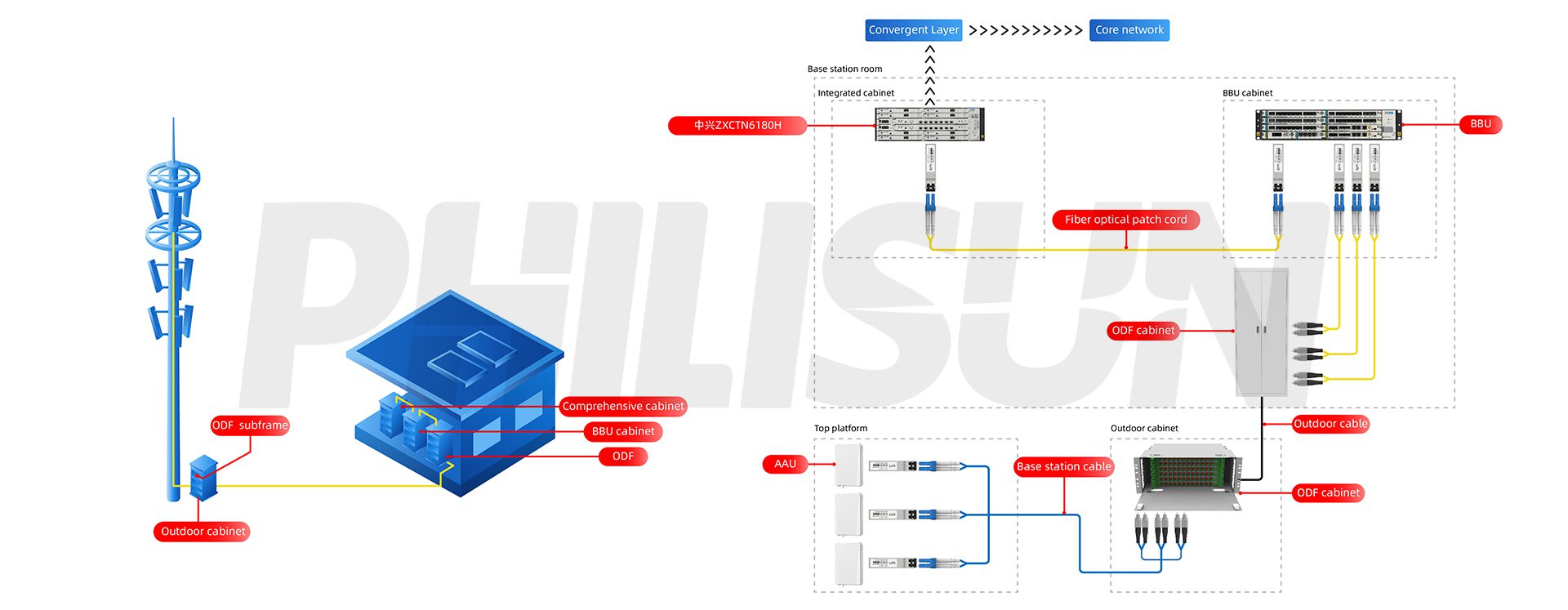
Routing Tension
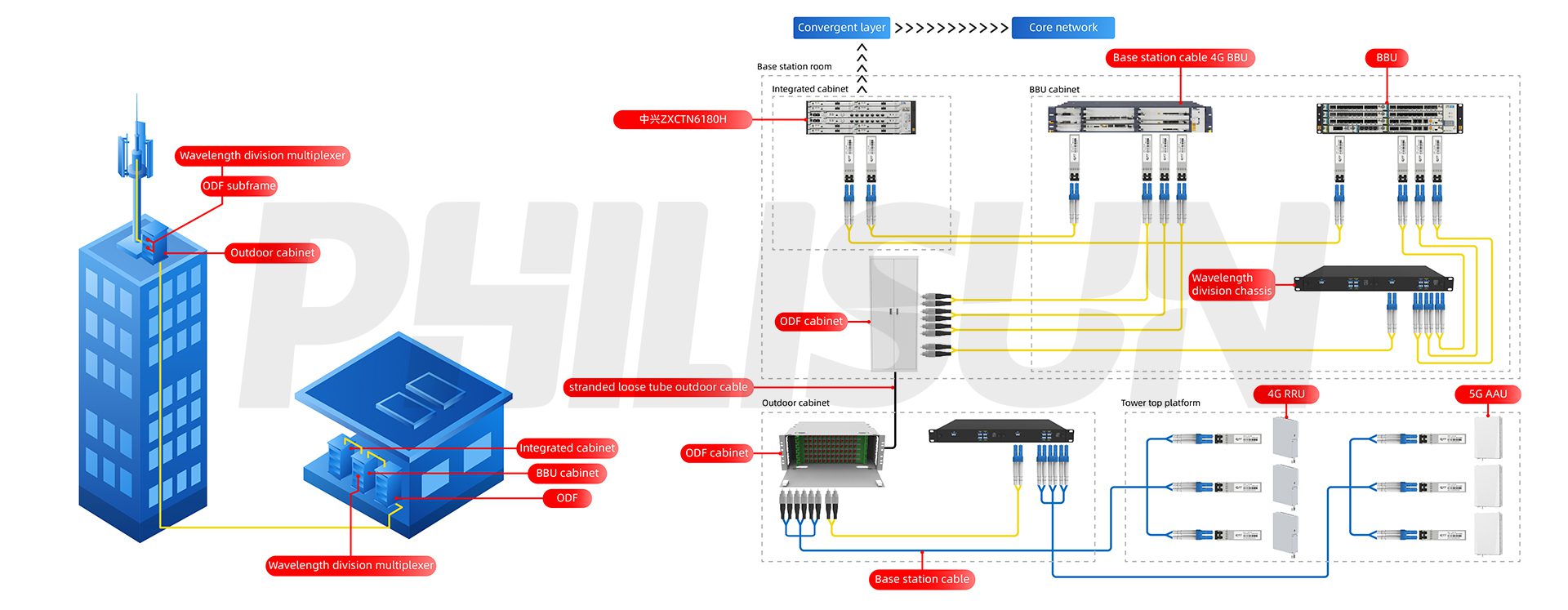
5G Indoor Coverage