
As global data demand continues to rise exponentially—driven by 5G, cloud computing, IoT, and video streaming—network operators are under pressure to deliver faster, more reliable, and more flexible connectivity. Traditional transport networks, once dominated by pure optical or packet-based systems, struggle to keep up with the complexity and scale of today’s digital ecosystems.
Enter the Packet Optical Transport Network (POTN)—a converged technology that combines the strengths of both packet switching and optical transport into one intelligent, unified system. POTN not only improves bandwidth efficiency but also simplifies operations, making it the preferred architecture for modern service providers and enterprises.
Quick answer: POTN, or Packet Optical Transport Network, combines packet switching with optical transport so operators can carry Ethernet, mobile backhaul, enterprise and cloud traffic on a more flexible transport layer. Compared with traditional OTN or PTN designs, POTN is usually used when networks need both high-capacity optical transmission and packet-level service handling.

What Is POTN?
Packet Optical Transport Network (POTN) is an advanced transport system that integrates packet-based services (Ethernet, IP, MPLS) with optical transport technologies (WDM, OTN) on a single platform.
Traditional optical transport networks (OTNs) were designed for large, static circuits—ideal for long-distance transmission but less efficient for bursty packet traffic. Meanwhile, packet-based networks like IP or Ethernet excel at handling variable data flows but lack the deterministic performance required for long-haul or mission-critical connections.
POTN merges these two paradigms—creating a unified transport layer that can handle both high-bandwidth optical channels and flexible packet traffic with minimal latency, low cost, and superior scalability.
At its core, POTN enables the coexistence of multiple service types—from legacy TDM circuits to advanced IP-based services—within a single physical infrastructure.
How Does POTN Work?
The fundamental concept behind POTN is layer convergence—the integration of packet and optical layers to achieve streamlined network operation and efficient bandwidth use.
Here’s how it works step-by-step:
Traffic Ingestion
POTN systems receive diverse traffic types—Ethernet, IP, MPLS, or SDH/SONET—through their packet switching modules.
Service Grooming & Aggregation
Incoming data packets are aggregated and optimized through packet grooming, reducing bandwidth waste and improving transport efficiency.
OTN Encapsulation
Once aggregated, packet data is mapped into OTN containers (ODU/OTUk). These optical data units are the “transport vehicles” that carry packetized traffic through the optical layer.
Optical Layer Transmission
Encapsulated data is transmitted over DWDM (Dense Wavelength Division Multiplexing) channels, enabling multi-terabit capacity across long distances.
Unified Switching Fabric
POTN platforms feature a hybrid switching matrix that supports both packet-level and optical-level cross-connections. This allows for any-to-any service mapping and dynamic bandwidth allocation.
Centralized Control & SDN Integration
Modern POTN architectures integrate software-defined networking (SDN) for centralized control, automation, and network optimization—providing operators with end-to-end visibility and agility.
In essence, POTN transforms networks from static, multi-layer systems into dynamic, service-aware infrastructures that can adapt to rapidly changing traffic demands.
Key Features and Technical Advantages
| Feature | Description |
| Layer Convergence | Combines OTN, DWDM, and packet switching in a single platform |
| Flexible Bandwidth Management | Dynamically allocates capacity between packet and optical layers |
| Multi-Service Support | Supports Ethernet, IP, SDH/SONET, and private line services simultaneously |
| Enhanced QoS and Reliability | Provides deterministic performance with low latency and high uptime |
| Centralized Control | SDN-enabled management for faster service provisioning |
| Scalable Capacity | Supports 100G/200G/400G and beyond with modular design |
These features enable operators to reduce infrastructure costs, simplify maintenance, and future-proof their networks.
Why POTN Matters for 5G Networks
The rise of 5G network infrastructure demands more than just faster speeds — it requires ultra-low latency, deterministic quality, and flexible service delivery. POTN addresses these needs in several critical ways:
- Converged Transmission – Supports both mobile backhaul traffic and fixed broadband in one unified platform.
- Intelligent Slicing – Enables dynamic resource allocation for different 5G use cases, such as IoT, autonomous vehicles, and smart cities.
- Low Latency & High Reliability – Reduces intermediate conversions, ensuring consistent performance for time-sensitive applications.
- Simplified Management – Unified orchestration and monitoring reduce complexity across multi-vendor systems.
With its packet-aware and optical-intelligent design, POTN has become the backbone technology for nationwide 5G deployments.
POTN vs. Traditional OTN and PTN
| Item | POTN | OTN | PTN |
| Main role | Packet plus optical transport | High-capacity optical transport | Packet transport |
| Typical traffic | Ethernet, mobile, cloud and enterprise services | Wavelength and client service transport | Carrier Ethernet and packet services |
| Best fit | 5G, DCI and metro aggregation networks | Long-haul and backbone transport | Metro packet backhaul |
| PHILISUN relevance | Transceivers, fiber cabling and patching | Optical modules and fiber links | Fiber access and aggregation links |
Unlike PTN, which focuses solely on packet services, or OTN, which specializes in wavelength-based transmission, POTN combines the strengths of both. It’s capable of offering the dynamic flexibility of IP networks along with the precision and protection of optical layers.
Applications of POTN
5G Mobile Backhaul
POTN ensures smooth and efficient data transport between base stations and core networks, supporting the massive bandwidth demands of 5G.
Data Center Interconnection (DCI)
By leveraging optical transceivers and wavelength multiplexing, POTN connects distributed data centers with high throughput and low latency.
Enterprise and Cloud Networking
Enterprises can deploy POTN-based infrastructure to integrate WAN and LAN services under one management framework.
Metro and Core Network Upgrades
POTN’s scalability and service-awareness make it ideal for telecom operators modernizing their metro and backbone networks.
Where Fiber Cabling and Transceivers Fit in a POTN Network
In a POTN deployment, optical transceivers and fiber cabling sit at the physical connection points between access, aggregation, metro and data center nodes. The POTN platform handles packet and transport functions, while the fiber layer determines reach, connector type, wavelength, link budget and upgrade flexibility.
For teams planning a POTN, OTN or metro transport project, the practical hardware questions usually include data rate, transmission distance, fiber type, connector format, optical power budget and whether the deployment needs standard or custom patching.
POTN Optical Layer Planning
If you already understand the POTN concept and need to plan the physical layer, see the POTN network architecture guide for optical modules and cabling. It explains how SFP, QSFP, 100G/400G optics, fiber routes and patching fit into access, aggregation, metro and data center transport links.
| Planning question | Where to go next |
|---|---|
| Which module family fits the POTN port? | Optical transceiver selection |
| How should the fiber route be planned? | Fiber optic network solutions |
| How do modules and cabling fit the architecture? | POTN architecture and cabling guide |
Optical Transceiver Solutions for POTN
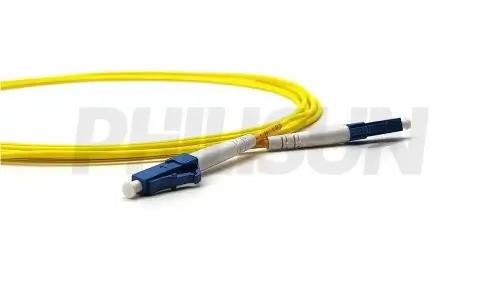
PHILISUN supplies optical transceivers, fiber patch cords and high-density cabling that support the physical-layer side of POTN and OTN network builds.
Depending on the transport equipment and service rate, POTN links may use short-reach or long-reach modules, including 100G SFP56-DD / QSFP28 transceivers, lower-speed SFP modules, or custom fiber patching between shelves, panels and aggregation nodes.
These modules ensure dependable signal transmission across 5G network backhaul and enterprise connectivity scenarios.
Benefits of Deploying POTN
1. Optimized Network Efficiency
POTN combines optical transport and packet flexibility, ensuring every wavelength is utilized efficiently. Dynamic bandwidth allocation prevents congestion and optimizes performance.
2. Reduced Network Layers
Traditional systems require separate packet and optical equipment. POTN simplifies this by consolidating both functions into a single system—reducing hardware, power consumption, and space requirements.
3. Improved Service Agility
With unified control and SDN compatibility, POTN enables rapid provisioning of new services—whether it’s 10G business access, mobile backhaul, or cloud interconnects.
4. Enhanced Reliability and Protection
Built-in OTN features such as Forward Error Correction (FEC) and Optical Channel Protection ensure consistent uptime and low bit-error rates.
5. Future-Proof Scalability
POTN supports smooth migration from 10G to 400G and beyond, accommodating growing data traffic and new service types without major infrastructure overhauls.
6. Lower Total Cost of Ownership (TCO)
By minimizing redundant equipment and simplifying operations, POTN significantly reduces both capital and operational expenses.
POTN FAQ
What does POTN mean?
POTN means Packet Optical Transport Network. It combines packet switching with optical transport so carriers and enterprises can move multiple service types over a flexible optical network layer.
Is POTN the same as OTN?
No. OTN focuses on optical transport and service containers, while POTN adds packet-aware switching and aggregation functions on top of optical transport capabilities.
What is the difference between POTN and PTN?
PTN is mainly packet transport, while POTN combines packet functions with optical transport. POTN is usually a better fit when a network needs both packet flexibility and high-capacity optical transmission.
Which optical transceivers are used in POTN networks?
The right transceiver depends on the equipment interface, reach, data rate and fiber type. POTN projects may use SFP, SFP+, SFP28, QSFP28 or higher-speed modules depending on the network layer and upgrade path.
Conclusion
POTN represents a significant evolution in optical networking — blending packet intelligence with optical reliability.
In the era of 5G and cloud transformation, this hybrid transport technology ensures that network operators can scale efficiently, manage intelligently, and deliver consistently high performance.
By integrating PHILISUN’s optical transceivers into POTN-based infrastructures, telecom and enterprise users can achieve reliable, future-ready optical transmission across 5G and high-capacity backbone networks.
Need help matching transceivers or fiber cabling to a POTN, OTN or metro transport design? Share your target speed, distance and equipment interface, and PHILISUN can help recommend a compatible optical transceiver, fiber patch cord or cabling configuration.