

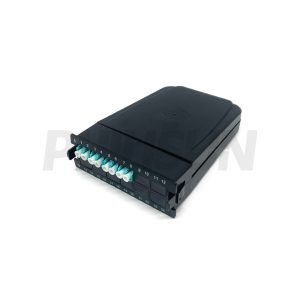
8 Fibers Cassettes Series
8-fiber MPO cassette modules convert trunk links to front patch ports. Choose adapter type, polarity and housing style.
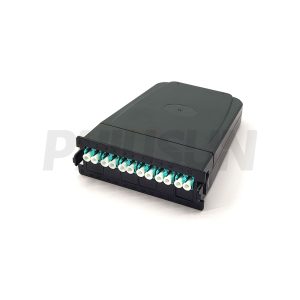
12 Fibers Cassettes Series
12-fiber MPO cassette modules convert trunk links to front patch ports. Choose adapter type, polarity and housing style.
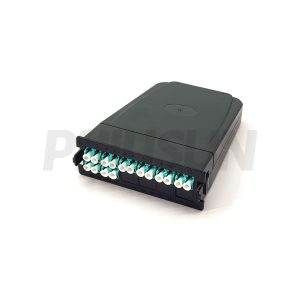
16 Fibers Cassettes Series
16-fiber MPO cassette modules convert trunk links to front patch ports. Choose adapter type, polarity and housing style.
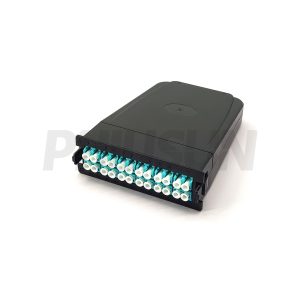
24 Fibers Cassettes Series
24-fiber MPO cassette modules convert trunk links to front patch ports. Choose adapter type, polarity and housing style.
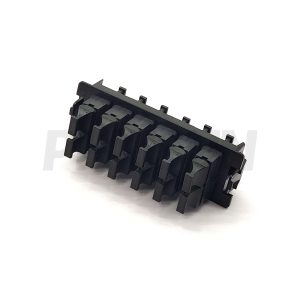
Panel Series
Adapter panel options support clean front-panel fiber presentation. Match adapter type, port count and enclosure layout.
Not Sure Which MPO Cassette You Need?
Tell us your fiber count, connector type, and network architecture, and Philisun’s team will recommend the most suitable MPO cassette solution for your deployment. Our modular MPO to LC/SC designs simplify fiber management, improve scalability, and ensure reliable performance for high-density networks.
Related Fiber Optic Products

MPO Cassette Guides & Modular Fiber Solutions Insights
What Is a Fiber Optic Cable? Everything You Need to Know
Guide to fiber optic cables: single-mode, multimode, indoor/outdoor uses, and PHILISUN products for high-speed, reliable networks.
Choosing Bulk Fiber Optic Cable Suppliers: A Quality Control Checklist
Looking for bulk fiber optic cable suppliers? Don’t compromise on quality. Learn how to vet suppliers based on Interferometry testing, IL/RL reports, and LSZH/CMP compliance. Partner with PHILISUN for reliable volume orders.
Fiber vs Ethernet: 7 Critical Differences for 400G Network Scale
Fiber wins the scalability battle. We detail 7 differences: Fiber handles 400G+ with lower TCO and unlimited distance, while Ethernet hits limits at 10G.
MPO Cassette Modules selection guide
PHILISUN MPO Cassette Modules support modular MPO-to-LC, MPO-to-SC or MPO-to-MPO handoff points for structured cabling and rack-level distribution. This page is useful when a project needs a defined MPO mapping, factory test documentation and a repeatable part-number structure instead of a generic patch cable.
How to specify MPO Cassette Modules
- Map the link: confirm the connected transceivers, cassettes, panels or trunks, then document lane order and endpoint labels.
- Define the build: specify front adapter type, rear MPO port, fiber count, polarity, cassette material, insertion loss class, label plan and panel fit so the assembly matches optical performance, routing and service access requirements.
- Control polarity: align Method A, Method B, Method C or custom mapping with existing trunks, modules and patching records.
- Request evidence: ask for insertion loss, return loss, polarity verification, end-face inspection, serial labels and packaging groups.
Common deployment scenarios
Typical applications include pre-terminated trunk handoff, data center cross-connects, enterprise cabling upgrades and staged capacity expansion. For project planning, compare MPO fiber enclosures, MPO trunk cables, MPO harness cables, MPO cable assemblies, fiber optic products and contact PHILISUN.
Procurement and QA checklist
Before releasing the order, confirm whether the assembly will be treated as a standard spare, a labeled project component or a controlled part in a documented cabling system. This decision affects packaging, serial traceability, drawing review and how installers match each piece to the rack schedule.
- Optical budget: reserve loss margin for adapters, cassettes, panels and field cleaning rather than judging the cable alone.
- Mechanical route: check bend radius, pulling direction, trunk entry point, cabinet depth and whether the cable needs extra protection.
- Compatibility: verify the connected transceiver, cassette or enclosure accepts the selected fiber count, connector gender and key orientation.
- Documentation: keep the part number, route label, test report and packing group aligned so repeat orders do not drift from the approved build.
Installation notes
Clean and inspect MPO end faces before connection, protect unused connectors with dust caps and avoid forcing a keyed connector into the wrong adapter. For dense moves, additions and changes, stage cables by rack or route group so technicians can validate polarity and labels before the final link test.
MPO Cassette Modules FAQ
What information is needed for a quote?
Share the fiber count, connector gender, polarity method, length, fiber mode, jacket requirement, label format and the equipment or panel used at each end.
Can PHILISUN support custom polarity or labels?
Yes. PHILISUN can build custom polarity, lane maps, lengths, colors, packaging groups and labels when the project provides a route or port plan.
Which test records should be requested?
Common records include insertion loss, return loss, polarity verification, end-face inspection and serial traceability for each assembly or cassette.