

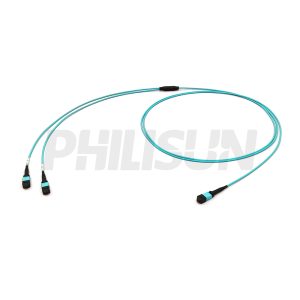
MPO8-2*MPO4 Series
MPO8-2*MPO4 breakout assemblies map MPO lanes for switches, cassettes and panels. Confirm polarity, pinning, fiber type and leg length.
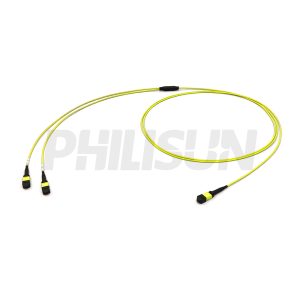
MPO12-2*MPO6 Series
MPO12-2*MPO6 breakout assemblies map MPO lanes for switches, cassettes and panels. Confirm polarity, pinning, fiber type and leg length.
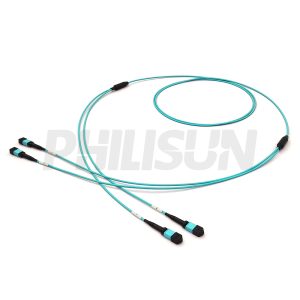
2*MPO12-2*MPO12 Series
2*MPO12-2*MPO12 breakout assemblies map MPO lanes for switches, cassettes and panels. Confirm polarity, pinning, fiber type and leg length.
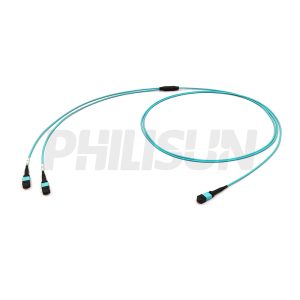
MPO16-2*MPO8 Series
MPO16-2*MPO8 breakout assemblies map MPO lanes for switches, cassettes and panels. Confirm polarity, pinning, fiber type and leg length.
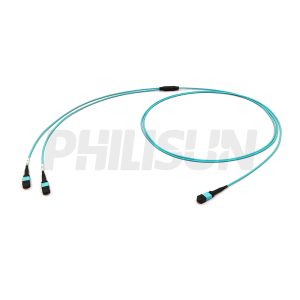
MPO24-2*MPO12 Series
MPO24-2*MPO12 breakout assemblies map MPO lanes for switches, cassettes and panels. Confirm polarity, pinning, fiber type and leg length.
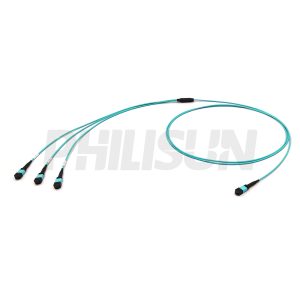
MPO24-3*MPO8 Series
MPO24-3*MPO8 breakout assemblies map MPO lanes for switches, cassettes and panels. Confirm polarity, pinning, fiber type and leg length.
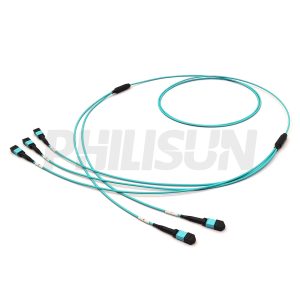
2*MPO12-3*MPO8 Series
2*MPO12-3*MPO8 breakout assemblies map MPO lanes for switches, cassettes and panels. Confirm polarity, pinning, fiber type and leg length.
MPO Breakout Cable Selection Guide
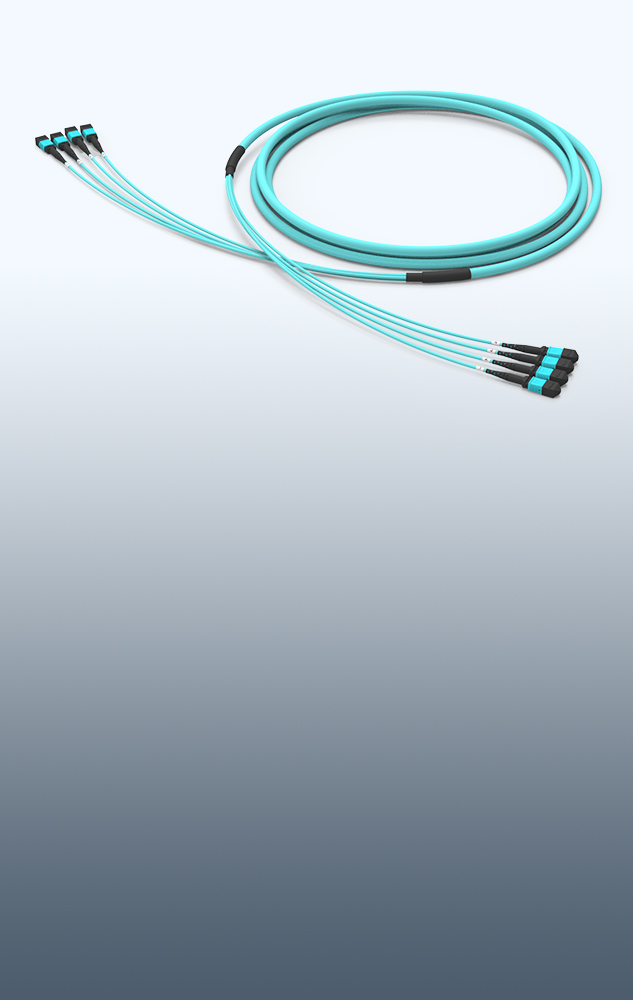
MPO breakout cables split a high-density MPO interface into smaller MPO channels so parallel optics links can be mapped cleanly between transceivers, patch panels and trunk routes. Use the fiber count, connector gender, polarity and lane assignment to choose the right breakout layout before confirming length, jacket, labels and test records.
| Breakout layout | Typical use | Key specification points | Browse series |
|---|---|---|---|
| MPO8 to 2xMPO4 | Parallel optics links where 8-fiber interfaces split into two 4-fiber channels. | Lane map, gender, polarity, fiber mode, jacket and link loss target. | MPO8-2MPO4 Series |
| MPO12 to 2xMPO6 | Base-12 breakout layouts and high-density rack patching. | MPO-12 mapping, pinned or unpinned side, polarity and label format. | MPO12-2MPO6 Series |
| MPO16 to 2xMPO8 | 400G/800G planning with MPO16 parallel optics and grouped channels. | MPO16 lane assignment, fiber type, connector gender and low-loss grade. | MPO16-2MPO8 Series |
| MPO24 to 2xMPO12 | Higher-density trunk handoff and base-12 channel grouping. | MPO24 pinning, polarity, route labels, fanout length and packing group. | MPO24-2MPO12 Series |
How to specify MPO breakout cables
- Map the optical lanes: confirm the source port, target port, lane order and whether the breakout supports 400G, 800G or another parallel optics design.
- Choose connector details: MPO8, MPO12, MPO16 or MPO24, pinned or unpinned gender, key orientation and connector end layout.
- Confirm polarity: align the breakout with MPO trunk cables, cassettes, harness cables and transceiver lane mapping.
- Set route requirements: length, fanout leg length, bend radius, jacket, fiber mode, label format and packaging group should match the rack route.
- Request documentation: insertion loss, return loss, polarity verification, end-face inspection and serial labels help simplify installation handoff.
For a larger project, coordinate MPO breakout cables with MPO cable assemblies, MPO harness cables, optical transceivers and data center cabling routes. PHILISUN can help translate lane mapping into a practical project BOM.
MPO Breakout Cable FAQ
What is an MPO breakout cable?
An MPO breakout cable splits one high-density MPO link into multiple smaller MPO channels. PHILISUN MPO breakout cables are used for parallel optics, 400G/800G link splitting, data center patching and high-density fiber route planning.
How is an MPO breakout cable different from an MPO harness cable?
MPO breakout cables on this page focus on MPO-to-MPO fanout layouts such as MPO8 to 2xMPO4 or MPO16 to 2xMPO8. MPO harness cables are often used for MPO-to-LC, MPO-to-SC or other connector breakout layouts, depending on the patching architecture.
How do I choose MPO8, MPO12, MPO16 or MPO24 breakout layouts?
Start with the transceiver lane count, port form factor, fiber count and target equipment mapping. MPO8 and MPO16 are often used in parallel optics planning, while MPO12 and MPO24 can support base-12 or higher-density trunk designs.
Which polarity information is needed?
Provide the port mapping, lane assignment, connector gender, pinned or unpinned side, polarity method and the products connected on both ends. This helps align breakout cables with MPO trunk cables, cassettes and transceivers.
What information is needed for a custom MPO breakout cable quote?
Provide fiber count, MPO connector type, gender, polarity, breakout mapping, fiber mode, jacket, length, labels, packaging group and test report requirements. For a full product plan, review MPO cable assemblies or contact PHILISUN.
Have Questions About MPO to MPO Breakout Cables?
Tell us your transceiver type and port configuration, and Philisun’s team will recommend the most suitable MPO breakout cable for your application. Our solutions support high-speed MPO to MPO breakout for 400G and 800G networks, including OSFP and QSFP-DD architectures.
Related Fiber Optic Products
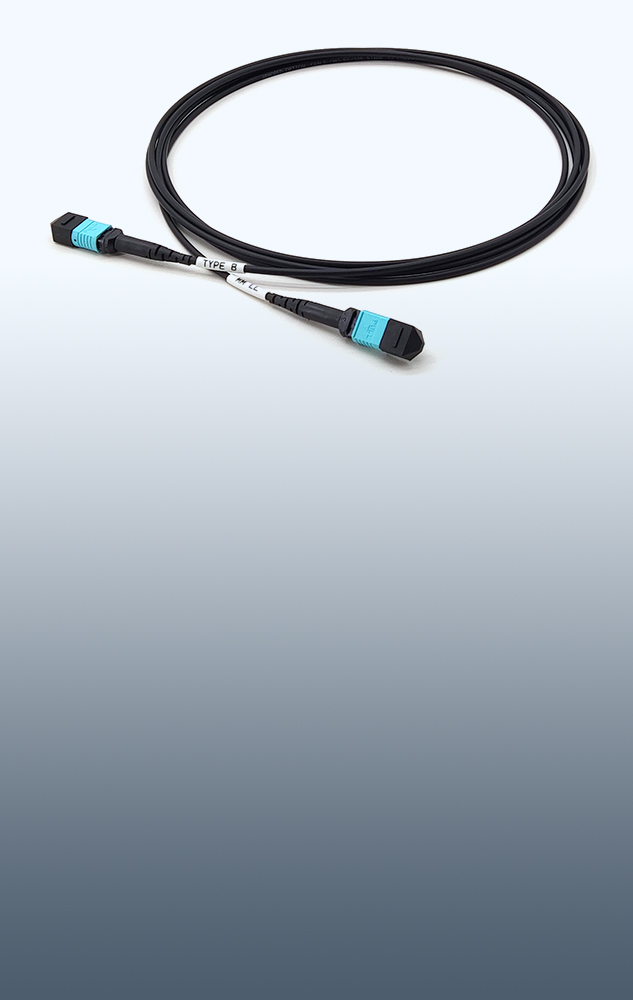

MPO Cassette Guides & Modular Fiber Solutions Insights
Fiber Optic Color Code Chart: Cable, Jacket & Connector Guide
Learn everything about the fiber optic color code, from strand to connector. Discover how color coding improves network clarity and reliability — with insights from PHILISUN.
How Do Fiber Optics and Spine-Leaf Define Enterprise Data Centers?
Master the modern enterprise data center: Learn how the Spine-Leaf network architecture and high-density fiber optics (MPO/MTP) deliver the guaranteed low latency and predictable performance required for AI, NVMe storage, and 400G/800G connectivity.
How to Clean a Fiber Optic Connector in 7 Steps
Use the technician’s 7-step protocol to clean a fiber optic connector, covering dry/wet methods, MPO specialization, and IEC 61300-3-35 inspection to eliminate 400G+ link failures.
MPO breakout cables specification checklist for serious buyers
MPO breakout cables should be selected as part of a complete optical channel, not as an isolated SKU. For PHILISUN customers, the practical goal is to convert the network requirement into a repeatable specification that production, testing, packing and field installation can all follow. That means the buyer should define the link role, equipment interface, cable route, operating environment and acceptance records before comparing unit prices.
This checklist also helps teams compare alternatives consistently across repeated purchasing cycles.
In most projects, MPO breakout cables serve as fanout assemblies that convert multi-fiber MPO links into duplex or simplex connector legs for equipment handoff. The correct choice depends on the port type, required speed, route distance, density target, maintenance process and future migration plan. A product that looks suitable on a data sheet can still create field issues if the bend radius, label format, polarity, coding, packing group or test report does not match the real deployment.
Confirm the link role before requesting a quote
Start by naming where the assembly will be used: switch-to-server, rack-to-rack, panel-to-panel, equipment breakout, backbone, access link, AI cluster link or maintenance spare. This small step makes the rest of the selection much easier. A short high-density rack link may prioritize handling, airflow and connector density, while a backbone or pre-terminated route may prioritize length accuracy, pulling protection, loss budget and labeling discipline.
Also decide whether the order is for a one-time replacement, a pilot build, a repeat production batch or a multi-site deployment. Replacement orders need exact compatibility with existing stock. Pilot orders need enough detail to validate the architecture. Multi-site orders need stable naming, packing and test documentation so every site receives the same interpretation of the specification.
Lock down the technical options
The most common ordering mistakes happen when one important option is assumed instead of written down. Use the checklist below before finalizing a bill of materials:
- fiber count
- breakout leg type
- polarity
- gender
- leg length
- test record format
- required speed or application
- equipment brand and port type
- route length and service-loop allowance
- connector, polish, gender or polarity details
- fiber mode or cable construction
- jacket color, rating and diameter
- label format and packing group
- insertion loss, return loss or compatibility test requirement
When these details are known, PHILISUN can recommend whether the project should use standard stock, a custom length, a low-loss option, a different cable family or a different migration path. This is especially important for 100G, 400G and 800G environments, where a small mismatch in reach, connector type, polarity or host support can delay deployment.
Plan testing, labels and spares at the same time
Testing and documentation are part of the product, not an afterthought. For fiber assemblies, request the records that match the risk of the link: insertion loss, return loss, polarity or continuity verification, end-face inspection, DOM/DDM compatibility where relevant, and any serial or packing identifiers needed by the installation team. For repeated orders, keep the same naming rule across labels, packing lists and test files.
Spare planning should follow the same logic. Keep spares grouped by form factor, fiber type, length, polarity, coding and equipment platform. If two assemblies look similar but serve different routes or hosts, use labels and packing groups to prevent accidental mixing. This reduces troubleshooting time and makes future expansion easier.
When to request a custom review
Request a custom review when the project includes non-standard lengths, mixed equipment brands, high-density racks, special jacket requirements, strict loss limits, phased deployment, or a migration from 100G to 400G or 800G. These situations benefit from checking the full channel instead of approving the product line one item at a time. A short review can confirm whether the current specification is complete, whether a related product family would reduce risk, and whether the order needs special labels, packing groups or compatibility testing before shipment.
Related PHILISUN planning pages
For adjacent product families and solution planning, review MPO cable assemblies, MPO trunk cables, MPO harness cables, MPO cassettes and contact PHILISUN.