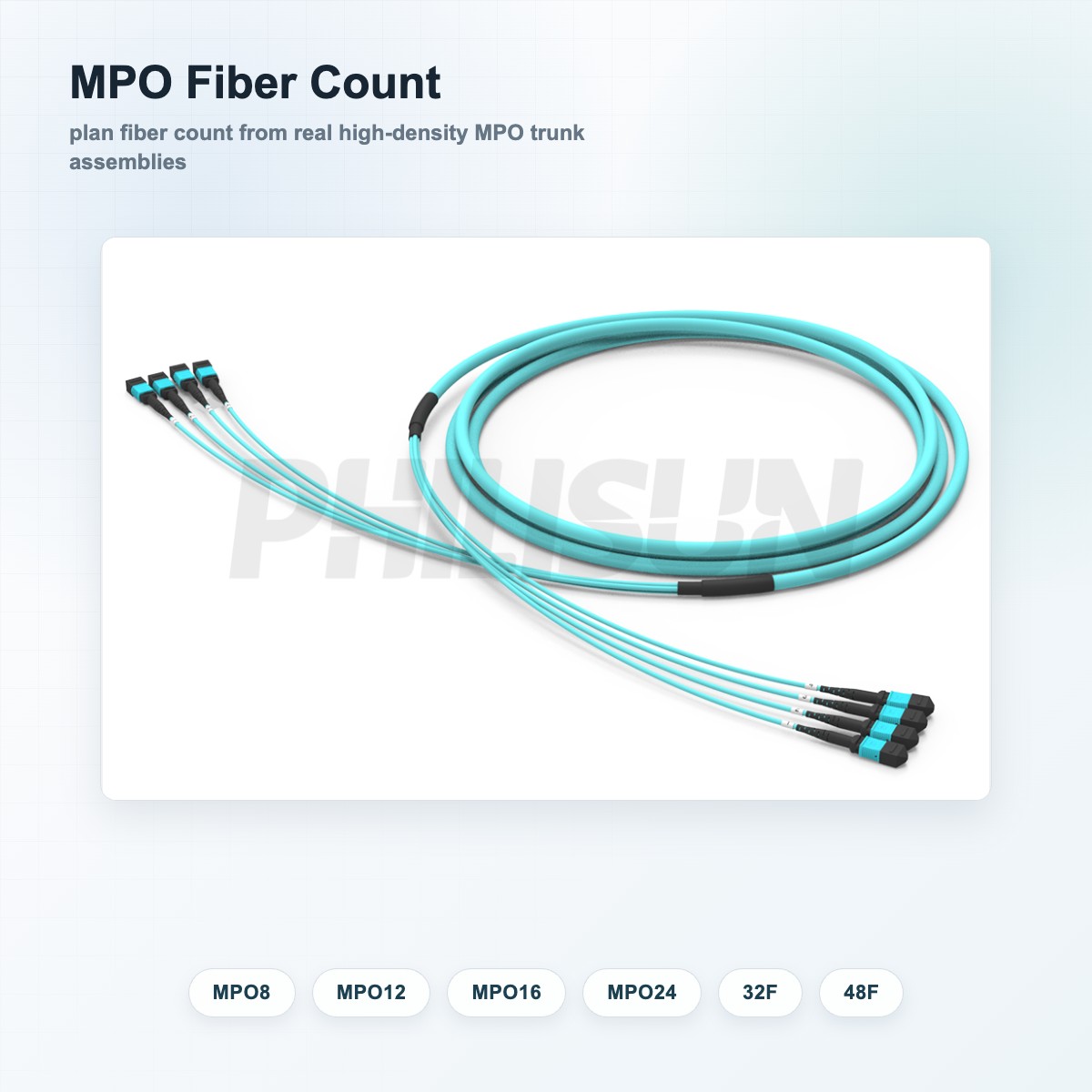

MPO fiber count tells you how many fibers are carried inside one MPO connector or MPO cable assembly. It is one of the most important details in high-density data center cabling because it affects transceiver compatibility, breakout design, rack density, polarity planning, and future upgrade paths.
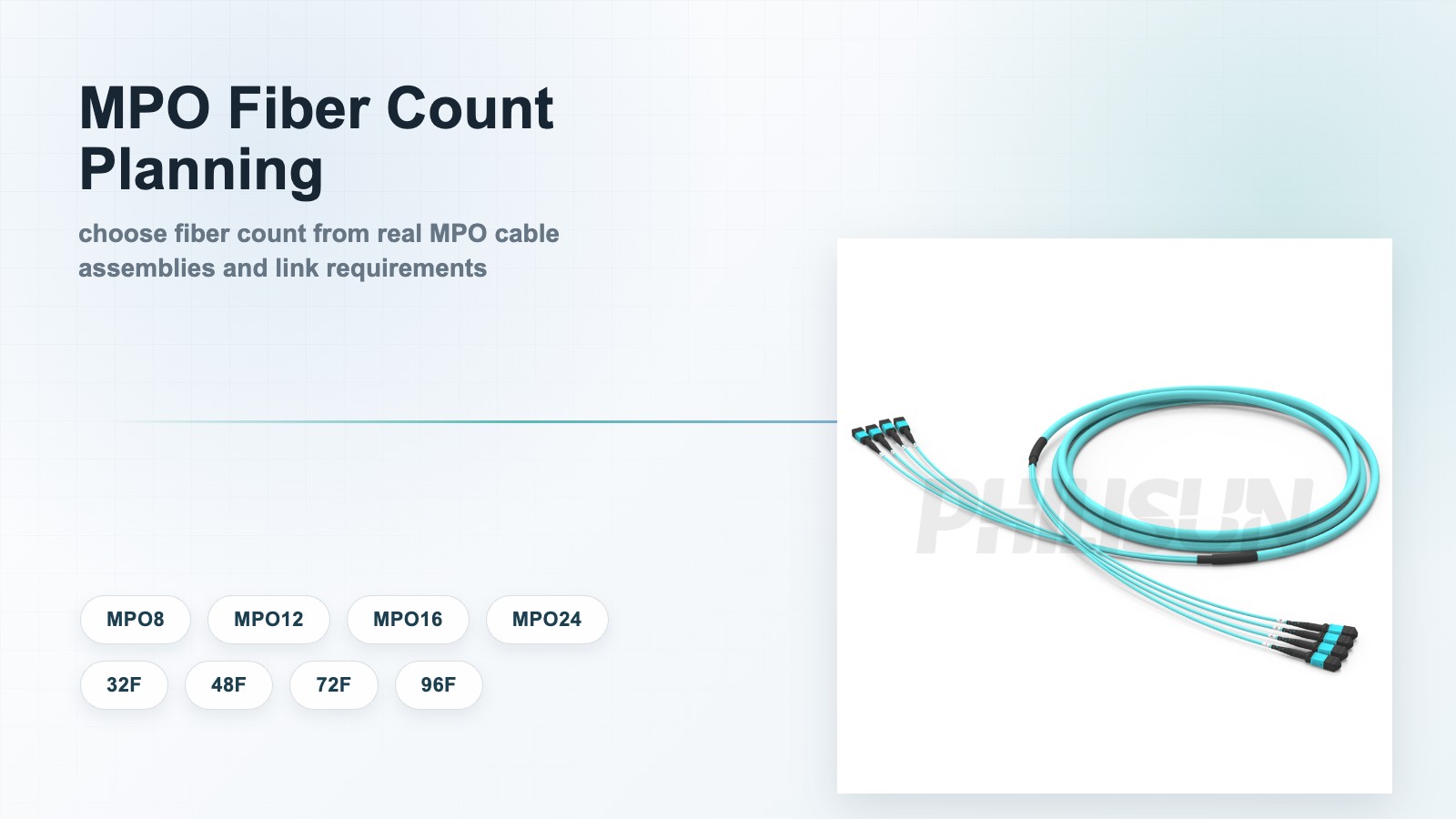
The most common MPO fiber counts include MPO8, MPO12, MPO16, and MPO24. High-fiber MPO trunk cables may also use 32, 36, 48, 72, 96, 144, or more fibers for backbone cabling.
The short answer:
- MPO8 is often used for parallel optics and efficient 40G/100G style channel planning.
- MPO12 is widely used in traditional MPO cabling systems and can support many backbone and cassette designs.
- MPO16 is often used for higher-density parallel optical applications, including some 400G/800G designs.
- MPO24 can provide very high density and can be split into multiple lower-fiber-count paths.
- High-fiber trunks are used when many MPO channels need to run between racks, cabinets, or patching zones.
The best choice depends on your transceiver, speed, fiber type, connector gender, polarity method, and whether the link is point-to-point, cassette-based, or a breakout design.
Start With the Module
Do not choose MPO8, MPO12, MPO16, or MPO24 by habit. Start with the transceiver interface, lane count, fiber mode, distance, and breakout requirement.
Quick Comparison
| Fiber count | Common use | Strength | Planning note |
|---|---|---|---|
| MPO8 | Parallel optical links and breakout designs | Efficient use of 8 fibers | Good fit when 8 active fibers are required |
| MPO12 | General MPO trunk and cassette systems | Common and flexible | May include unused fibers in some 8-fiber applications |
| MPO16 | Higher-speed parallel optics | Supports wider parallel channels | Must match module and fiber mapping carefully |
| MPO24 | High-density cabling and breakout | Carries more fibers in one connector | Useful for dense patching and split configurations |
| 48 to 144 fibers | Backbone trunk cabling | Scalable rack-to-rack cabling | Best for structured cabling and future expansion |
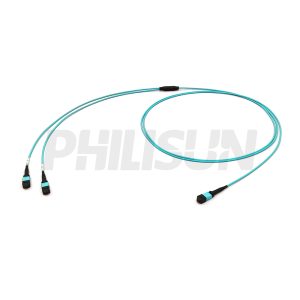
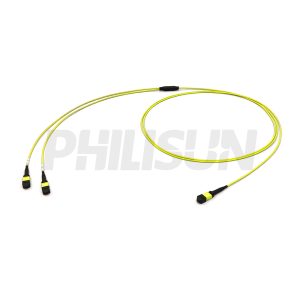
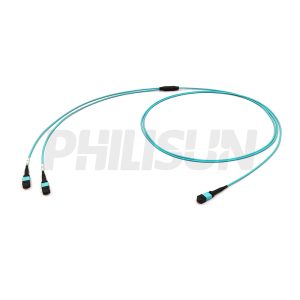
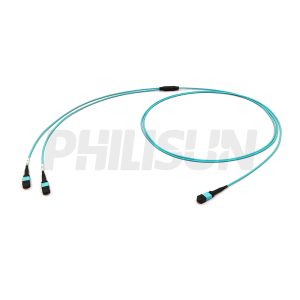
If you are not sure which fiber count is correct, start with the optical module. The transceiver interface and lane count usually determine the required active fibers. The cable system should then be designed around that requirement.
What Does MPO Fiber Count Mean?
MPO fiber count refers to the number of individual optical fibers terminated in the MPO connector or carried through the MPO cable assembly. A higher count means more fibers are available in one compact connector, but it also means the mapping and polarity must be managed carefully.
In a simple duplex LC link, one fiber transmits and one fiber receives. MPO cabling is different because one connector can hold multiple transmit and receive fibers. This makes MPO useful for parallel optics, high-density trunks, and structured data center cabling.
Common MPO cable assemblies include:
- MPO trunk cables
- MPO harness cables
- MPO breakout cables
- MPO jumpers
- MPO cassettes
- MPO fiber enclosures
PHILISUN groups these solutions under MPO Cable Assemblies for data center, telecom, AI, HPC, and enterprise networks.
MPO8: Efficient 8-Fiber Parallel Cabling
MPO8 uses eight fibers in the connector path. It is often selected when the application needs an efficient 8-fiber parallel connection.
MPO8 can be useful for designs where eight active fibers are required and unused fibers should be minimized. This can make cabling cleaner in certain 40G and 100G parallel optic environments, depending on the transceiver type and link architecture.
Typical reasons to choose MPO8 include:
- You need an 8-fiber parallel optical link.
- You want to reduce unused fibers compared with a 12-fiber layout.
- Your transceiver or breakout design is based on 8 active fibers.
- You need a compact cable assembly for high-density patching.
PHILISUN offers products such as MPO8-2MPO4 Series for MPO breakout and high-density cabling applications.
MPO12: Common and Flexible MPO Cabling
MPO12 is one of the most widely used MPO formats. It carries 12 fibers and appears in many trunk, cassette, and backbone cabling systems.
The main advantage of MPO12 is availability and flexibility. Many data center cabling systems are built around 12-fiber structures, making it easy to integrate with cassettes, panels, and existing fiber infrastructure.
MPO12 is commonly used for:
- Backbone trunk cabling
- MPO cassettes
- MPO to LC fanout assemblies
- 40G and 100G cabling systems
- Data center migration projects
The planning tradeoff is that some parallel optic applications use only eight active fibers. In those cases, an MPO12 assembly may leave four fibers unused unless the system is designed to use or manage them properly.
For breakout applications, see PHILISUN MPO12-2MPO6 Series.
MPO16: Higher-Density Parallel Fiber Planning
MPO16 carries 16 fibers and is often considered for high-speed parallel optics where more fiber lanes are required. It can support dense channel planning for certain 400G and 800G architectures, depending on the module standard and equipment design.
MPO16 should be selected carefully because it must match the optical interface, transceiver lane structure, and polarity plan. It is not simply a higher-count replacement for MPO12.
Choose MPO16 when:
- The transceiver interface requires or benefits from 16-fiber parallel cabling.
- The network design calls for higher-density parallel optical paths.
- You need an MPO-to-MPO breakout arrangement based on 16 fibers.
- The rack design requires compact high-speed cabling.
PHILISUN MPO16-2MPO8 Series can support applications where a 16-fiber MPO path needs to be split into smaller MPO connections.
For more general split configurations, PHILISUN MPO Breakout Cable assemblies can help match a higher-fiber-count MPO path to smaller MPO channels.
MPO24: High-Density MPO Cabling and Breakout
MPO24 carries 24 fibers in one MPO connector. It is useful when high density is important and the cabling system needs to carry more fibers through a compact interface.
MPO24 may be used in backbone cabling, high-density patching, and breakout designs. It can also be split into smaller MPO channels, depending on the required mapping.
Good use cases include:
- High-density data center patching
- Backbone cabling with limited pathway space
- Parallel optical planning that requires more fiber lanes
- MPO breakout designs from 24 fibers to lower-count MPO connectors
See PHILISUN MPO24-2MPO12 Series for an example of high-fiber-count MPO breakout cabling.
High-Fiber MPO Trunks: 48, 72, 96, 144 Fibers and More
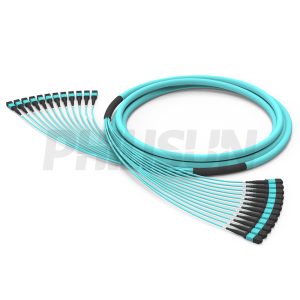
When a data center needs many links between two locations, individual low-count cables can become hard to manage. This is where high-fiber MPO trunk cables become useful.
High-fiber trunks can carry many fibers through a factory-terminated assembly. Common trunk counts include 48, 72, 96, 144, or custom fiber counts. These trunks are usually used between patch panels, cabinets, rows, or distribution areas.
High-fiber trunks are useful for:
- Rack-to-rack backbone cabling
- Zone-to-rack fiber distribution
- High-density patch panel interconnection
- Pre-terminated data center buildouts
- Future migration to 100G, 400G, or 800G networks
PHILISUN MPO Trunk Cable solutions include high-density trunk options, including products such as MPO 144-Fiber Trunk Cables.
How to Match MPO Fiber Count to Network Speed
Network speed alone does not determine the MPO fiber count. A 100G link can use different optical modules, and those modules may use different connector and fiber requirements. The same is true for 400G and 800G.
Start with these questions:
- What transceiver form factor is used?
- What optical standard is required?
- Is the link parallel or duplex?
- Is the fiber single-mode or multimode?
- What connector interface does the transceiver use?
- Does the design require breakout?
- What polarity method is used?
For example, a duplex LC-based 100G module has different cabling requirements from a parallel MPO-based 100G module. A 400G or 800G optical link may also require different MPO formats depending on whether it uses SR, DR, FR, or another module type.
The lesson is simple: do not choose MPO8, MPO12, MPO16, or MPO24 by habit. Choose it based on the transceiver and channel design.
Fiber Count and Polarity Must Be Planned Together
MPO fiber count and polarity are connected. The cable may have the correct number of fibers, but if the transmit and receive paths are mapped incorrectly, the link may fail.
Common MPO polarity methods include Type A, Type B, and Type C. The right method depends on how the trunks, cassettes, patch cords, harnesses, and equipment ports are connected.
For example, changing from an MPO12 trunk to an MPO8 or MPO24 design may require a fresh look at fiber mapping. The same applies when using breakout cables.
Before ordering, confirm:
- Polarity method
- Connector gender
- Pin position
- Fiber mapping
- Transceiver transmit and receive layout
- Whether cassettes or adapter panels are part of the channel
For a detailed explanation, read the PHILISUN MPO Polarity Guide.
MPO Fiber Count Selection Table
| Project requirement | Recommended direction |
|---|---|
| Need a common MPO backbone system | Consider MPO12 or high-fiber MPO trunks |
| Need efficient 8-fiber parallel links | Consider MPO8 |
| Need higher-density parallel optic planning | Consider MPO16 or MPO24 if supported by the module |
| Need to split one MPO path into smaller MPO channels | Consider MPO breakout cables |
| Need many rack-to-rack fibers | Consider 48, 72, 96, or 144-fiber MPO trunk cables |
| Need MPO to duplex LC connections | Consider MPO harness cables rather than MPO-to-MPO breakout |
This table is only a starting point. The final choice should be based on the exact optical module, link distance, fiber plant, and equipment interface.
Common Ordering Mistakes
Mistake 1: Treating all MPO connectors as interchangeable
MPO8, MPO12, MPO16, and MPO24 are not automatically interchangeable. Each has a different fiber count and may require different adapter, cassette, breakout, and polarity planning.
Mistake 2: Ignoring unused fibers
Using MPO12 for an 8-fiber application may leave unused fibers unless the design accounts for them. This may be acceptable in some systems, but it should be intentional.
Mistake 3: Choosing fiber count before choosing the transceiver
The transceiver standard should guide the cabling choice. Select the module first, then design the MPO cabling path around it.
Mistake 4: Forgetting future migration
A cabling system built only for today's port count may become limiting during a 400G or 800G migration. High-fiber trunks can provide room for expansion if the pathway and patching design are planned correctly.
Mistake 5: Missing the test report requirement
For high-speed links, insertion loss and return loss matter. Request factory test data and confirm whether the cable needs standard loss or low-loss performance.
Ordering Checklist
Before ordering MPO fiber assemblies, prepare this information:
- Target speed, such as 40G, 100G, 200G, 400G, or 800G
- Transceiver type and connector interface
- Required fiber count, such as MPO8, MPO12, MPO16, MPO24, 48, 72, 96, or 144 fibers
- Fiber mode, such as OS2, OM3, OM4, or OM5
- Cable type, such as trunk, harness, jumper, cassette, or breakout
- Connector gender and pin requirement
- Polarity method
- Cable length and breakout leg length
- Jacket type, such as LSZH, OFNP, or OFNR
- Insertion loss grade and test report requirement
- Application, such as data center, telecom, AI cluster, HPC, cloud, or enterprise LAN
The more complete this information is, the easier it is to select the correct MPO assembly without rework.
Which MPO Fiber Count Should You Choose?
Choose MPO8 when the design needs efficient 8-fiber parallel cabling.
Choose MPO12 when you need a common, flexible MPO format for backbone, cassette, or mixed cabling systems.
Choose MPO16 when the transceiver and link design require higher-density parallel fiber paths.
Choose MPO24 when you need higher connector density or want to split 24 fibers into smaller MPO paths.
Choose 48, 72, 96, or 144-fiber MPO trunks when the main requirement is scalable rack-to-rack or zone-to-rack backbone cabling.
If the project is complex, do not start by asking "Which MPO connector should I buy?" Start by asking "What transceiver, speed, distance, fiber mode, and rack layout do I need to support?"
FAQ
What is the difference between MPO8 and MPO12?
MPO8 uses eight fibers, while MPO12 uses twelve fibers. MPO8 can be efficient for 8-fiber parallel applications. MPO12 is common in many structured cabling systems and may be used in trunks, cassettes, and fanout designs.
Is MPO12 still useful for high-speed data centers?
Yes. MPO12 remains useful in many backbone and cassette systems. The key is to confirm whether all fibers are needed in the specific application or whether some fibers will be unused.
When should I use MPO16?
Use MPO16 when the optical module and channel design require a 16-fiber parallel path or when the cabling system is designed around 16-fiber breakout or high-density connections.
Is MPO24 only for 800G?
No. MPO24 is a high-density fiber count that can be used in different backbone and breakout designs. Whether it fits 800G depends on the specific transceiver and network architecture.
Can PHILISUN help choose the right MPO fiber count?
Yes. Share your transceiver type, link speed, fiber mode, rack distance, polarity requirement, and connector interface. PHILISUN can recommend MPO8, MPO12, MPO16, MPO24, or high-fiber trunk options based on the deployment.
Need Help Specifying MPO Fiber Count?
If you are planning 40G, 100G, 400G, or 800G cabling, PHILISUN can help select the right MPO fiber count and cable assembly.
Send us your target speed, module type, fiber mode, rack distance, and required connector layout. We can recommend MPO trunk, harness, breakout, jumper, cassette, or enclosure solutions for your network.