
Why Choosing an SFP Module Is About More Than Speed
In switches, routers, servers, and storage systems, SFP modules remain one of the most widely used interface options. As network speeds continue to increase, different types of SFP transceivers, including SFP, SFP+, SFP28, and QSFP, are now widely deployed across enterprise networks, data centers, and high-speed interconnect environments.
In practice, however, choosing the right fiber module is not just about speed. module type, transmission distance, fiber type, device compatibility, and long term maintenance needs can all affect purchasing decisions and deployment results.
This guide covers the key questions buyers and engineers usually ask: what an SFP transceiver is, how SFP, SFP+, SFP28, and QSFP differ, what common SFP module types are used in different networks, and how to choose the right module more efficiently for real world deployments.
What Is an SFP Module and What Role Does It Play in Network Infrastructure?
SFP module, short for small form factor pluggable, is a standardized interface module used in switches, routers, firewalls, server NICs, and other network devices to support different connection media.
The Core Function of SFP Modules
SFP transceiver is signal conversion between the device and the link. In fiber applications, it converts electrical signals from the equipment into optical signals for transmission. In some cases, SFP modules can also provide copper connectivity.
Why SFP Modules Are Still Widely Used
Compared with earlier and larger module formats, SFP replacement and maintenance easier. For enterprise networks and data centers, this flexibility matters because the same device can support different speeds, distances, and media types by using the right transceiver.
What Are the Differences Between SFP, SFP+, SFP28, and QSFP Modules?
What Are These Optical Transceiver Types?
SFP, SFP+, SFP28, and QSFP are all pluggable transceiver formats, but they are designed for different speed levels and network applications.
In general, SFP modules are used for 1G links, SFP+ transceivers are mainly used for 10G, and SFP28 are used for 25G. QSFP are designed for higher bandwidth applications, typically 40G, 100G, and above.
For a quick comparison of typical speeds and application scenarios, see the table below.
Typical Use Cases for Different Module Types
| Module Type | Typical Speed | Common Applications | Best Fit in the Network |
| SFP | 1G | Gigabit switching, access networks, legacy device interfaces | Access layer, basic interconnects |
| SFP+ | 10G | Server connectivity, switch uplinks, enterprise network upgrades | Access to aggregation layer |
| SFP28 | 25G | 25G server links, spine leaf architecture, high density data centers | Server access, high density networks |
| QSFP | 40G / 100G and above | Data center backbone, high speed uplinks, aggregation links | Aggregation layer, core layer, backbone links |
What Are the Common Types of SFP Module and Where Are They Used?
By Transmission Medium
From the perspective of transmission media, common SFP can generally be grouped into fiber optic SFP modules and copper SFP modules. The difference is not only about interface type, but also about deployment method and application environment.
What Is a Fiber Optic SFP Module?
A fiber optic SFP is used for fiber links and transmits data through optical signals. It is better suited for medium to long distance connections and network environments that require stronger resistance to interference.
What Is a Copper SFP Module?
A copper SFP is typically used for copper cabling, usually with an RJ45 interface. Its deployment method is closer to traditional Ethernet connections.
By Transmission Distance
By transmission distance, common module types are usually divided into SR, LR, ER, and ZR. The main difference between them is the supported reach and the type of link they are designed for.
What Is SR?
SR stands for Short Reach. It is mainly used for short distance transmission, typically inside equipment rooms, between racks, or in short range data center interconnects.
What Is LR?
LR stands for Long Reach. It is mainly used for medium to long distance links, such as building to building connections, campus networks, or longer equipment interconnects.
What Are ER and ZR?
ER and ZR are designed for longer and ultra long distance transmission. They are more commonly used in backbone networks, dedicated links, or longer fiber routes.
By Fiber Type
By fiber type, SFP transceivers are usually divided into single mode and multimode modules. This classification directly affects whether the module can work properly with the existing fiber link.
What Is a Single Mode SFP Module?
A single mode SFP is typically used with OS2 fiber and is better suited for longer distance transmission. It is common in campus networks, metro networks, and medium to long distance backbone links.
What Is a Multimode SFP Module?
A multimode fiber SFP is typically used with OM3, OM4, or OM5 fiber and is more commonly found in short distance, high speed connections inside data centers.
By Special Application
In addition to standard modules, SFP can also be classified by special transmission needs, such as BiDi, CWDM, and DWDM. These types are usually designed for more specific network applications rather than general deployment.
What Is BiDi?
A BiDi SFP module supports bidirectional transmission over a single fiber strand. It is well suited for deployments where fiber resources are limited or where fewer fiber runs are preferred.
What Is CWDM?
A CWDM SFP module uses different wavelengths to transmit multiple signals over the same fiber. It is suitable for networks that need better fiber utilization and higher transmission capacity.
What Is DWDM?
A DWDM SFP uses tighter wavelength spacing and is better suited for higher capacity, longer distance, and more complex transmission networks.
The differences between SFP modules do not come from speed alone. Even at the same data rate, modules may be suited for very different deployments because of media type, transmission distance, fiber type, or special functions. That is why choosing an SFP transceiver should always be based on actual link conditions rather than speed alone.
4 Steps to Choose the Right SFP Module
Step 1: Link Speed
The first step in selecting an SFP is to confirm the required link speed.
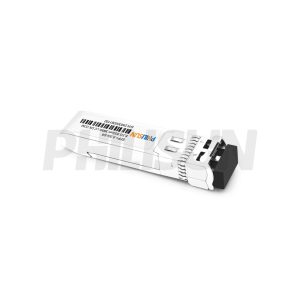
In most cases, 1G links correspond to SFP modules, 10G links typically use SFP+ transceivers, and 25G links usually require SFP28 transceivers. For higher bandwidth uplinks or backbone links, QSFP transceivers are usually the more relevant option. Based on common product coverage, SFP can support 100M to 4.25G, SFP+ can cover 8G, 10G, and 16G, SFP28 is typically used for 25G and 32G, and QSFP+ is mainly used in 40G applications.
Step 2: Transmission Distance
Once the speed is clear, the next step is to confirm the link distance. Short links usually point to SR, while longer links may require LR, ER, or ZR depending on the actual reach.
As a common reference, SFP can cover distances from 300 m to 160 km, SFP+ can support roughly 30 m to 120 km, SFP28 are commonly used from 30 m to 40 km, and QSFP+ can cover about 100 m to 80 km.
Step 3: Confirm the Fiber Type
You need to confirm whether the existing link uses single mode or multimode fiber. multimode SFP is typically used with OM fiber and is often associated with short reach applications at 850 nm. single mode SFP is usually used with OS2 fiber and is more suitable for longer distance transmission, commonly at 1310 nm or 1550 nm.
Step 4: Check Interface and Feature Requirements
Fianlly, check the interface format and any additional feature requirements, including whether DOM or DDM is needed.
In your current product range, SFP, SFP+, and SFP28 mainly use LC or SC interfaces, while QSFP+ transceivers can support MPO, LC, or SC depending on the application. If the deployment requires stronger visibility for maintenance, modules with DOM/DDM can provide more value because they can help monitor temperature, laser bias current, transmit and receive optical power.
What Should You Confirm Before Purchasing an SFP Module?
SFP Module Compatibility
After completing the basic selection, the next step is to confirm SFP module compatibility. Many devices, especially switches and routers, have specific requirements for module recognition.
Even if the optical specifications match, improper coding or compatibility handling may still lead to unrecognized modules, alarm issues, or ports that do not work properly. For that reason, it is important to confirm the device brand, model, and compatibility requirements
OEM Modules vs Compatible Modules
OEM modules offer a more direct fit in terms of brand consistency and procurement process, but they usually come with higher cost and may also have longer lead times.
Compatible SFP modules are already widely used in many projects. Their main advantages are better cost control, more flexible delivery, and broader platform coverage. However, the reliability of a compatible transceiver depends less on whether it is third party and more on whether the supplier has stable compatibility handling and testing capability.
To reduce rework and compatibility risk, it is recommended to confirm the following before purchasing:
- device brand and model
- link speed
- transmission distance
- single mode or multimode fiber type
- interface format
- wavelength requirement
- whether DOM/DDM is required
- whether pre coding is required
- whether testing reports or compatibility verification are needed
For enterprise network deployments, the more complete the purchasing check is upfront, the smoother the later deployment usually becomes.
How PHILISUN Simplifies Compatible SFP Module Deployment
PHILISUN’s compatible SFP module solutions are better understood in terms of application coverage rather than as isolated models.
Coverage Across Mainstream Speed Categories
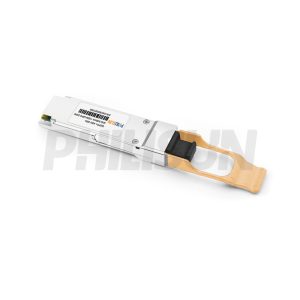
PHILISUN’s compatible transceiver portfolio covers SFP, SFP+, SFP28, and QSFP+ for mainstream 1G, 10G, 25G, and 40G network deployments.
Interface and Module Choices for Different Link Structures
SFP, SFP+, and SFP28 modules mainly use LC or SC interfaces, while QSFP+ can support MPO, LC, or SC depending on the application. PHILISUN also provides CWDM, DWDM, BiDi, RJ45 copper modules, and AOC solutions to support different link requirements within the same project.
Compatibility and Environmental Support for Multi Platform Deployment
For multi platform projects, PHILISUN products are available in commercial, extended, and industrial temperature ranges and support compatibility with major platforms such as Cisco, Juniper, Arista, HPE, NVIDIA, Huawei, and H3C. This helps reduce repeated confirmation work during deployment.
Compatibility Verification and Delivery Support
Whether a compatible transceiver is easy to deploy depends not only on the product itself, but also on whether key issues are addressed before shipment. PHILISUN focuses on moving compatibility confirmation, testing, and batch control forward to reduce onsite troubleshooting and rework.
- Performance testing
Basic optical and electrical testing can be completed before shipment to help confirm stable transmission performance. - Compatibility verification
Compatibility verification can be carried out for major switch and router platforms to reduce repeated checks caused by recognition issues after delivery. - Reliability screening
For more demanding applications, aging, temperature cycle, and stability testing can be used to complete a basic risk screening in advance. - Traceable quality control
Inspection and production records can be used for batch traceability, making later maintenance, replacement, and batch management easier.
From a deployment perspective, this support helps reduce onsite issues, shorten troubleshooting time after installation, and make later expansion and maintenance easier in batch projects.
Conclusion
For enterprise networks and data center deployments, a suitable SFP module depends on how well it matches the actual link environment, device requirements, and maintenance needs. Confirming speed, distance, fiber type, and compatibility requirements early can make deployment smoother and reduce follow up issues.
If you are evaluating 1G, 10G, 25G, or higher speed links, the next step is to organize your device model, transmission distance, fiber type, and interface requirements, then move on to compatibility and delivery planning.
Feel free to contact the PHILISUN team to discuss your network deployment needs and get more specific SFP transceiver recommendations.
FAQs About SFP Module
Can SFP and SFP+ be used interchangeably?
Not necessarily. Although they have similar form factors, they support different speed levels. Actual compatibility still depends on the device port.
What is the main difference between SFP+ and SFP28?
The main difference is speed. SFP+ transceivers are mainly used for 10G, while SFP28 modules are mainly used for 25G. They also differ in typical applications and interface requirements.
How can I tell whether an SFP module is compatible with a switch?
The safer approach is to confirm the switch brand, model, and port specification first, then verify compatibility before purchase. For compatible SFP modules, it is also important to confirm whether the module supports the required coding for the target platform.
Can single mode and multimode modules be mixed?
In most cases, no. The module type must match the actual fiber type in use. Otherwise, link establishment and transmission stability may be affected.
What is the difference between SR and LR modules?
SR is mainly used for short distance transmission, commonly inside equipment rooms and data centers. LR is more suitable for medium to long distance links, but the actual fiber type and transmission distance still need to be confirmed before deployment.
Are third party compatible transceivers reliable?
They can be reliable, but the key factor is whether the supplier has stable compatibility handling and testing capability. For B2B projects, reliability depends more on compatibility verification and delivery quality than on whether the module is OEM branded.