
High-performance optical networks use powerful laser sources, so fiber links must be designed with clear safety behavior during faults, maintenance and accidental disconnections. Automatic Power Reduction (APR) is a safety function that reduces or shuts down optical output when a fiber break, open connector or abnormal link condition is detected. This guide explains how APR works, how it differs from APC, and where safety-aware optical transceiver selection fits in a reliable fiber network.
What is Automatic Power Reduction (APR)?
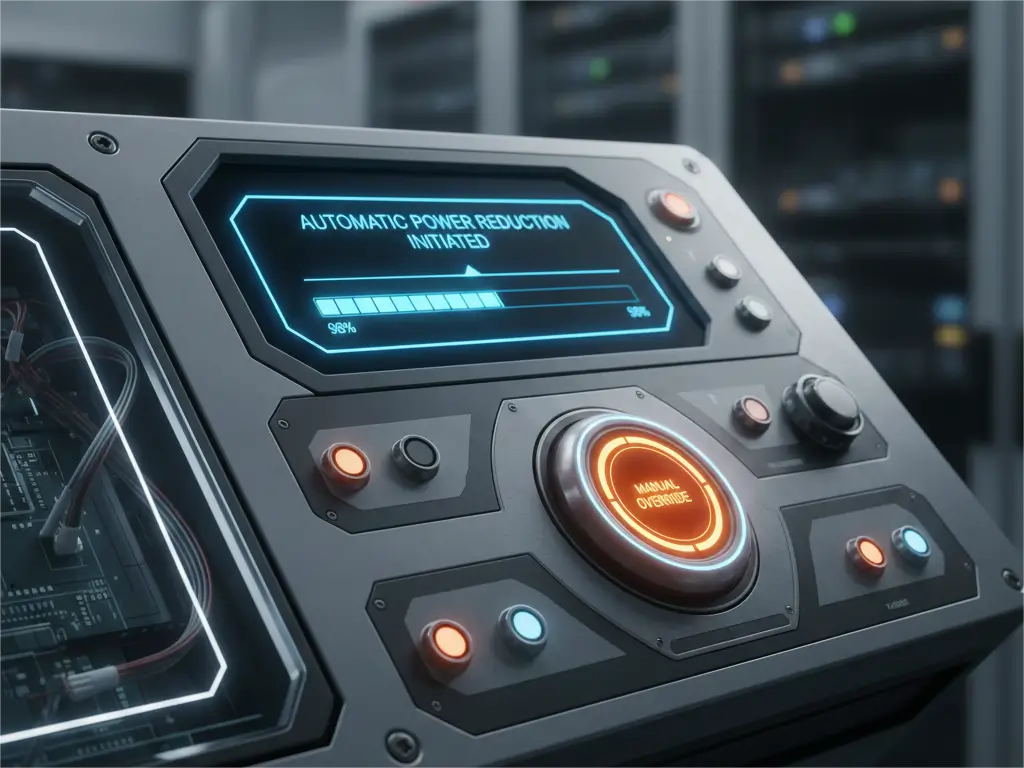
Automatic Power Reduction (APR) is a laser safety function used in optical communication systems. When a fiber break, open connector or abnormal link condition is detected, APR reduces or shuts down optical output power to help limit exposure risk until the fault is cleared and the link can safely recover.
In practice, APR works inside high-power optical transceivers, line cards or transport equipment by monitoring link health and moving the transmitter into a lower-power or shutdown state when the optical path is no longer behaving as expected.
When Does APR Reduce Optical Power?
APR is designed for abnormal link conditions where exposed or unstable optical output could create a safety risk. Common trigger scenarios include:
- A fiber cut or severe bend loss that causes the receive signal to drop unexpectedly.
- An open connector during installation, inspection or maintenance.
- Loss of the expected receive signal or supervision signal between two linked devices.
- Equipment behavior that indicates an unsafe or unstable optical link state.
- Recovery polling after the physical fault has been corrected.
The Mandate: IEC 60825-2 Compliance
The necessity for APR is firmly rooted in international standards, primarily the IEC 60825-2 (Safety of Laser Products). This standard dictates that any product that operates internally at a hazardous power level (Class 3b or Class 4) but is accessible to personnel in the field—such as through an exposed connector—must include a fail-safe mechanism like APR. Rigorous testing of APR functionality is therefore essential for any optical vendor to legally and responsibly deploy their equipment in data centers, carrier networks, and enterprise environments.
The APR Mechanism: Detection, Shutdown, and Recovery
APR operates based on rapid, closed-loop optical and electronic communication between the interconnected devices. It is a three-part process: detection, mitigation, and controlled recovery.
Detection
APR is specifically triggered by a loss of incoming optical signal (Rx power) at the receiving module. When the module on Device A registers that the light level from Device B has dropped below a predetermined Loss of Signal (LOS) threshold, the logic concludes that the fiber link has suffered a physical break, disconnection, or severe attenuation, exposing a potentially active high-power light source.
Shutdown (Mitigation)
Upon this fault trigger, the internal logic in Device A immediately sends a signal to its own Transmitter (Tx) to cease high-power operation. The laser power is reduced to the safe, eye-friendly Class 1 level, or shut off completely, protecting any personnel who might examine the exposed fiber end.
Recovery (Polling)
To avoid locking the system offline, the module will enter a polling mode. The now-safe transmitter periodically sends brief, low-power optical pulses (often referred to as heartbeats) to check if the remote connection has been restored. Once the receiver on Device A detects a stable and healthy signal returning from Device B, it clears the APR fault. The transmitter is then autonomously and safely returned to full operating power.
APR Design Checklist for Fiber Optic Links
| Checkpoint | Why it matters |
| Fault detection path | The system needs a reliable way to detect a break, open connector or abnormal receive condition. |
| Power reduction behavior | The laser output should reduce or shut down according to the equipment safety design. |
| Recovery mode | Polling or restart behavior should avoid immediately returning to unsafe output after a fault. |
| Installation process | Technicians should still follow eye-safety procedures and avoid looking into active fiber ends. |
| Documentation | Safety labels, equipment manuals and test records should match the deployed system. |
For adjacent link-design basics, see PHILISUN resources on SFP ports and fiber optic latency, then match the safety requirements to the selected transceiver and fiber route.
APR vs. APC: Clarifying the Distinction
Automatic Power Reduction (APR) is often confused with Automatic Power Control (APC), but they serve entirely different, albeit complementary, roles in an optical module.
A. Automatic Power Reduction (APR)
- Primary Purpose: Safety and Compliance.
- Trigger: External link failure (physical fiber break or accidental disconnection).
- Action: Emergency, high-level power step-down or shutdown to mitigate hazard.
B. Automatic Power Control (APC)
- Primary Purpose: Performance and Stability.
- Trigger: Internal operational drift (fluctuations due to temperature, voltage, or laser aging).
- Action: Continuous, subtle fine-tuning of the laser drive current to ensure the output power remains precise and consistent (e.g., exactly 0 dBm) for stable data transmission.
A reliable, professional-grade transceiver needs both functions: APC helps maintain stable optical output during normal operation, while APR helps reduce exposure risk when the link fails or is opened during maintenance.
Real-World Importance and Safety Impact
APR is a crucial engineering detail that provides critical defense in real-world scenarios:
- Accidental Disconnection: A technician mistakenly pulled a patch cable out of a switch port. APR ensures the exposed port immediately stops emitting hazardous light.
- Physical Cable Damage: Like a cable shear in a containment area, triggers APR on both ends, preventing dangerous exposure while technicians assess the damage.
- Operational Confidence: APR’s reliable implementation allows network operators to use high-power lasers confidently. At the same time, knowing that personnel are protected during critical procedures.
Automatic Power Reduction FAQ
What is Automatic Power Reduction in fiber optics?
Automatic Power Reduction is a safety function that lowers or shuts down optical output when a fiber link fault, open connector or abnormal receive condition is detected.
Is APR the same as Automatic Power Control?
No. APR is mainly a safety response to link faults, while Automatic Power Control is a performance function that stabilizes optical output during normal operation.
Does APR make fiber optic links eye-safe?
APR helps reduce exposure risk, but it does not replace proper laser-safety procedures. Technicians should still avoid looking into fiber ends and follow the equipment manual.
When does APR activate?
APR can activate when the system detects a fiber break, open connector, severe attenuation, loss of expected receive signal or another fault condition defined by the equipment.
What happens after the fiber fault is fixed?
Many systems use a recovery or polling process. Once a stable link condition is detected again, the transmitter can return to normal operating power according to the equipment design.
Conclusion
Automatic Power Reduction (APR) is fundamental to operating compliant, high-performance optical networks. Its integration into transceiver design is the gold standard for protecting personnel and minimizing operational risk. By choosing solutions from providers committed to this rigorous level of safety and quality assurance, such as PHILISUN, network operators can confidently deploy the highest bandwidth systems without sacrificing a commitment to human safety.
Planning a high-speed fiber link where laser safety, compatibility and link budget all matter?
Explore PHILISUN optical transceivers or share your required speed, reach, connector and switch platform so our team can help recommend a compatible optical link.