
As data traffic continues to grow across enterprises and data centers, high-speed networks such as 40G, 100G, 400G, 800G have become standard requirements. Traditional fiber cabling can no longer meet the demands of high-density fiber infrastructure and scalable network deployment.
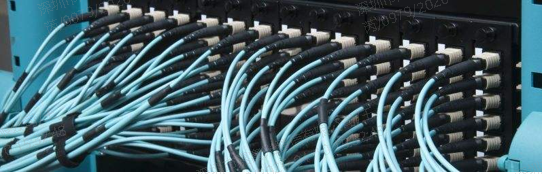
MPO cabling has emerged as a key solution for high-density fiber connectivity.
This guide covers MPO basics, product types, applications, and selection strategies to help you design and deploy reliable fiber optic cabling systems.
What Is an MPO Connector?
MPO (Multi-fiber Push On) is a multi-core, plug-and-play fiber optic connector based on the MT ferrule array. It enables precise alignment of multiple fibers (8, 12, 24, or more) within a single interface, significantly increasing cabling density compared to traditional single-fiber connectors.
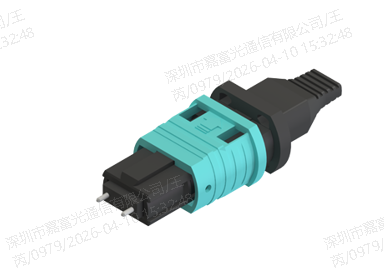
As a key component in modern fiber networks, MPO connectors are widely used in data centers, HPC environments, and enterprise backbone cabling, supporting high-density fiber connectivity and optical interconnection.
MPO vs. MTP: What’s the Difference?
MTP™ is a high-performance MPO connector developed by US Conec and a registered trademark of the company. It is fully compliant with international MPO standards and represents a premium implementation of the MPO connector, incorporating patented mechanical improvements and enhanced performance features.
MPO is an international standard defined by IEC 61754-7 and TIA FOCIS-5. It serves as the fundamental specification for multi-fiber connectors, and MPO products can be manufactured by various vendors worldwide.
However, the difference between MPO and MTP is not absolute. With advancements in manufacturing, high-quality MPO connectors can also achieve low insertion loss and reliable performance comparable to MTP in many data center applications. Features such as polarity adjustment and low-loss performance may vary depending on the specific product design rather than the connector type itself.
Benefits of MPO cabling
Compared with traditional fiber optic cabling, MPO cabling provides significant improvements in space efficiency, deployment speed, and scalability, making it an ideal solution for modern fiber infrastructure and high-density fiber cabling.
Ultra-High Density, Maximizing Data Center Space
A single MPO interface supports 8–24 fibers, allowing one 12-fiber MPO to replace 12 LC connections. This significantly reduces rack space usage by over 70%, making it ideal for space-constrained high-density fiber cabling environments.
Pre-Terminated Solution for Faster Deployment
MPO trunk cables and jumpers are factory pre-terminated, including polishing and full-link testing. This eliminates on-site splicing and reduces installation time by over 70%, enabling faster deployment and more efficient fiber optic cabling in data center interconnect scenarios.
Scalable Architecture
MPO cabling supports seamless upgrades from 10G/40G to 100G/400G without major changes to the fiber infrastructure. Its modular design allows flexible expansion, making it a future-proof interconnection solution for growing bandwidth demands.
Structured Cabling for Easier Management
By reducing cable volume and simplifying connections, MPO cabling improves organization and visibility. When used with MPO cassettes and patch panels, it enables structured fiber connectivity, making maintenance and troubleshooting more efficient.
Main Types of MPO Cabling Products and Applications
The MPO cabling system consists of several key components, including trunk cables, harness cables, breakout cables, patch cords, cassettes, and enclosures. Together, these products form a complete high-density fiber connectivity solution, widely used in modern fiber networks and data center interconnect environments.
To better understand how MPO systems work in real-world deployments, let’s look at each product type and its typical applications.
MPO Trunk Cables (Backbone Interconnect)
MPO trunk cables serve as the backbone of fiber networks, designed for long-distance and high-capacity transmission between switches, distribution areas, and cabinets.
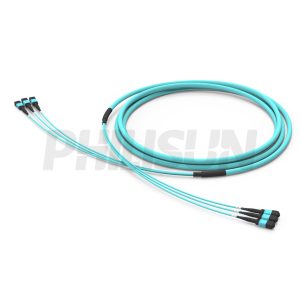
They are widely used in data center Spine-Leaf architectures and enterprise backbone cabling. With a pre-terminated design and support for 12–144 fibers, trunk cables ensure consistent performance while significantly reducing installation time.
MPO Harness Cables
MPO harness cables ( MPO to LC ) convert a single MPO connector into multiple LC interfaces, enabling direct connectivity between high-speed ports and individual network devices.
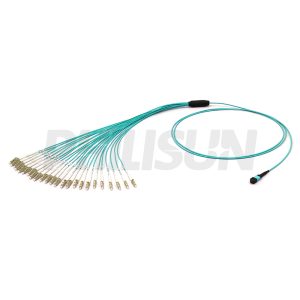
They are commonly used for port breakout applications, such as 40G to 4×10G and 100G to 4×25G, simplifying switch-to-server connections while reducing cabling complexity.
MPO Breakout Cables
MPO breakout cables (MPO to MPO) are designed for distributing multi-fiber connections within MPO-based cabling systems. Unlike harness cables, they retain MPO interfaces on both ends, making them suitable for high-density fiber routing and backbone-level interconnection.
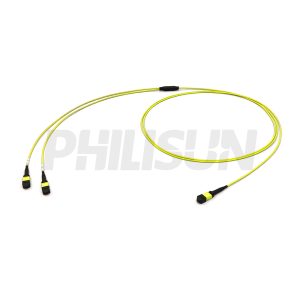
They are typically deployed in trunk extension, cross-connect, and high-density distribution scenarios within data center infrastructure.
MPO Patch Cords (Short-Distance Connectivity)
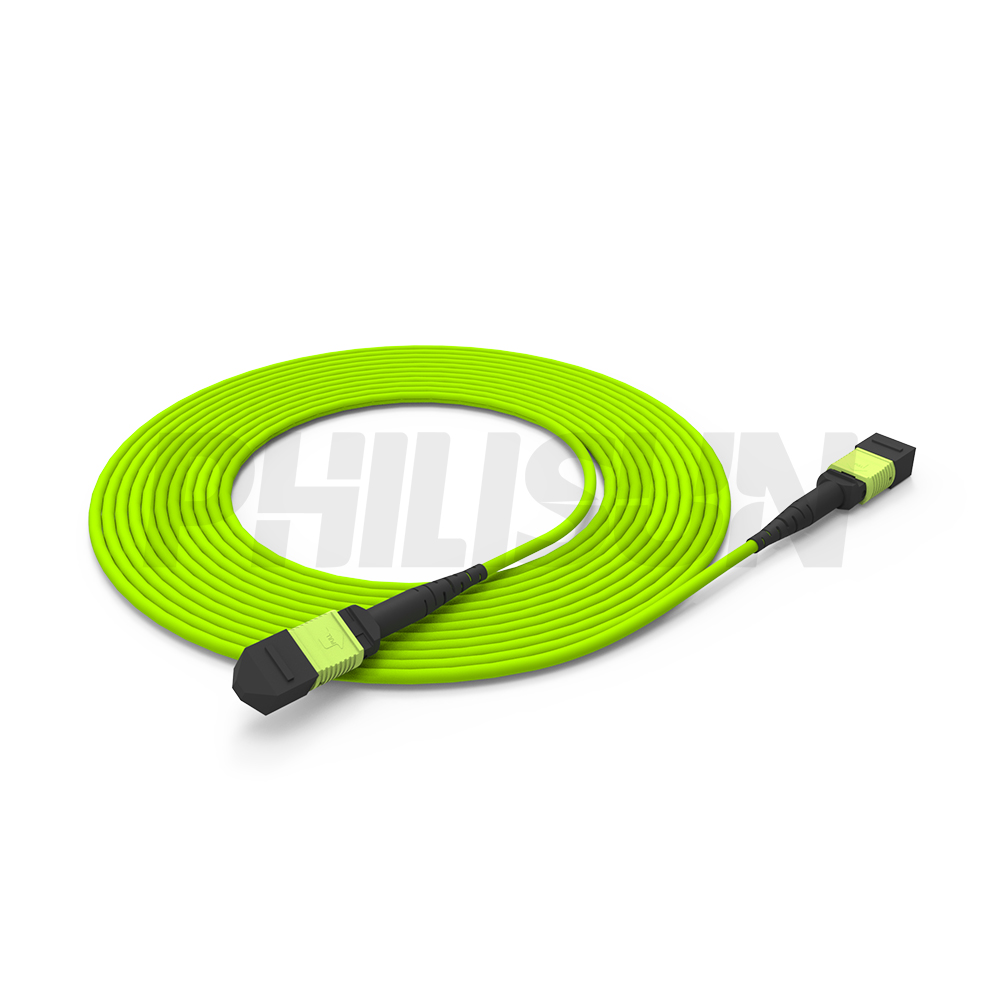
MPO patch cords are used for short-distance connections within data centers, including switch-to-switch links, patch panels, and cassette connections.
They support multiple polarity types (A/B/C) and are suitable for high-speed optical connectivity, including 400G applications.
MPO Cassettes (Fiber Distribution & Management)
MPO cassettes convert MPO interfaces into LC/SC ports, enabling structured cabling and flexible network expansion.
They are widely used in data center fiber management and help simplify deployment while improving overall connectivity efficiency.
MPO Enclosures (High-Density Fiber Infrastructure)
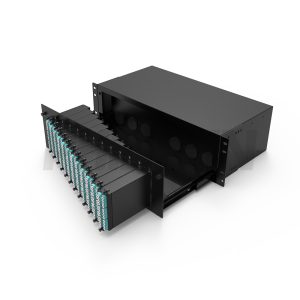
MPO enclosures are used to house cassettes and manage fiber connections in a structured and organized way.
They support high-density fiber infrastructure deployment, with some designs accommodating up to 288 fibers, helping optimize space and enable scalable network expansion.
MPO Cabling Key Parameter Selection Guide
Selecting the right MPO cabling is essential for ensuring performance, compatibility, and long-term scalability in modern fiber networks. Key parameters such as fiber type, core count, polarity, and insertion loss each play a distinct role in optimizing fiber connectivity and interconnection solutions.
Fiber Type: Based on Transmission Distance and Network Environment
Fiber type determines transmission distance and deployment scenarios in fiber infrastructure.
OS2 Single-mode: Ideal for long-distance backbone cabling and campus interconnect, supporting long-range optical communication
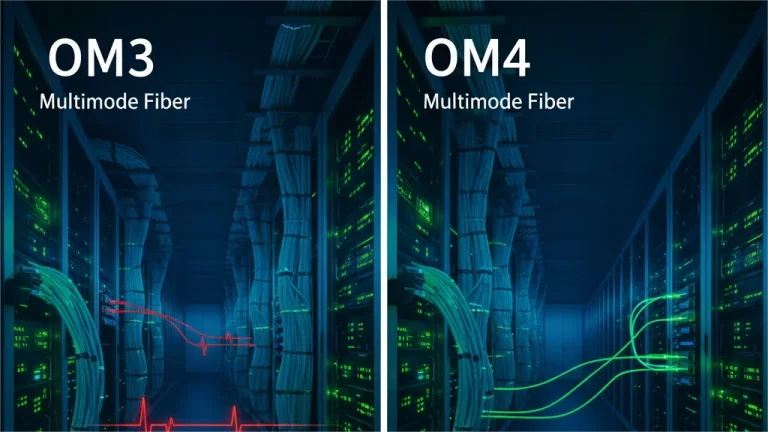
OM3 / OM4 Multimode: Optimized for short-distance, high-density fiber cabling in data center interconnect environments
OM5 Multimode: Designed for advanced optical connectivity, supporting high-speed optical communication with multi-band transmission
Core Count: Based on Interface and Transmission Architecture
The required fiber count in MPO cabling is determined by the optical module architecture and the number of parallel transmission lanes, rather than the data rate alone.
In practical selection:
- Parallel optics modules:
Use multiple fiber lanes for transmission. For example, SR4 or DR4 modules use 8 fibers (4 transmit + 4 receive), while SR8 modules use 16 fibers - WDM-based single-mode modules:
Use wavelength multiplexing instead of parallel fibers. For example, FR4 modules operate over duplex LC interfaces rather than MPO
Selection tip:
MPO-12 is widely used as a standard configuration, even when only 8 fibers are active, providing compatibility with parallel optics modules and allowing flexibility for future upgrades.
For backbone and high-density cabling systems, higher fiber-count MPO assemblies (such as 24, 48, or 72 fibers) are used for trunk connections and structured fiber distribution, rather than direct optical module interfaces.
Polarity: Ensuring Correct Signal Transmission
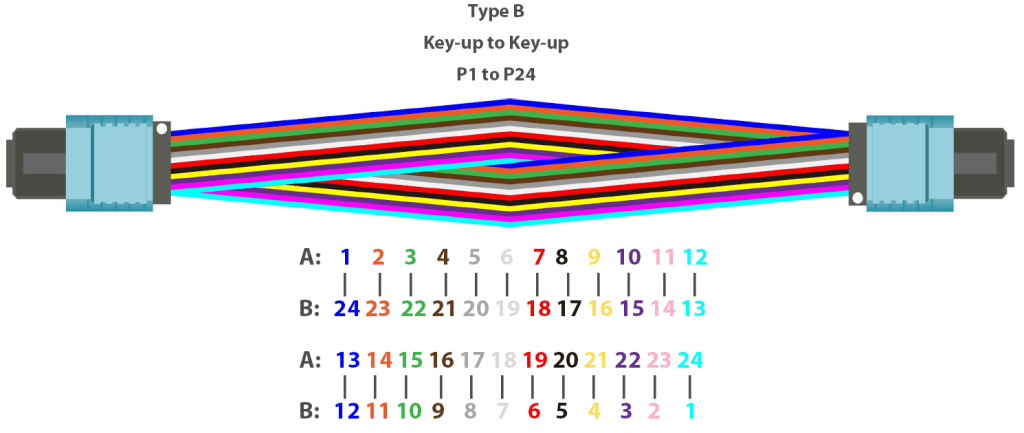
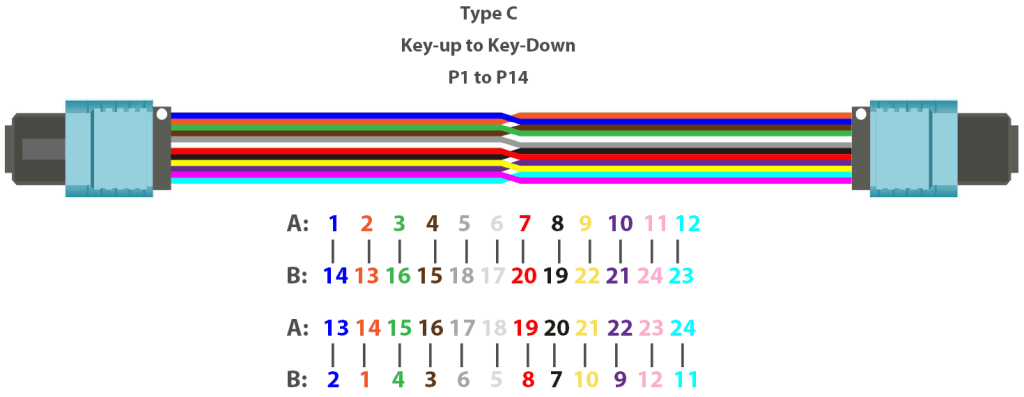
Polarity defines the proper transmit-to-receive (Tx/Rx) fiber mapping in fiber optic interconnections, which is critical to avoid link failure.
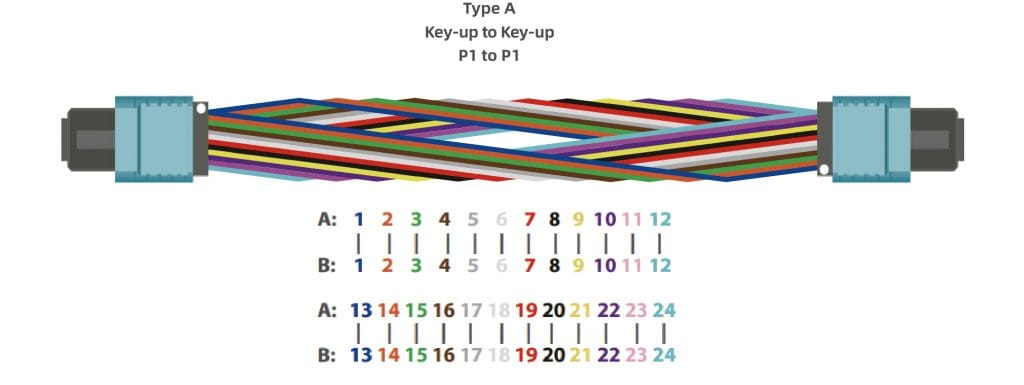
The Type A/B/C polarity scheme is defined based on 12-fiber MPO configurations and is commonly used as the reference for illustrating polarity in parallel fiber systems:
- Type A (Straight-Through): Maintains the same fiber position from end to end
- Type B (Fully Reversed): Reverses fiber positions to achieve direct Tx-to-Rx mapping
- Type C (Pair Crossed): Swaps adjacent fiber pairs for duplex-based transmission
Gender: Matching Connector Interfaces
MPO connectors are available in male and female types, which must be properly matched to ensure reliable optical connectivity and accurate fiber alignment.
- Male connectors: Equipped with guide pins for precise alignment; typically used in MPO adapters, cassette, and certain trunk cables
- Female connectors: Designed without guide pins; commonly used in MPO patch cords and trunk cables
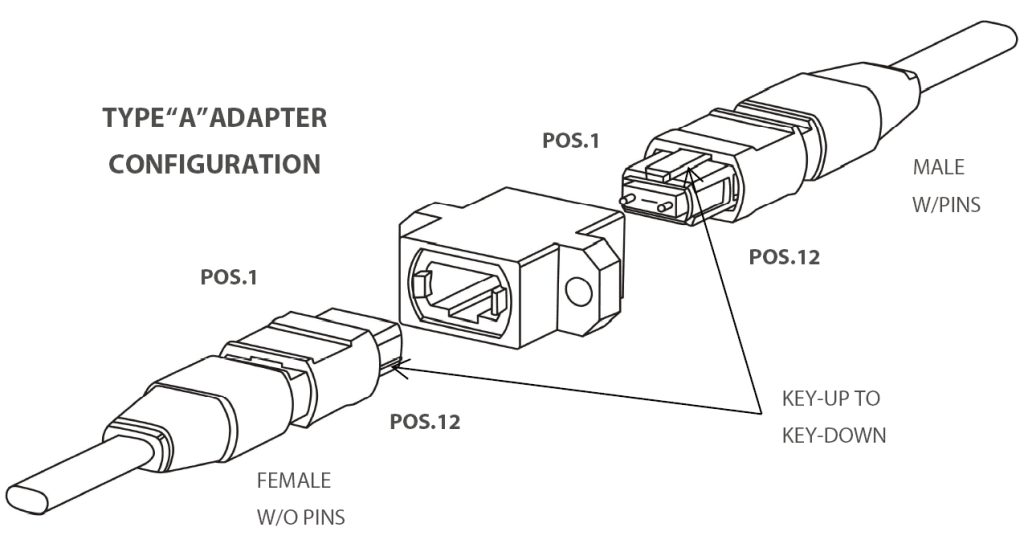
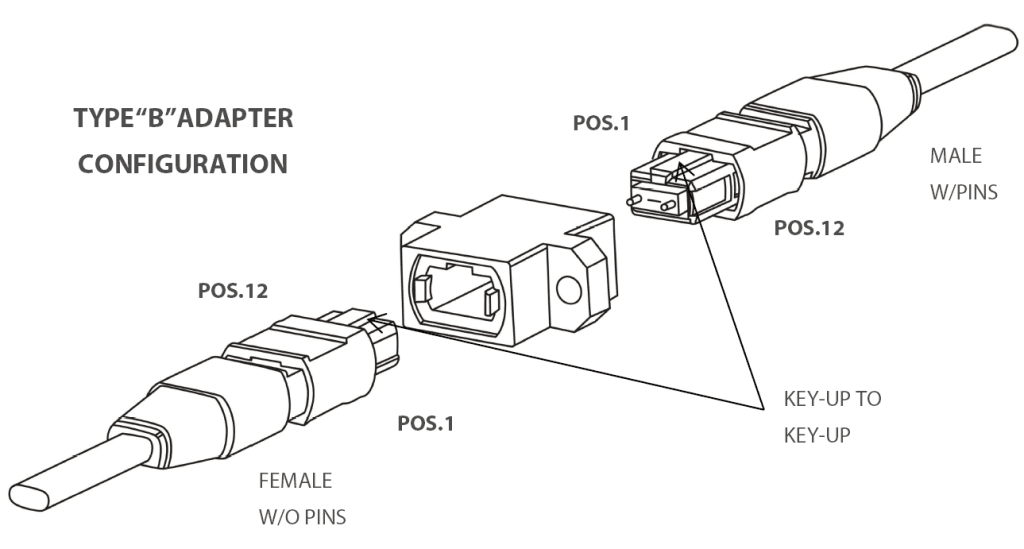
Key rule: Always follow male-to-female pairing to ensure stable fiber connectivity and proper alignment.
Connector Endface: PC vs. APC
The MPO connector endface type (PC or APC) is an important selection parameter, as it affects insertion loss, return loss, and overall link performance, and should be selected based on the application scenario and link design.
PC (Physical Contact):
Features a flat-polished MT ferrule surface designed for multi-fiber physical contact. It provides standard return loss performance (typically ≥40 dB) and is widely used in multimode and short-distance data center applications, such as 40G/100G/400G high-speed interconnections.
APC (Angled Physical Contact):
Uses an angled (typically 8°) polished endface to minimize back reflection and achieve higher return loss (typically ≥60 dB). In MPO cabling systems, APC is primarily used with single-mode fiber (OS2) in applications requiring low reflectance, such as high-speed data center interconnects or backbone links.
In recent high-performance computing (HPC) and AI-driven deployments, APC endfaces are also increasingly seen in certain multimode MPO connectors, driven by the need to match high-speed optical modules that adopt APC interfaces. Although less common than PC in standard data center cabling, APC is becoming more relevant in specialized high-speed scenarios..
Insertion Loss: Based on Performance Requirements
Insertion loss directly affects signal quality and transmission stability in high-speed networks.
Standard loss: Suitable for general fiber optic cabling applications
Low loss: Recommended for high-speed data center interconnect and long-distance transmission
Selection tip: For 100G/400G and above, prioritize low-loss interconnection solutions
Jacket Type: Based on Installation Environment
Cable jacket materials determine safety, durability, and environmental adaptability in fiber infrastructure deployment.
PVC: Cost-effective for general indoor fiber optic cabling
LSZH: Ideal for data centers and enterprise environments requiring high safety standards
OFNP: Designed for high-performance optical communication environments with strict fire protection requirements
How to Choose the Suitable MPO Cabling Solution
Choosing the right MPO solution involves more than selecting individual products. It requires aligning your cabling design with application scenarios, network architecture, and future scalability.
In general, MPO trunk cables are used for backbone interconnect, breakout cables enable device-level connectivity, while cassettes and enclosures support structured cabling and centralized management. At the same time, key factors such as fiber type, core count, polarity, and overall system design should be considered to ensure performance and compatibility.
A Complete MPO Cabling Solution for Your Network
Philisun provides a complete range of MPO solutions, including trunk cables, breakout cables, patch cords, cassettes, enclosures, and adapter panels, delivering high-performance fiber connectivity and interconnection solutions for modern fiber networks and data center interconnect applications.
Flexible MPO Solutions for Different Network Deployments
We support project-based configuration, including fiber type, core count, polarity, connector gender, cable length, and breakout design, ensuring optimized fiber infrastructure and scalable connectivity solutions tailored to your deployment.
Reliable Quality and Technical Support
All fiber products are tested for performance and consistency to ensure stable optical communication and long-term reliability. Our technical team provides fast response and professional support for complex fiber connectivity and interconnection solutions.

If your project involves complex cabling structures or high-density fiber cabling deployment, it is recommended to validate the full link design in advance. Our team can help you build a customized MPO solution based on your specific network architecture and application requirements.
Conclusion
MPO cabling has become a key solution for building scalable and efficient fiber networks, especially in high-density and high-speed environments such as modern data centers and AI-driven infrastructure.
By combining the right products, configurations, and architecture, a well-designed MPO system can simplify network deployment while supporting long-term growth and evolving bandwidth demands.
If you are planning an MPO deployment or need support with network design, contact Philisun team to develop a tailored MPO cabling solution based on your specific application and infrastructure requirements.
FAQs about MPO Cabling
What is MPO fiber cable used for?
MPO fiber cables are multi-core parallel connectors used for transmitting multiple optical signals simultaneously in high-density scenarios, mainly for high-bandwidth, high-density, and rapid deployment fiber interconnections.
What is the difference between MPO cabling and LC cabling?
LC is a single-core/dual-core connector with lower density and more cables, while MPO is a multi-core array connector with higher density, fewer cables, and more suitable for high-speed networks.
How many cores does MPO typically have? What are the common core counts?
Common core counts are 8-core, 12-core, 16-core, and 24-core; for high-density scenarios, there are also 48-core, 72-core, etc.
What is MPO polarity?
Polarity refers to the arrangement and pairing of fiber cores at the transmitting and receiving ends. It is divided into Type A, Type B, and Type C, typically illustrated using 12-fiber MPO configurations. Incorrect polarity will cause a link failure
When should MPO breakout cables be used?
Use MPO breakout cables when you need to convert a single MPO interface into multiple LC interfaces, for example, 40G to 4×10G or 100G to 4×25G.
What is the difference between MPO trunk cables and breakout cables?
Trunk cables: Both ends are MPO, used for long-distance interconnection between cabinets/equipment.
Breakout cables: One end is MPO, and the other end is multiple LC, used for device-side interconnection.
Can MPO cables be compatible with 100G/400G optical modules?
Yes, as long as the core count, polarity, fiber type, and connector endface (PC/APC) all match, MPO cables can directly interface with high-speed optical modules such as QSFP28 and QSFP-DD.
Note: PC and APC endfaces are not interchangeable. MPO cables must use the same endface type as the optical module to ensure proper connection and link performance.
Can MPO be used with LC systems?
Yes, MPO breakout cables or MPO cassettes can easily achieve hybrid cabling between MPO trunks and LC branches, ensuring compatibility with existing network devices.
Related MPO Planning Guides
This page is the broad MPO cabling architecture and selection hub. Use the specialist guides below when you need connector standards and testing, MTP branding differences, fiber-count and lane mapping, or cable-role selection.
- Review MPO connector fundamentals and testing for standards, gender, polarity basics, inspection and cleaning.
- Use the MTP vs MPO comparison for branded-interface compatibility and engineering differences.
- Choose MPO8, MPO12, MPO16 or MPO24 with the MPO fiber count guide.
- Compare backbone and fan-out roles in the MPO trunk vs harness vs breakout guide.
- When the architecture is defined, review MPO cable assemblies for product and quotation options.
Recommended MPO Products
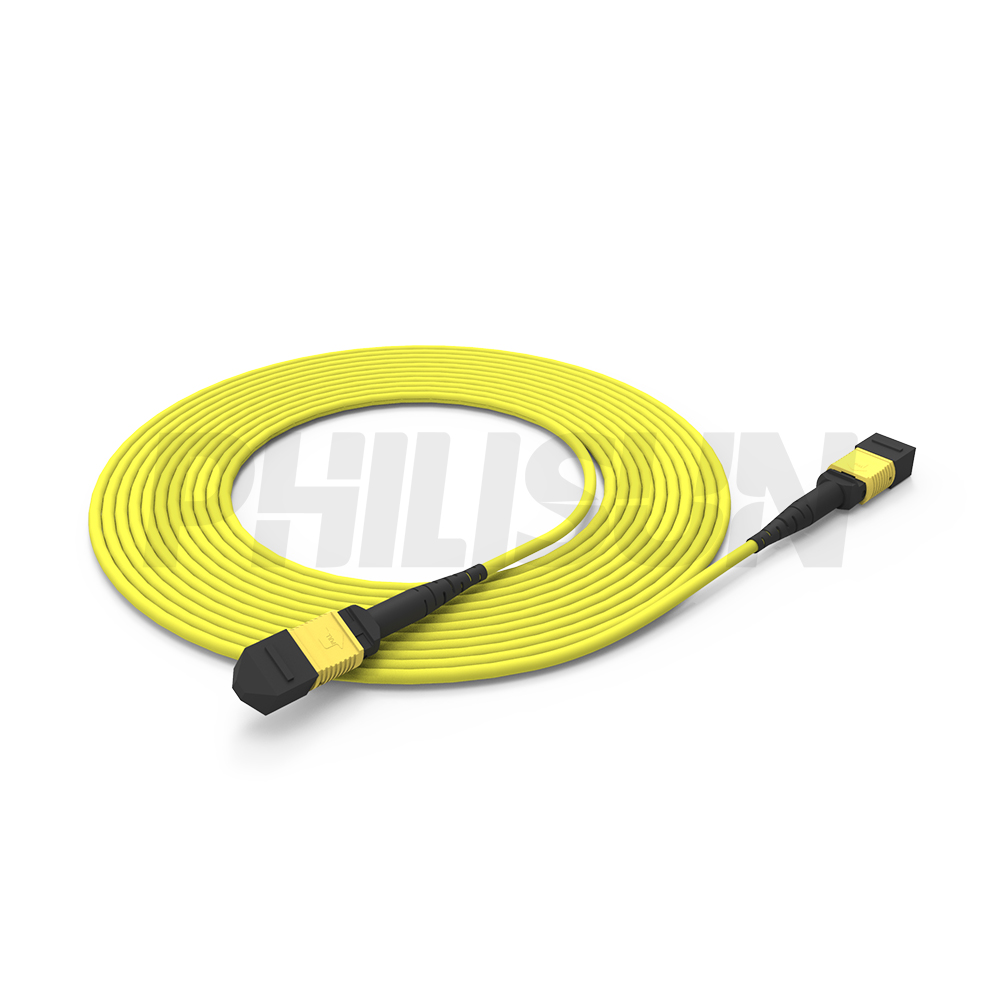
MPO Jumper
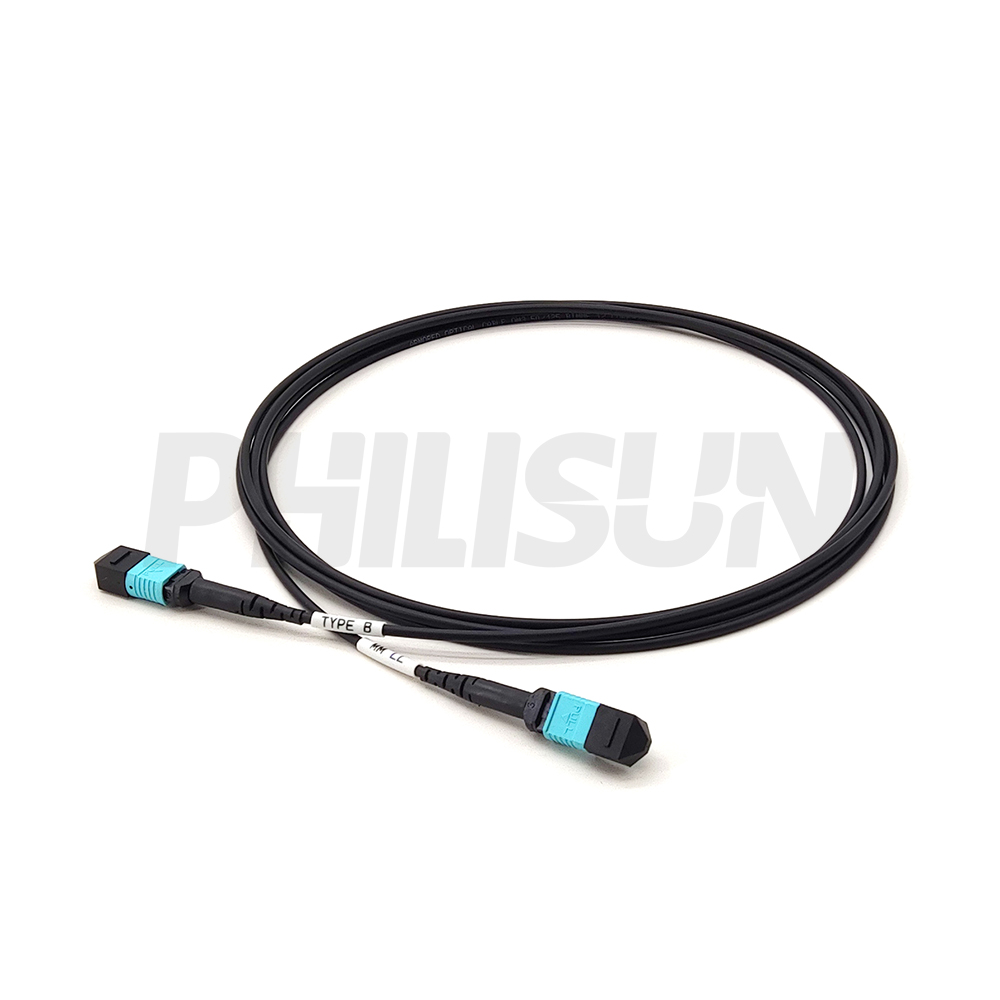
MPO Armored Jumper
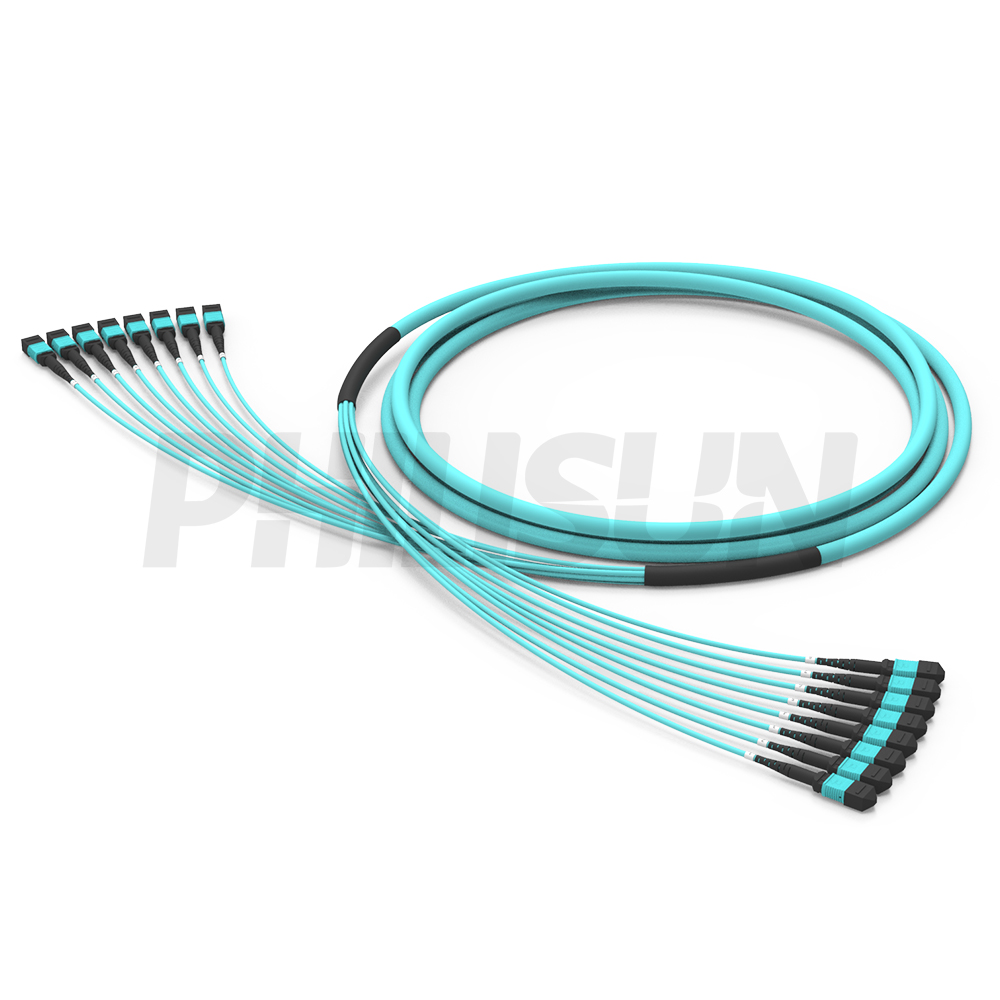
MPO Trunk Cable
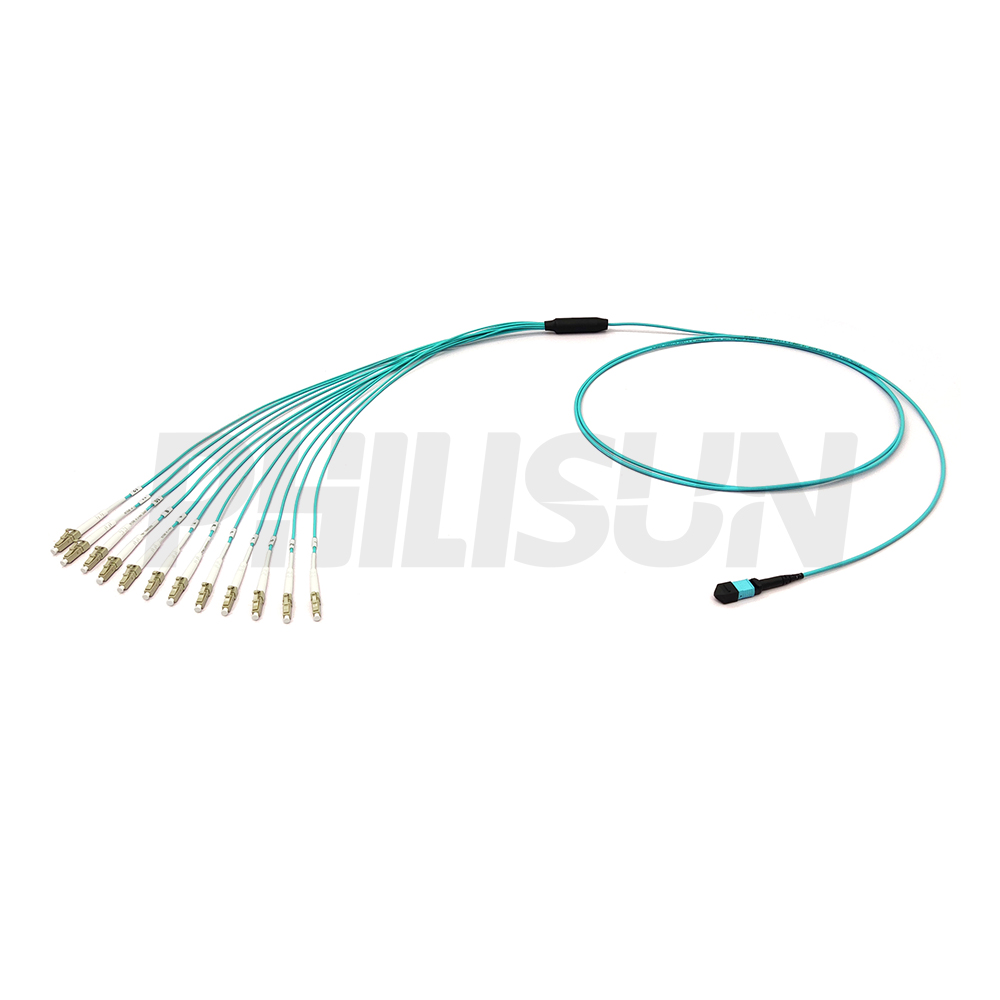
MPO Harness Cable