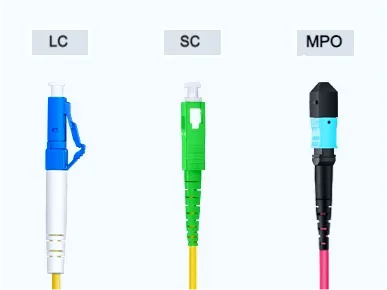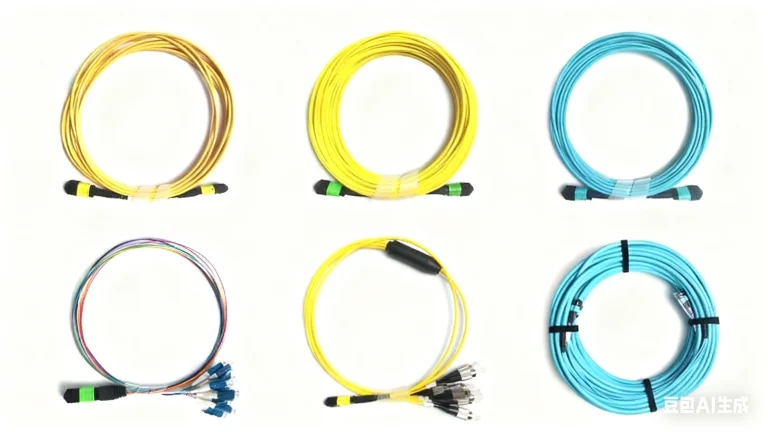

Has your multi-million dollar 400 G hardware failed to deliver stable performance? The problem isn’t the silicon; it’s the invisible integrity of your fiber interconnects. Networks operating at 400 G and 800 G demand technical mastery over two critical physical layer metrics: Insertion Loss (IL) and Return Loss (RL). Understanding the fundamental difference between Insertion Loss vs Return Loss is essential to calculating your link budget, preventing bit errors, and guaranteeing the reliability of your advanced computing infrastructure. This guide provides the definitive technical analysis required to master signal integrity.
1. What Exactly is Insertion Loss (IL), and Why is Lower Better?
Insertion Loss (IL) is the most fundamental measure of power reduction in a fiber optic link. It quantifies the amount of optical power that is lost—or attenuated—as the signal passes through any component, most notably a connector pair, splice, or fiber segment.
Technical Definition and Impact
IL is measured in decibels (dB). Mathematically, it represents the ratio of output power (Pout) to input power (Pin):
The rule for IL is unambiguous: Lower is unequivocally better. For example, an assembly with 0.2 dB of power attenuation is superior to one with 0.5 dB.
The Link Budget Conundrum
Every 400 G transceiver pair is engineered with a finite Optical Link Budget (the total allowable IL). Any unnecessary loss consumes this margin, limiting the maximum achievable link distance. For the demanding 400 G standard, the total allowable IL may be as tight as 1.9 dB. If a system uses components with high Insertion Loss (e.g., three connectors at 0.75 dB each), the resulting cumulative loss of 2.25 dB guarantees link failure, irrespective of the hardware quality.
2. What Defines Return Loss (RL), and Why is Higher Better?
Return Loss (RL) measures the amount of light that is reflected backward toward the signal source at any discontinuity, such as a connector interface. While Insertion Loss addresses signal attenuation, Return Loss addresses signal integrity and noise.
Technical Definition and Impact
RL is also measured in decibels (dB) and represents the ratio of incident power (Pinc) to reflected power (Prefl).
The rule for RL is the inverse of IL: Higher is significantly better. A 65 dB RL is superior to a 40 dB RL because a higher number indicates a smaller amount of destructive reflection.
The Peril of Back-Reflection
Reflections, primarily caused by air gaps (Fresnel reflection), introduce noise that severely destabilizes high-speed lasers and digital signaling:
- Laser Instability: Reflected light disrupts the laser cavity, causing shifts in wavelength or power output, which is catastrophic for WDM (Wavelength Division Multiplexing) systems.
- Bit Errors: Reflections cause signal interference, leading to high jitter and increasing the Bit Error Rate (BER), which slows down the entire network due to retransmissions.
3. How Do Insertion Loss and Return Loss Fundamentally Differ?
While both metrics are critical to fiber performance, their physical origins and implications are distinct, making the distinction between Insertion Loss vs Return Loss vital for troubleshooting.
| Feature | Insertion Loss (IL) | Return Loss (RL) |
| Physical Nature | Signal Attenuation (Loss of Power) | Signal Reflection (Noise Generation) |
| Measurement Goal | Low dB (e.g., 0.2 dB) | High dB (e.g., 65 dB) |
| Primary Impact | Limits distance; consumes link budget | Destabilizes lasers; creates signal noise |
| Typical Cause | Dirty connectors, poor alignment, bending | Air gaps, non-perpendicular mating angle |
4. Why is APC Polishing Essential for Managing Single-Mode Return Loss?
The polishing style of the fiber connector end-face is the dominant factor in managing Return Loss. This is a crucial specification point for the procurement of single-mode fiber assemblies.
- UPC (Ultra Physical Contact): Characterized by a flat, rounded ferrule. Typical RL performance is good (50 dB to 55 dB).
- APC (Angled Physical Contact): Defined by an 8° angle on the ferrule. This angle ensures that any minute amount of reflected light is directed into the fiber cladding, away from the core and the source laser. This drastically improves Return Loss to industry-leading figures (upwards of 65 dB).
Technical Requirement: For modern high-speed single-mode systems—especially those utilizing sensitive coherent optics—the superior Return Loss performance of APC connectors makes them mandatory to guarantee link stability. PHILISUN prioritizes APC design in its single-mode MPO/MTP assemblies to meet these strict RL targets.
5. Is the Link Budget the Key to Guaranteeing 400 G/800 G Stability?
Yes, the link budget is the foundational constraint, but stability relies on minimizing both Insertion Loss and the noise caused by poor Return Loss.
PAM4 Signaling Demands
Modern 400 G and 800 G systems rely on PAM4 (Pulse Amplitude Modulation 4-Level) signaling, which uses four distinct voltage levels to transmit twice the data per clock cycle. This complexity makes PAM4 exponentially more sensitive to both attenuation (IL) and noise (RL) than older NRZ methods. A high Return Loss event can flood the receiver with noise, causing the BER to spike above the threshold (10-12), resulting in link failure.
Case Example: The ULL MPO Mandate
In a recent 400 G AI cluster deployment, initial link failures were traced to standard MPO assemblies. Although the total Insertion Loss met the minimal budget, the individual connector losses were high (0.7 dB each). By replacing the assemblies with PHILISUN’s Ultra-Low Loss (ULL) MPO Elite cables, which guarantee <0.35 dB IL per mate, the overall channel margin increased by 1.0 dB, instantly stabilizing the high-speed links and avoiding a costly hardware replacement cycle.
6. How Can Engineers Optimize IL and RL for Peak Network Performance?
Managing Insertion Loss and Return Loss requires a commitment to quality components and rigorous testing protocols that exceed basic standards.
Strict Component Procurement
- Mandate ULL: Require all high-density MPO/MTP assemblies to be manufactured with ULL components, typically achieving <0.35 dB IL per connection. PHILISUN‘s manufacturing processes ensure every ferrule is polished and tested to this exacting standard.
- Specify Polish: Always demand APC connectors for all single-mode fiber assemblies.
Rigorous Certification
- Mandate Tier 2 Testing: Tier 1 (OLTS) testing only measures end-to-end Insertion Loss. Tier 2 certification using an OTDR (Optical Time Domain Reflectometer) is mandatory, as it maps the discrete IL and RL of every single connector and splice, providing the crucial data needed to verify link compliance and isolate potential reflection sources.
- End-Face Inspection: Adopt an “Inspect and Clean Before Every Connection” policy. Contamination is the single biggest cause of high Insertion Loss.
Conclusion
Mastery of Insertion Loss vs Return Loss is the fundamental technical requirement for managing high-speed network infrastructures. Insertion Loss consumes your link budget, limiting reach, while poor Return Loss introduces destabilizing noise, particularly crippling sensitive PAM4 systems. To safeguard your hardware investment and guarantee stable 400 G/800 G operation, the choice of certified, precision-engineered, ultra-low-loss fiber infrastructure is non-negotiable.
Is your critical network infrastructure ready for the next level of speed? Don’t let high Insertion Loss or poor Return Loss compromise your investment in high-speed hardware. PHILISUN specializes in manufacturing Tier 2 certified, ultra-low loss MPO/MTP assemblies and high-spec optical transceivers engineered to exceed the toughest industry standards. Contact our technical sales team today for a quote and consultation on optimizing your optical link budget.
Frequently Asked Questions (FAQ)
- Q: What is the TIA/IEC standard for maximum Insertion Loss per connector?
- A: TIA/IEC standards vary, but standard MPO connectors typically allow up to 0.75 dB. Critical ULL components needed for 400 G channels must meet <0.35 dB per pair.
- Q: Can I mix APC and UPC connectors?
- A: No. Mating an APC (8° angle) connector with a UPC (flat) connector will cause a massive air gap, leading to dangerously high Insertion Loss and severe back-reflection.
- Q: How do professionals measure Insertion Loss and Return Loss in the field?
- A: Insertion Loss (IL) is measured by an OLTS (Tier 1 testing). Both IL and Return Loss (RL) are mapped by an OTDR (Tier 2 testing).
- Q: Why do MPO assemblies need stricter IL/RL standards than single-fiber cables?
- A: MPO assemblies contain multiple failure points (12 or 16 fibers). The cumulative loss from multiple connectors in an MPO trunk channel quickly consumes the tight link budget for 400 G systems, mandating ULL precision.