
The LC fiber connector (Lucent Fiber Connector) is the undisputed champion of the modern data center, owing its dominance to its small form factor and robust performance. While its miniature size is its most visible feature, the true performance of an LC connection relies on the precision engineering of its internal components, particularly the ferrule and the end-face polish. Understanding the differences between the common polish types—PC, UPC, and APC—is critical for network architects, because a mismatched polish can increase loss, reflection, and troubleshooting time in high-speed or long-distance links.
The Anatomy of the LC Fiber Connector
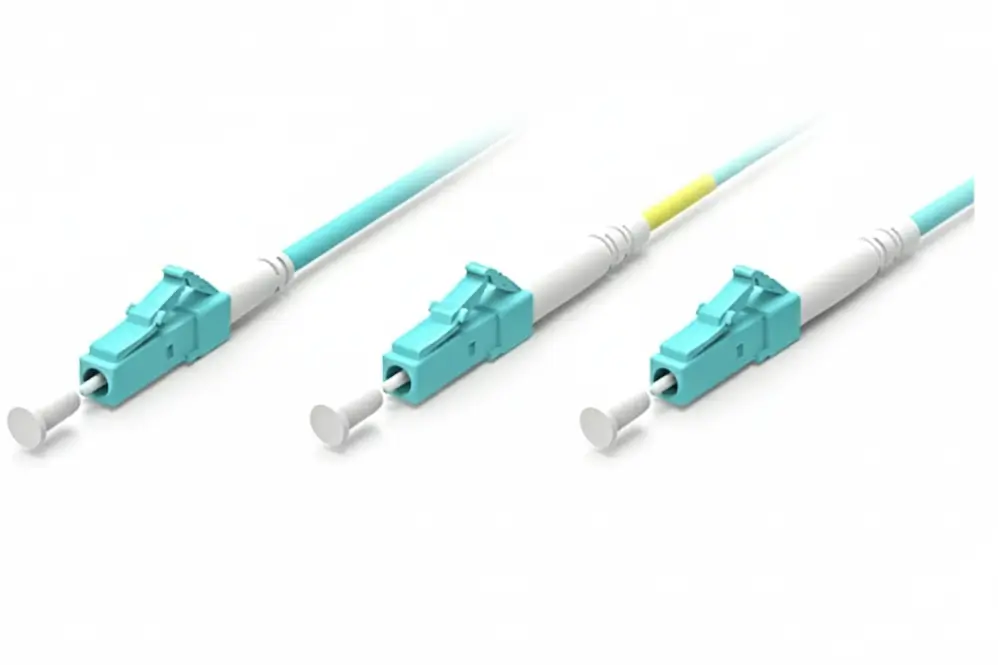
The LC fiber connector is a small form factor (SFF) connector that uses a push-and-latch mechanism, similar to a standard RJ45 copper connector, but built for optical precision.
The Precision Ferrule
The heart of the LC fiber connector is the ferrule, typically a 1.25mm ceramic cylinder. The ferrule holds the optical fiber perfectly centered and aligned. This 1.25mm size is half the size of the SC connector’s 2.5mm ferrule, which is why the LC is known for its high-density capabilities. The precision with which the fiber is seated and polished inside this ferrule dictates the connector’s performance.
Simplex LC Connector (One Fiber)
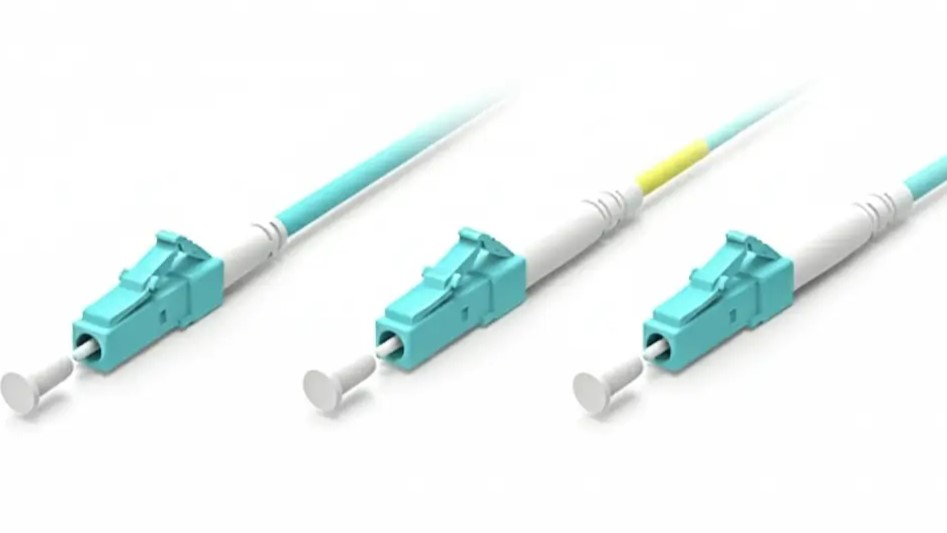
A Simplex LC connector is the basic unit of the design, housing a single fiber strand within its body. Simplex connectors are used when only one-way transmission is required or, more commonly, when deployed with Bi-directional (BiDi) transceivers. BiDi optics utilize two different wavelengths (e.g., 1310nm and 1550nm) to send and receive data simultaneously over a single fiber, reducing the total fiber count needed.
Duplex LC Connector (Two Fibers)
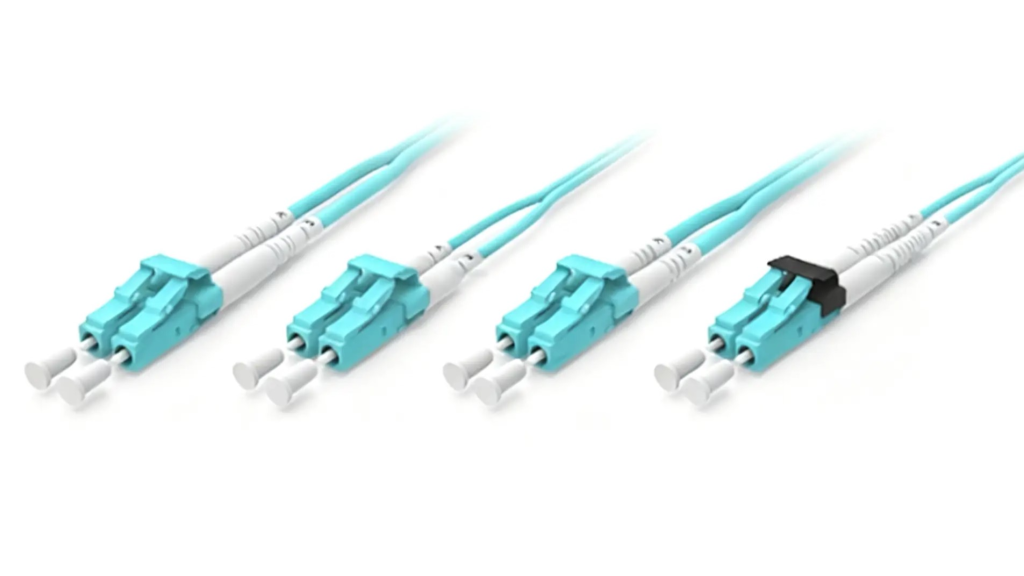
The Duplex LC connector is the most common configuration for standard networking. It consists of two Simplex LC connectors joined together by a plastic clip or bridge. This assembly ensures that the Transmit (Tx) fiber and the Receive (Rx) fiber are maintained in the correct polarity. Duplex LCs are essential for connecting two-way transceiver interfaces like SFP+ and QSFP modules (via breakout harnesses).
Insertion Loss and Return Loss
Two critical metrics define connector quality:
- Insertion Loss (IL): The power lost when light passes through the connector pair. Good quality LC connectors should aim for an IL of less than 0.25 dB.
- Return Loss (RL): The power reflected back toward the source. High RL can destabilize lasers, especially in Single Mode systems. This is directly controlled by the end-face polish. PHILISUN rigorously tests all of its LC connectors for optimal IL and RL before deployment.
Understanding Fiber End-Face Polish (PC, UPC, APC)
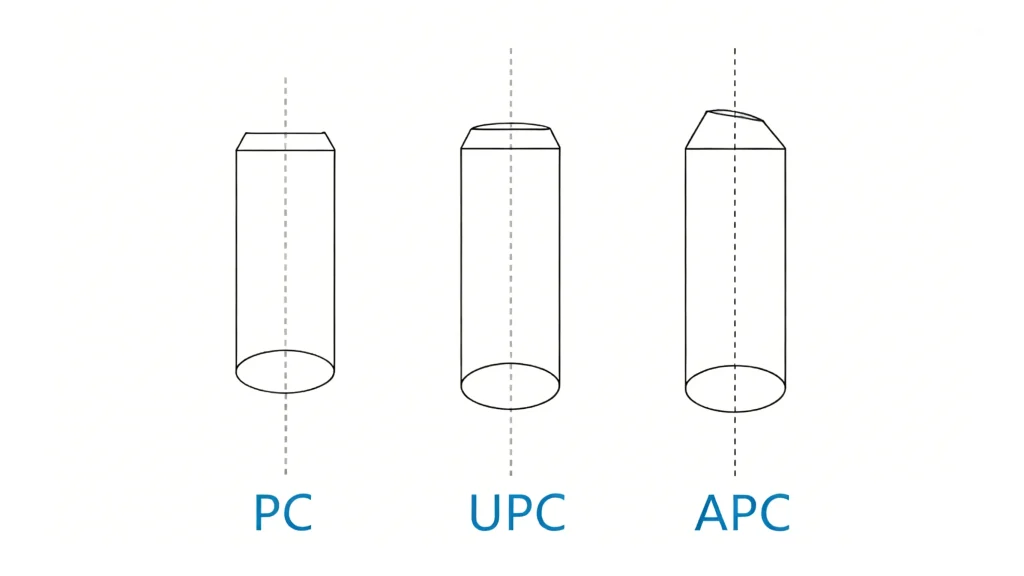
The polish applied to the ferrule’s tip is the most critical factor determining the connector’s suitability for different network applications.
PC (Physical Contact)
The earliest polish type, where the fiber ends are spherically polished to ensure they touch tightly, minimizing the air gap. PC polish is now largely obsolete, having been replaced by UPC.
UPC (Ultra Physical Contact)
UPC polish represents a more refined, extended polishing of the convex curve. This results in an incredibly flat and smooth surface finish, achieving superior Return Loss compared to PC.
- Typical RL: > 50 dB
- Application: UPC is the standard polish for Multimode fiber (OM3, OM4, OM5) and is commonly used for short-reach Single Mode links in data centers. UPC connectors are easily identified by their blue housing or strain relief boot.
APC (Angled Physical Contact)
APC polish uses an 8-degree angle applied to the fiber end face. This angle ensures that any reflected light is directed into the cladding (the outer glass layer), preventing it from traveling back toward the source laser. This lowers back reflection when the mated connection and equipment interface are designed for APC.
- Typical return loss: often ≥60 dB; reflectance may be shown around −60 dB or better
- Application: APC is used where the equipment interface or link budget requires lower reflectance, including many PON/FTTx, RF/video, WDM, test, and long single-mode links.
Key Properties and Selection Criteria
Choosing the right LC fiber connector depends entirely on your link specifications.
How to Choose the Right Polish Type
Start with the equipment port, adapter, and cable plant specification. UPC is common for multimode and many duplex LC transceiver links; APC is selected when the interface or reflectance budget calls for angled polish. For the detailed single-mode comparison, use the dedicated guide to choose the correct LC polish.
Why Is LC Compatiblity Important
LC connectors are compatible with transceivers ranging from 1G to 400G and are necessary for break-out cables from high-density MPO/MTP interfaces. The precision and consistent quality of the connector body and ferrule are critical for these high-speed applications. PHILISUN supplies LC connector assemblies with geometry, end-face inspection, and loss-test options matched to the project specification.
Conclusion
The LC connector remains widely used because its 1.25mm ferrule enables high-density patching. This page explains LC connector anatomy, simplex and duplex formats, and PC/UPC/APC polish terminology; the final polish choice should follow the equipment interface and link budget.
To turn LC connector details into a cable specification, contact PHILISUN Experts Today.
FAQ: LC Fiber Connector Types
What does LC stand for?
LC is commonly expanded as Lucent Connector and refers to the small-form-factor fiber connector that uses a 1.25 mm ferrule.
What LC connector details matter most?
Connector format, simplex or duplex layout, polish, fiber mode, cable structure, polarity, end-face quality, and test records all matter.
How can I visually identify an APC connector?
APC connectors are commonly green, while UPC connectors are commonly blue. Treat color as a field clue, not the only proof; confirm the part number and equipment interface.