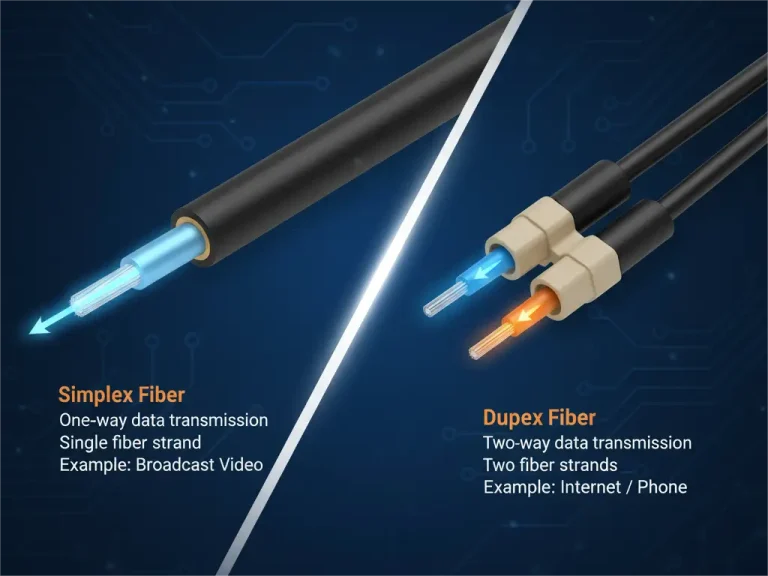
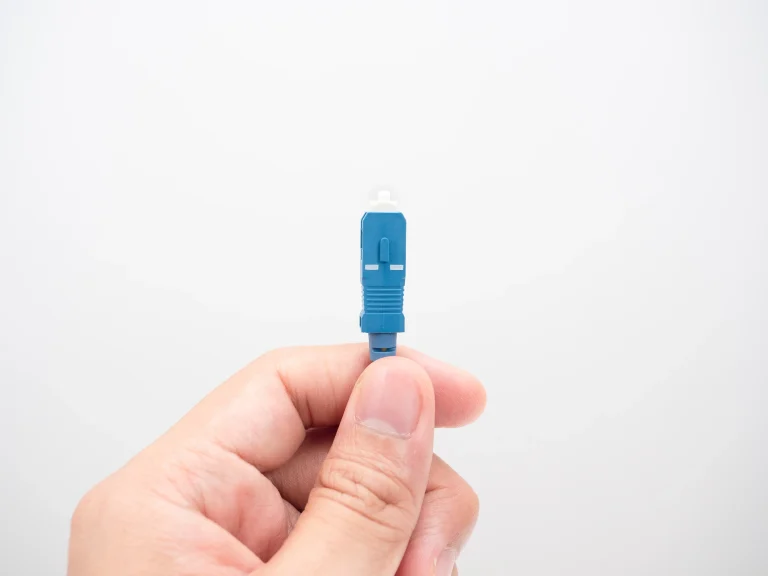
If a single-mode link shows unstable power, unexpected errors, or a poor optical budget, connector polish is one of the first details to verify. The choice between LC APC vs LC UPC connectors affects back reflection, equipment compatibility, and field reliability, but the correct answer always starts with the equipment port, adapter, and link specification.
This guide cuts through the confusion. By the end, you’ll know exactly which connector type your network needs, how APC and UPC polishing affect return loss, and how to avoid costly mismatches. Whether you design AI clusters, DWDM long-haul systems, or enterprise data centers, this article gives you a practical, engineering-grade comparison of LC APC vs LC UPC connectors—with clear rules and real deployment cases.
Quick answer: LC UPC is the common choice for duplex LC transceiver patching and most data-center cross-connects. LC APC is used when the equipment interface or optical design requires lower reflection, such as many PON/FTTx, CATV/RF, test, WDM, or long single-mode links. Do not directly mate APC and UPC end faces; match the polish required by the port, adapter, and cable plant.
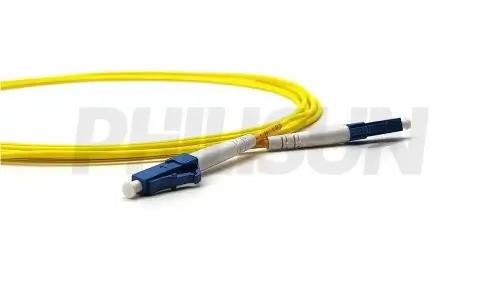
Fundamentals of Ferrule End-Face Polishing for Single Mode Fiber
Single-mode connectors depend heavily on the geometry of the ferrule end-face. The flatness, curvature radius, apex offset, and angle determine two key parameters that define connector quality.
Defining Back Reflection (Return Loss)
Return loss (RL) measures the amount of light reflected back toward the laser source. Reflections cause:
- laser instability
- noise and jitter
- link-layer performance issues
- high BER in coherent and DWDM systems
Connector specifications may express this two ways: return loss as a positive value, such as ≥50 dB for UPC or ≥60 dB for APC, or reflectance as a negative dB value, such as around −50 dB or −60 dB. Keep those sign conventions separate when comparing datasheets.
Connector Geometry in High-Speed SM Links
Modern high-speed single-mode links are designed against both insertion-loss and reflectance limits. Reflections can matter more in long-reach, amplified, WDM, coherent, RF/video, or PON environments than in ordinary short data-center patching. The safe rule is to follow the active equipment and adapter polish specification first, then verify loss and reflectance against the link budget.
LC UPC Connector: Ideal Applications and Performance Characteristics
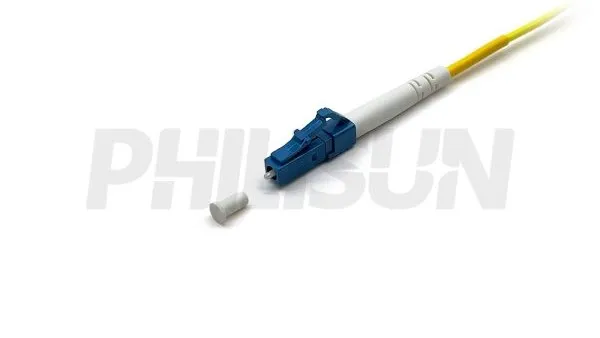
Physical (PC) and Ultra Physical (UPC) Polish Types
UPC is an enhanced version of the PC polish. Both are polished with a curved surface, but UPC provides a higher degree of finishing, resulting in:
- lower insertion loss
- improved return loss compared to PC
- better long-term stability
Typical performance:
- IL: 0.2–0.3 dB
- Return loss: typically ≥50 dB for UPC-class connectors
When to Use LC UPC in Data Centers
UPC connectors dominate short-reach single-mode networks, such as:
- 100G/200G/400G SMF data center links
- single-mode patching inside racks
- connections to most QSFP/OSFP SMF transceivers (FR, DR, LR, PLR, etc.)
- P2P links under 10 km
Most duplex SMF transceivers are designed for UPC connectors, making them the default in modern data centers.
To source high-quality LC UPC patch cables, see:
👉 PHILISUN LC Single Mode Patch Cables
LC APC Connector: The Angled Contact Solution for Maximum Stability
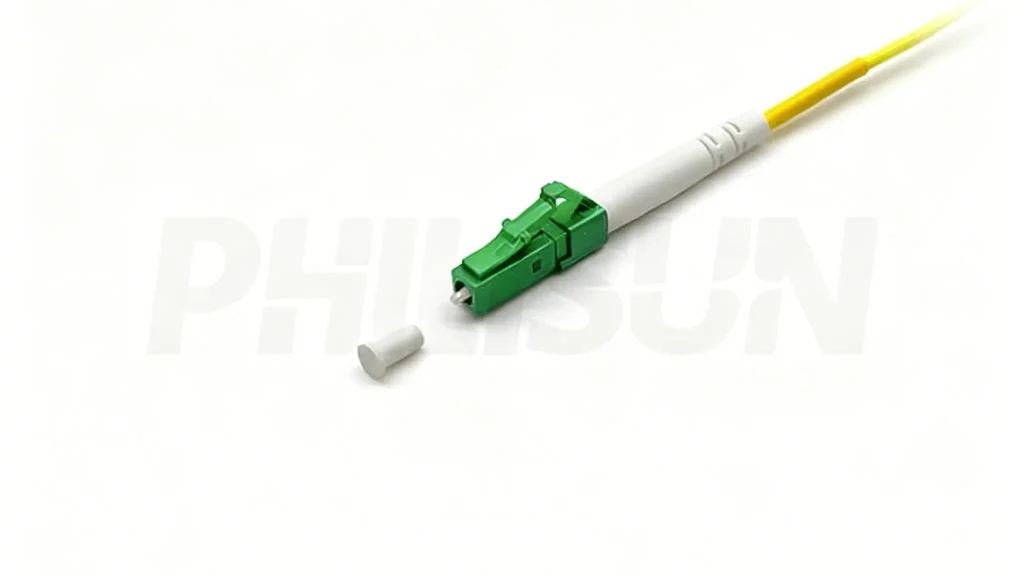
8-Degree Angle Minimizes Back Reflection
APC connectors feature an 8° angled ferrule face, which prevents reflected light from traveling back into the laser. This dramatically improves return loss:
- IL: 0.2–0.4 dB
- Return loss: typically ≥60 dB; reflectance often shown around −60 to −65 dB
APC connectors are used where lower reflectance is part of the optical design or equipment requirement.
LC APC Applications (WDM and FTTH)
You should choose LC APC when your network requires:
- extremely low back reflection
- high optical stability
- long-distance or amplified links
Typical APC use cases include:
- DWDM / OADM / ROADM optical systems
- FTTH / PON OLT and ONT equipment
- ZR/ZR+ and coherent DCI optics
- metro/regional transport networks
- CATV distribution
For coherent, ZR/ZR+, or transport optics, confirm the vendor interface and reflectance tolerance before choosing the patch-cord polish; do not assume APC or UPC without checking the port specification.
Direct Comparison: LC APC vs LC UPC Connector for Single Mode Networks
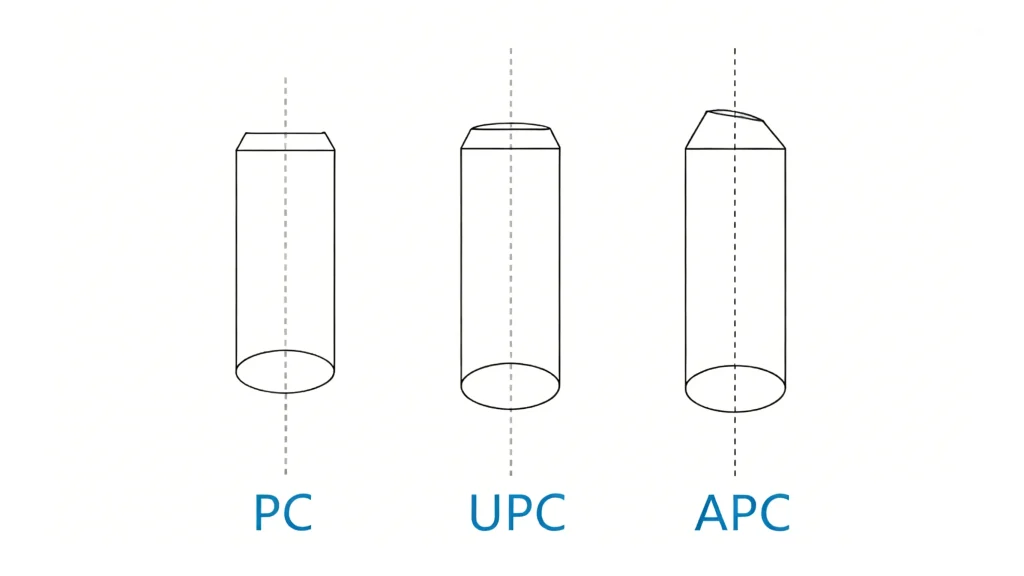
Understanding the differences helps prevent mismatched patching, poor reflectance performance, and unnecessary troubleshooting.
Comparing IL and RL Metrics
| Parameter | LC UPC | LC APC |
| Return Loss (RL) | Return loss often ≥50 dB; reflectance may be shown around −50 dB | Return loss often ≥60 dB; reflectance may be shown around −60 to −65 dB |
| Insertion Loss (IL) | 0.2–0.3 dB | 0.2–0.4 dB |
| Ferrule Angle | 0° (flat/curved) | 8° angled |
| Sensitivity to Reflection | Medium | Very low |
| Suitable For | Data center SMF links (FR/DR/LR) | DWDM, OADM, long-haul, PON |
| Color Convention | Blue | Green |
Rules for Mixing APC and UPC Connectors
Never mix them.
An APC connector mated to a UPC connector causes:
- high insertion loss
- extremely poor return loss
- ferrule damage
- link instability, troubleshooting complexity, or end-face damage risk
Mixing these is one of the most common (and costly) field mistakes.
PHILISUN’s Quality Control Standards for LC Single Mode Connectors
Ensuring Reliability with Tested LC Patch Cables
PHILISUN performs:
- interferometric end-face geometry testing
- IL/RL optical performance verification
- ferrule apex alignment measurement
- mechanical stress and durability testing
This ensures stable, high-performance SMF connections in AI data centers, telecom networks, and enterprise environments.
👉Explore PHILISUN’s patch cable solutions
Choosing the Correct LC Type for SM Transceivers
PHILISUN provides expert guidance on matching the proper LC polish to your transceiver type, including:
- 100G–800G DR/FR/LR modules (UPC)
- DWDM or tunable optics when the equipment interface specifies APC
- ZR/ZR+ coherent optics only after checking the vendor interface and reflectance tolerance
Choosing the right polish ensures optimal BER, OSNR, and long-term network stability.
Conclusion
LC APC and LC UPC connectors both play vital roles in single-mode fiber systems — but they are not interchangeable. UPC is the standard for high-speed data centers, while APC is selected for links whose equipment, adapter, or reflectance budget requires angled-polish performance.
Getting this decision wrong leads to unnecessary reflection, link degradation, and costly troubleshooting. PHILISUN’s rigorously tested LC patch cables ensure your network performs flawlessly, regardless of application.
FAQ: LC APC vs LC UPC
Should I use LC APC or LC UPC for 400G DR4/FR4/LR4?
Use the polish specified by the transceiver, adapter, and cabling design. Most duplex LC data-center transceiver patching uses LC UPC, but transport, PON, RF/video, test, or other reflection-sensitive links may specify LC APC.
Can LC APC connect to LC UPC?
No. LC APC and LC UPC have different end-face geometry and should not be mated directly because the mismatch can increase loss, create strong reflections, and risk connector end-face damage.
Why does APC provide lower reflection?
An APC ferrule uses an 8-degree angled end face, so reflected light is directed toward the cladding instead of straight back toward the source.
Does connector color prove the polish type?
Color is a useful field clue—green usually indicates APC and blue usually indicates UPC—but always confirm the part number, adapter, test record, and equipment documentation before installation.