
In the era of high-speed digital communication, the demand for faster, more reliable, and longer-distance data transmission has never been higher. Fiber optic technology sits at the heart of this transformation, enabling connections that are faster and more secure than traditional copper cabling.
At the core of every optical network lies a small yet powerful device — the fiber optic transceiver. It serves as the bridge between electronic systems and optical fiber, translating digital data into light and back again.
In this guide, we’ll explain what a fiber optic transceiver is, how it works, and why it’s essential for modern networks.
What Is a Fiber Optic Transceiver?
A fiber optic transceiver (also called an optical transceiver) is a compact module that both transmits and receives data signals through optical fibers.
It serves a dual purpose — transmitting electrical signals as light pulses and receiving light pulses to convert them back into electrical form.
These transceivers are found in nearly every modern communication device — from enterprise switches and telecom routers to data center servers and network interface cards. They enable high-speed communication over distances ranging from a few meters to hundreds of kilometers, depending on the model and fiber type used.
In short, a fiber optic transceiver acts as the translator between copper-based electronics and optical-based networks, ensuring seamless, low-latency data transfer.
How Does a Fiber Optic Transceiver Work?
At its core, a fiber optic transceiver performs bidirectional communication — sending and receiving signals over optical fibers simultaneously. Here’s how the process works step by step:
1. Electrical-to-Optical Conversion (Transmission)
When a network switch or router sends data, it delivers an electrical signal to the transceiver’s transmitter section. Inside, a laser diode (in single-mode transceivers) or LED (in multimode transceivers) converts this signal into light pulses.
These light pulses carry the encoded data through the fiber’s core, reflecting internally through the cladding until reaching the receiver at the other end.
2. Light Transmission Through Optical Fiber
The light signal travels through either single-mode fiber (SMF) or multimode fiber (MMF):
- Single-mode fibers (with ~9 µm core) transmit one light path, ideal for long distances and high bandwidth.
- Multimode fibers (with 50–62.5 µm cores) carry multiple light paths, used for shorter, cost-effective links.
During transmission, fiber coatings and cladding ensure total internal reflection, minimizing signal loss.
3. Optical-to-Electrical Conversion (Reception)
At the receiver end, the light pulses hit a photodiode (optical detector), which converts the light energy back into electrical signals. These signals are then processed by the receiving network equipment — completing the data transfer loop.
4. Module Interface and Communication Standards
Most transceivers comply with industry standards like SFP, SFP+, QSFP, or CFP, allowing easy interchangeability between brands and devices. Many are also hot-swappable, meaning they can be replaced or upgraded without shutting down equipment — a major advantage in live data center environments.
Core Components of a Fiber Optic Transceiver
| Component | Function |
| Transmitter (TX) | Converts electrical signals into optical signals using a laser or LED. |
| Receiver (RX) | Converts incoming light signals back into electrical signals via a photodiode. |
| Wavelength Controller | Ensures precise light emission at standardized wavelengths (e.g., 850 nm, 1310 nm, 1550 nm). |
| Microcontroller Unit (MCU) | Manages diagnostics and communication with the host system (DDM/DOM). |
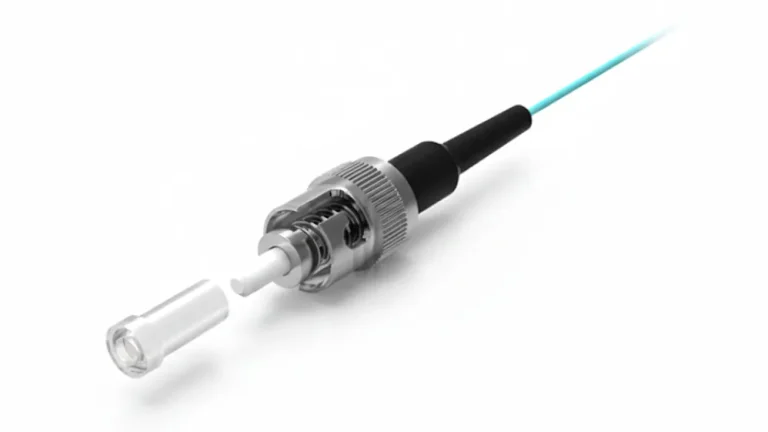
| Connector Interface | Provides physical connection — LC, SC, MPO, etc. |
| Casing / Housing | Protects internal optics and electronics while providing EMI shielding. |
Together, these components make the transceiver a self-contained, plug-and-play device ready for seamless fiber communication.
Different Types of Fiber Optic Transceivers
Transceivers vary based on speed, distance, form factor, and wavelength.
Common categories include:
- SFP (Small Form-factor Pluggable): 155 Mb/s to 1 Gb/s, typically for 850 nm to 1550 nm wavelengths.
- SFP+: Up to 10 Gb/s; compact and energy-efficient.
- QSFP / QSFP28: Supports 40 G, 100 G, and higher-rate transmissions using parallel fibers or multiplexing.
- CWDM/DWDM Transceivers: Designed for long-haul fiber networks with wavelength multiplexing.
Each type is engineered for specific network scales — from enterprise LANs to hyperscale data centers.
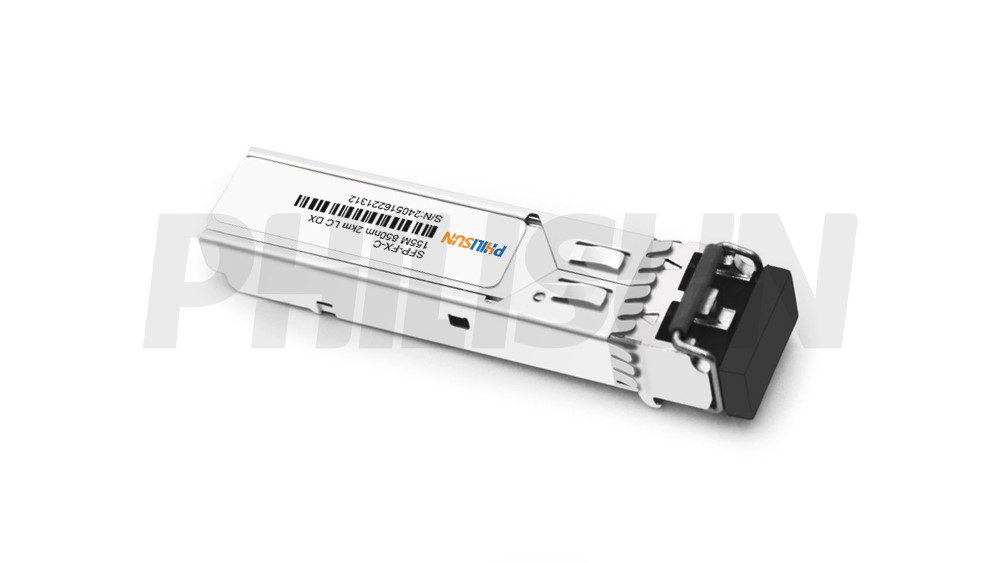
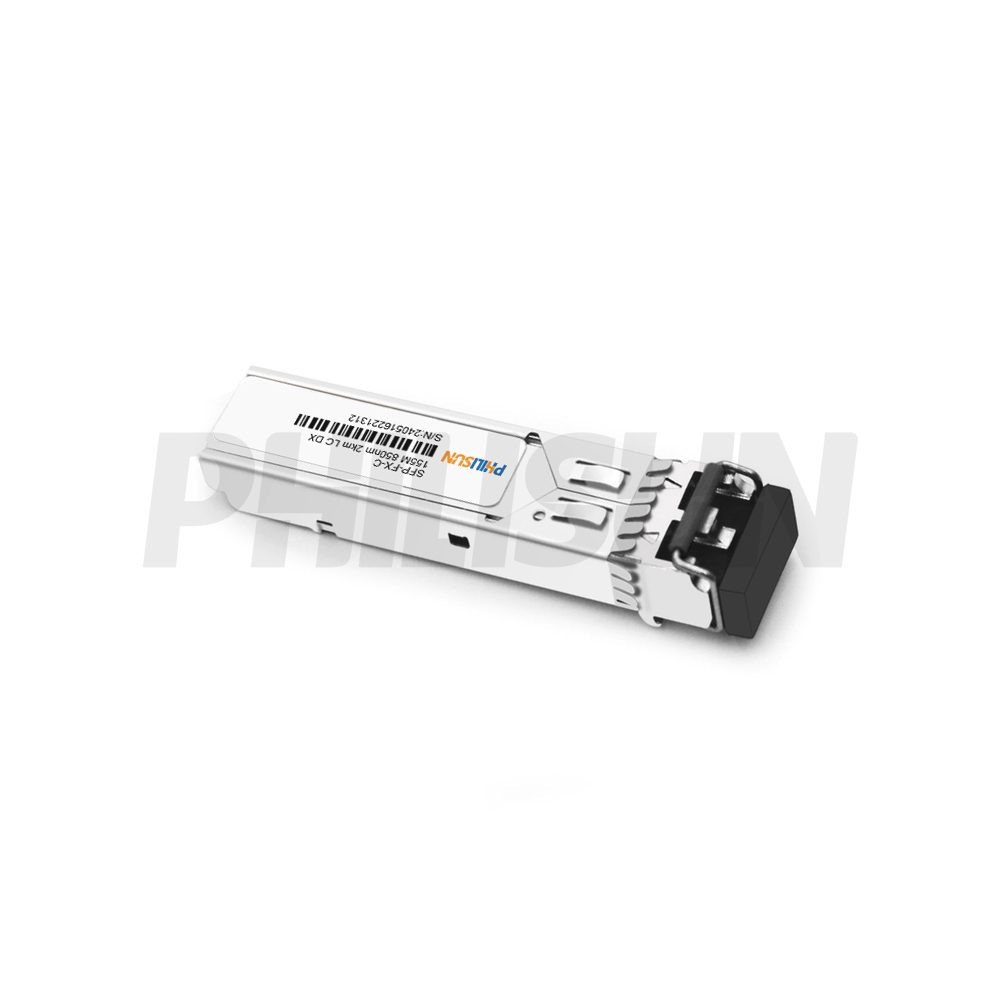
Example: PHILISUN SFP-155M-850NM-2KM-LC-DX Optical Transceiver
For organizations seeking reliable and cost-efficient optical connectivity, PHILISUN’s SFP-155M-850NM-2KM-LC-DX Optical Transceiver exemplifies performance and precision.
This model supports 155 Mb/s transmission over multimode fiber up to 2 km at 850 nm wavelength, using an LC duplex connector for compact, high-density connections.
Built to meet industry SFP standards, it’s compatible with major networking devices while maintaining excellent optical power budgets and low insertion loss.
Key Benefits:
- Reliable performance for short- to mid-range data transmission
- Compact design with dual-fiber LC interface
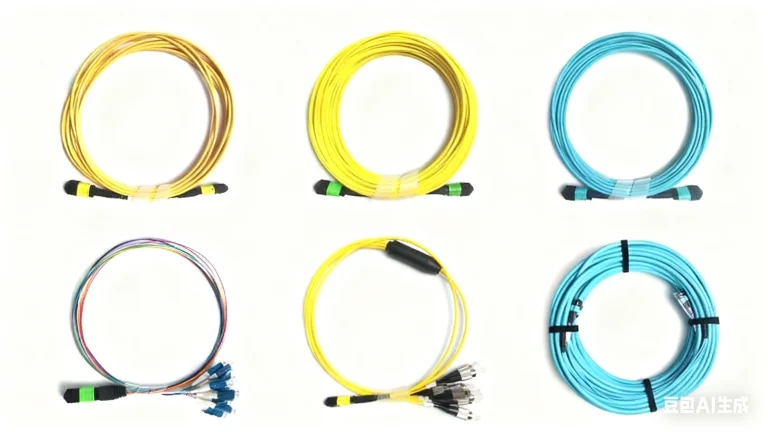
- Easy integration with PHILISUN patch cords and cabling
- Rigorously tested for signal integrity and low reflection
Whether for telecom, campus networks, or enterprise backbones, this module demonstrates PHILISUN’s commitment to standards-compliant, high-quality fiber connectivity.
Applications of Fiber Optic Transceivers
Fiber optic transceivers are used across nearly every modern communication system:
- Data Centers: Connecting switches, servers, and routers with ultra-low latency.
- Telecom Networks: Supporting metro, access, and backbone infrastructure.
- Enterprise Networks: Enabling high-speed LAN and WAN communication.
- Industrial & Smart Systems: Reliable connectivity in high-EMI or mission-critical environments.
- 5G Infrastructure: Supporting optical fronthaul and backhaul links.
Their versatility and compact design make transceivers indispensable in every layer of fiber networking.
Advantages of Using Fiber Optic Transceivers
High Bandwidth:
Supports massive data throughput compared to copper cabling.
Long Distance Transmission:
Up to 100 km+ with single-mode fiber; ideal for metro and long-haul networks.
Immunity to Interference:
Unaffected by electromagnetic noise, ensuring clean signal transmission.
Scalability:
Modular form factors like SFP/SFP+ allow easy upgrades.
Energy Efficiency:
Low power consumption and high reliability reduce operational costs.
Future-Proof Design:
Compatible with emerging standards like 100 G and 400 G optical systems.
Choosing the Right Fiber Optic Transceiver
When selecting an optical module, consider the following:
| Parameter | Consideration |
| Transmission Speed | Match module speed (e.g., 155 Mb/s, 1 G, 10 G) with switch ports. |
| Fiber Type | Choose single-mode or multimode based on distance and cost. |
| Wavelength | 850 nm for short-range MMF; 1310 nm or 1550 nm for long-range SMF. |
| Connector Type | Ensure compatibility (LC, SC, MPO). |
| Distance Rating | Select modules that meet your link budget and loss requirements. |
| Vendor Compatibility | Verify with the device manufacturer or use PHILISUN universal-compatible modules. |
Proper selection ensures optimal performance and reduces network downtime.
How Fiber Transceivers Shape Modern Networks
Fiber optic transceivers are the silent enablers behind global connectivity — powering cloud computing, streaming, AI data centers, and 5G infrastructure.
By transforming electrical data into light, they enable communication speeds that push beyond the limits of copper. As global data volumes surge, transceivers continue to evolve toward smaller form factors, higher efficiency, and greater capacity — ensuring scalability for the digital future.
Conclusion
A fiber optic transceiver is far more than a simple plug-in device — it’s the engine that drives optical communication.
It translates data into light and back again, enabling the high-speed, high-capacity networks our world relies on daily.
PHILISUN’s SFP-155M-850NM-2KM-LC-DX Optical Transceiver embodies the reliability and precision needed in modern fiber infrastructure. Whether you’re expanding a data center or upgrading enterprise networks, PHILISUN delivers connectivity built on innovation, accuracy, and performance.
Ready to enhance your network with dependable fiber transceivers?
Contact PHILISUN today to explore our range of optical modules and cabling solutions — engineered for seamless integration, efficiency, and durability.