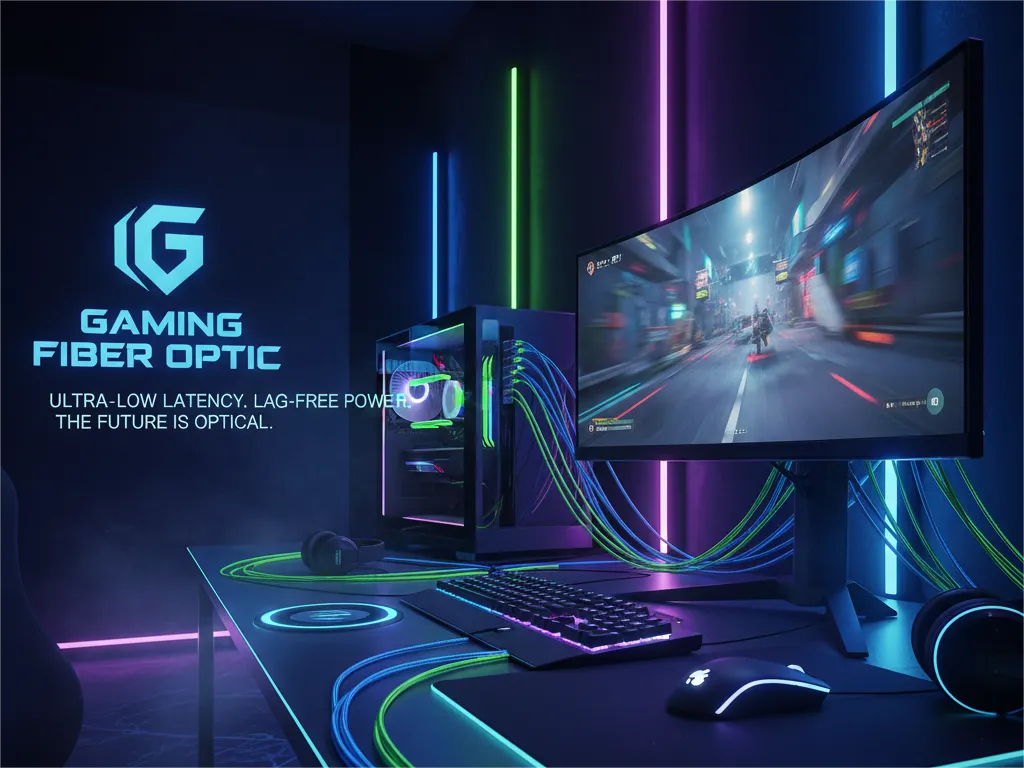

If milliseconds separate a headshot from defeat, outdated copper cables are costing your competitive edge. Traditional networks are running on borrowed time. This is why Gaming Fiber Optic is no longer a luxury—it is a mandatory upgrade for competitive players. This guide answers the critical questions about fiber optic technology, revealing how the shift to light speed guarantees zero-lag performance.
Why is Fiber the Core Gaming Advantage?
The immediate shift to Gaming Fiber Optic is driven by five distinct advantages that directly impact gameplay and streaming quality:
High Bandwidth (10G+)
Fiber optics deliver capacity well beyond the traditional 1 Gigabit standard, supporting speeds of 10 Gbps and even 25 Gbps into the home or gaming center. This high bandwidth eliminates buffering and congestion, allowing your console or PC to simultaneously handle huge game updates, 4K streaming, voice communication, and gameplay without any slowdown.
Symmetrical Data
Unlike cable internet, which prioritizes download speed (asymmetrical), fiber optic technology often delivers symmetrical speeds (upload equals download). For serious gamers who stream their gameplay, this is crucial. Symmetrical transmission guarantees high-quality, uninterrupted streaming upload speeds required by platforms like Twitch and YouTube, ensuring your audience sees your victory in crystal-clear quality.
Low Latency
Latency, or ping, is the time it takes for a signal to travel and return. Fiber guarantees superior stability and reduces latency to a consistent, low number—often 5ms or lower—by transmitting data at the speed of light. This consistent, low ping removes the unpredictable “lag spikes” that cripple competitive performance on copper networks.
Improved Reliability (EMI Immunity)
Because data is transmitted via pulses of light, Gaming Fiber Optic is completely immune to Electromagnetic Interference (EMI) and Radio Frequency Interference (RFI). This ensures absolute signal integrity, meaning your connection remains rock-solid and stable, even in crowded environments like multi-tenant buildings or LAN centers where copper connections suffer from electronic noise.
Better Data Security
Yes. From a physical standpoint, fiber optic cables are inherently more secure. Any attempt to physically “tap” the line to intercept data will result in a measurable drop in light signal, which network monitoring tools can immediately detect. Electrical signals on copper are much easier to passively intercept without detection.
How Does Fiber Beat Copper Speed?
The competitive edge provided by fiber isn’t just marketing—it’s based on physics that copper simply cannot overcome.
Light vs. Electrons (VOP Physics)
The fundamental reason for reduced lag lies in the Velocity of Propagation (VOP). Light travels through glass far more efficiently than electrons travel through a metallic wire. This translates to faster signal transmission, resulting in the measurable ping reduction that determines the outcome of split-second gaming scenarios.
Signal Degradation and Attenuation
Electrical signals on copper wires lose power and fidelity the farther they travel (a phenomenon called Attenuation), especially at high frequencies. Fiber optic signals, however, can travel vast distances—sometimes hundreds of kilometers—with minimal loss. This ensures that the high speed promised by your ISP is actually delivered reliably to your PC or console, regardless of your physical distance from the central switching node.
Which Fiber Solutions Matter Most?
For truly zero-lag performance, fiber must be implemented at every stage, from the network backbone to your desktop peripherals.
Should I Upgrade to XGS-PON FTTH?
If your ISP offers it, yes. Many older Fiber to the Home (FTTH) connections use GPON technology. XGS-PON is the current upgrade, offering true symmetric 10Gbps speeds, which is essential for future-proofing and high-volume data transfer.
What are AOCs and Why Do I Need Them?
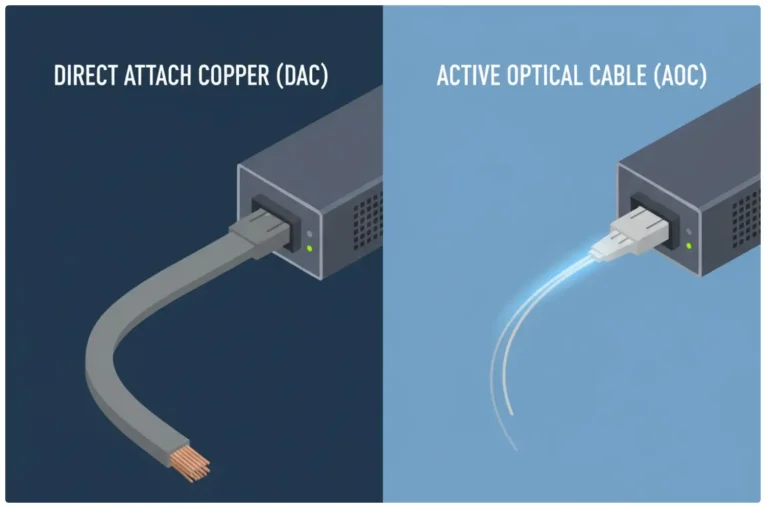
Active Optical Cables (AOCs) are hybrid cables that use fiber strands to transmit high-speed data (like USB-C, HDMI, or Thunderbolt) over longer distances without signal degradation. For gaming, AOCs are critical for connecting high-resolution monitors or VR headsets at 10Gbps or higher data rates, eliminating copper latency at the desktop level.
Fiber Solutions for Esports Arenas
Professional esports facilities and LAN centers utilize high-density, factory-terminated fiber solutions like MPO/MTP cables. These allow for the rapid deployment of hundreds of zero-lag fiber connections that are easily managed and guaranteed for optimal performance, ensuring fair play in large tournaments.
How Can Gamers Ensure Peak Performance?
The quality of your components determines your network’s final performance. A poor cable can undo the advantage of a gigabit connection.
Impact of Insertion Loss
Every connection point in a fiber link introduces a tiny amount of power loss known as Insertion Loss. If patch cables or connectors are poorly manufactured or polished, high insertion loss leads to signal jitter and can reintroduce the very instability and latency you paid to eliminate.
How Should I Choose Low-Loss Components?
You must demand third-party verified, factory-tested fiber assemblies. Only suppliers like PHILISUN who commit to precision polishing and stringent quality control standards can guarantee the ultra-low insertion loss necessary to protect your network’s latency budget and ensure true zero-lag performance.
Future-Proofing for Standards
Investing in high-quality fiber is an investment in the future. Because the transmission medium is light, fiber infrastructure is inherently capable of scaling to future speeds (such as 400Gbps) simply by upgrading the terminal equipment. This longevity makes fiber the most sustainable choice for competitive standards.
Conclusion: Is Fiber Optic the Ultimate Competitive Edge?
The data confirms it: the transition from electrons to light is the single most critical hardware upgrade for any serious gamer or professional esports organization today. Gaming Fiber Optic delivers the mandatory low latency, symmetrical bandwidth, and unwavering stability required to compete at the highest level. Stop fighting your network—start competing on skill.
Stop compromising on latency. Whether you are a dedicated home player or an esports facility manager, Contact the PHILISUN expert team today to secure custom, ultra-low-loss fiber optic solutions and AOCs that will launch your gaming network into the speed of light.