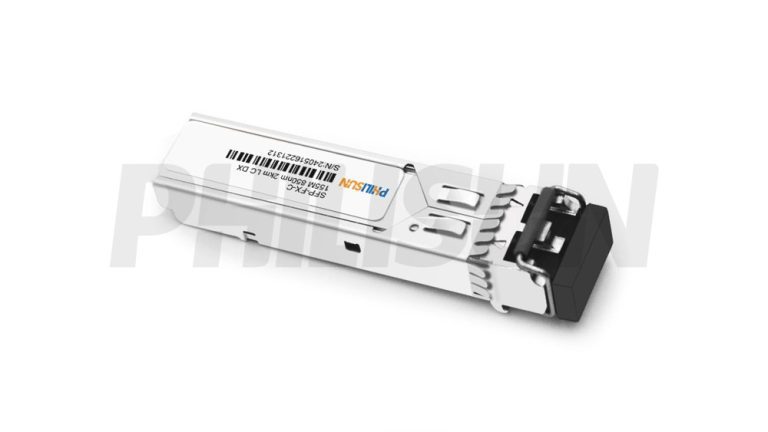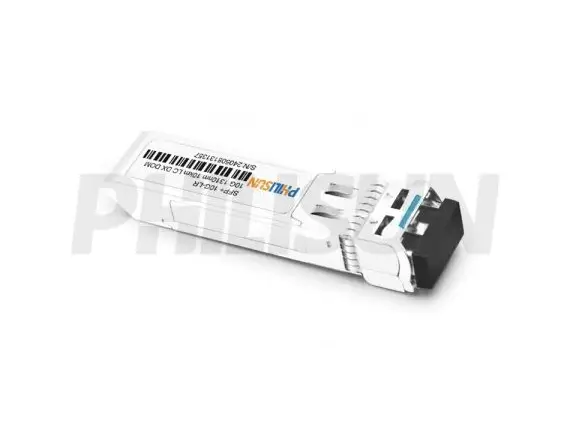

The Ciena S10U27 is a common, industry-standard part number used for 10 Gigabit Ethernet (10GbE) SFP+ deployments. It signifies a module operating at a 1310nm wavelength, typically designated for reaching various medium-to-long distances (often 10km, 20km, or more) over Single-Mode Fiber (SMF).
While original equipment manufacturer (OEM) modules are necessary for many deployments, organizations are increasingly looking for high-performance, fully compatible third-party alternatives. The drive is twofold: cost efficiency and faster module availability. However, choosing the right alternative requires a deep understanding of the module’s core technical specifications and the importance of compatibility coding.
Technical Specifications of the Ciena S10U27 Module
Understanding the core technical profile of the S10U27 is essential before sourcing replacements. This particular Ciena product is built upon the IEEE 802.3ae standard for 10GBASE-LR/LW and variations.
| Specification | Typical Ciena S10U27 Profile | Deployment Environment |
| Data Rate | 10.3125 Gb/s (10GBASE-x) | Data Center, Metro, Campus |
| Wavelength | 1310 nm | Low dispersion over SMF |
| Connector Type | LC Duplex | Standard fiber connector |
| Distance Range | Varies (commonly 10km, 20km, 40km) | Extended reach applications |
| Fiber Type | Single-Mode Fiber (SMF) | For long-haul links |
| Form Factor | SFP+ (Small Form-factor Pluggable Plus) | Industry-standard hot-pluggable module |
The 1310nm wavelength is favored for these distances because it operates close to the zero-dispersion point of standard Single-Mode Fiber, allowing for robust long-distance data transmission without the need for complex, costly dispersion compensation.
The Crucial Role of Compatibility and Coding
OEM switch and routing platforms, including Ciena’s, employ proprietary firmware checks to verify the authenticity and compatibility of any inserted transceiver. When a module is inserted, the switch reads an internal digital memory map (the EEPROM). If this data does not contain the specific vendor, part number, and signature code expected by the Ciena OS, the module may be disabled or flagged as non-operational, leading to network failure.
For third-party optics to function seamlessly, they must be meticulously coded to mimic the exact digital signature expected by the host equipment. This ensures plug-and-play reliability without network disruption.
High-Quality, Ciena-Compatible SFP+
PHILISUN specializes in providing a full range of 10G SFP+ modules, engineered as reliable and cost-effective alternatives to OEM parts like the Ciena S10U27. Our comprehensive SFP+ series covers every distance requirement from short-reach 300m to extended 70km links.
We overcome the compatibility challenge by using advanced coding techniques and proprietary configuration tools. Each PHILISUN transceiver is programmed with the precise digital signature required for full acceptance and operational compatibility across Ciena’s major switching and routing platforms. This rigorous process guarantees the module will boot up, operate, and provide accurate Digital Diagnostics Monitoring (DDM) data just like the OEM version.
Deployment Scenarios: Choosing the Right Reach
The “S10U27” designation often applies to multiple distance variations. Choosing the right distance is critical to avoiding overspending or poor link performance.
| Distance Option | Standard | Best Use Case | PHILISUN Compatible Product |
| 10 km | 10GBASE-LR | Standard campus links, metropolitan area network (MAN) access | 10G SFP+ 1310nm 10km LC-DX |
| 20 km | 10GBASE-ER Lite | Connecting data centers in close proximity, extended metro loops | 10G SFP+ 1310nm 20km LC-DX |
| 40 km | 10GBASE-ER | Regional links, wide area network (WAN) backbone | 10G SFP+ 1310nm 40km LC-DX |
| 70 km | Custom Long Haul | Long-distance remote node connections require high power | 10G SFP+ 1310nm 70km LC-DX |
Ensuring Reliability: Testing and Certification
For mission-critical Ciena environments, performance testing is non-negotiable. PHILISUN employs a rigorous, multi-platform testing regime for every transceiver before shipment. This involves:
- Host Testing: Testing in live Ciena switches to verify software acceptance and DDM functionality.
- Environmental Testing: Verification of performance across a wide range of temperatures.
- Optical Testing: Calibration and measurement of transmit power and receive sensitivity to ensure the module meets or exceeds the industry standards for the specified distance.
This meticulous certification process ensures that when you purchase a Ciena-compatible module, you receive a product that is guaranteed to integrate seamlessly into your existing infrastructure.
Conclusion
The Ciena S10U27 represents a critical component in 10G network architecture. While the OEM part ensures compatibility, high-quality third-party optics provide essential flexibility and cost savings without sacrificing performance.
To maximize your Ciena network investment, choose a provider who guarantees compatibility and subjects their optics to rigorous platform testing. PHILISUN is committed to providing fully coded, high-reliability SFP+ transceivers—including the specific 10G, 1310nm, multi-distance options you need.
Contact PHILISUN‘s compatibility experts today to ensure you receive the correct, pre-tested module configuration for your specific Ciena platform requirements.
Frequently Asked Questions (FAQ)
Q1: Can I use the PHILISUN alternative directly in my Ciena switch?
- A: Yes. PHILISUN modules are pre-coded with the exact firmware signature required to ensure they are recognized and accepted by the Ciena operating system, guaranteeing plug-and-play functionality.
Q2: What is the main benefit of the 1310nm wavelength used by the S10U27?
- A: The 1310nm wavelength is ideal for medium-to-long distances (up to 40km or more) on Single-Mode Fiber because it has very low chromatic dispersion loss, allowing for strong, clear signal transmission.
Q3: Does the PHILISUN module support DDM/DOM?
- A: Absolutely. All PHILISUN SFP+ modules support Digital Diagnostics Monitoring (DDM), also known as DOM, allowing network administrators to monitor critical parameters like temperature, voltage, and optical power in real-time.